
Black Salt Marsh Mosquito
Culex nigripalpus
Description
How to identify
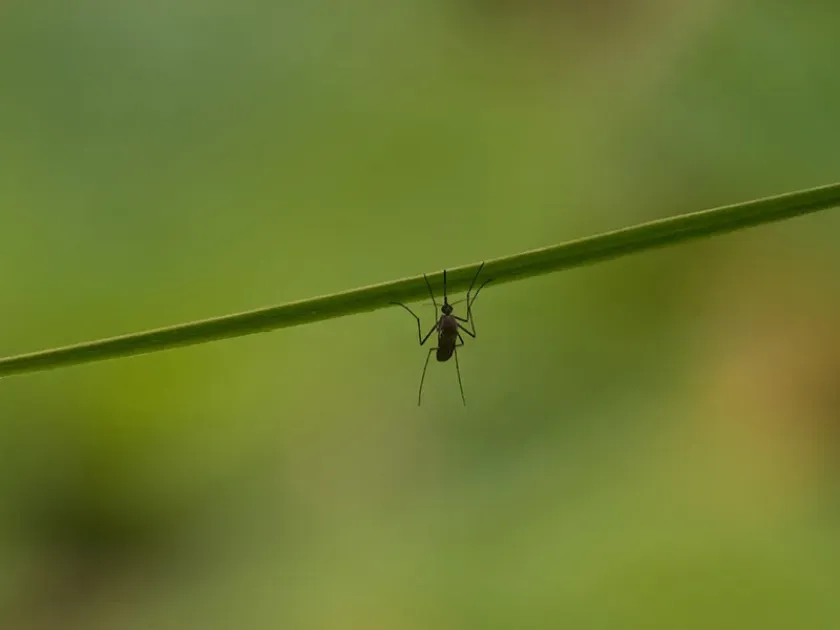
The Black Salt Marsh Mosquito (Culex nigripalpus) is a species belonging to the order Diptera and the family Culicidae. This insect is small and characterized by its dark coloration, distinguishing it within its genus.
The adult mosquitoes possess a piercing-sucking mouthpart typical of the family. Their slender bodies are covered in scales, and they feature clear wings with dark veins, which are key morphological markers for identification.
Larvae develop exclusively in aquatic environments. They feature a distinct respiratory siphon at the end of their abdomen, allowing them to breathe atmospheric air while hanging at an angle from the water surface.
Pupae are mobile and highly reactive to disturbances in the water, which helps them avoid aquatic predators. During this stage, the insect does not feed but undergoes a critical metamorphosis into an adult.
Definitive identification often requires microscopic examination of the male genitalia, as external similarities between various Culex species can be confusing for non-specialists.
What it damages
Although males feed on plant nectar, they contribute to the irritation of farm workers, indirectly reducing labor productivity in fields and greenhouses.
The most significant agricultural impact is on livestock management. Constant mosquito bites cause animal stress, which correlates with reduced milk production and slower growth rates in cattle.
Culex nigripalpus is a known vector for various arboviruses, including the St. Louis encephalitis virus, which can affect domestic birds and human populations nearby.
In greenhouse settings, the presence of these mosquitoes serves as an indicator of excessive humidity and poor sanitation, which may invite secondary fungal plant diseases.
The economic impact involves the costs associated with facility disinfestation, veterinary care for affected animals, and loss of efficiency in daily agricultural operations.
When it appears
Adult activity is highly dependent on temperature and humidity levels, with populations peaking during warm, wet seasons or immediately after significant rainfall events.
The species reproduces continuously as long as environmental conditions are favorable, though adults may enter a state of dormancy in sheltered areas during temperature drops.
In temperate climates, peak activity occurs during summer months when temporary water bodies provide optimal breeding sites for egg-laying females.
During the autumn, the focus shifts to overwintering preparation, making this an ideal time for agronomic interventions to reduce the population for the next season.
The life cycle from egg to adult can take as little as one to two weeks, allowing for multiple generations to thrive during a single growing season.
Signs of infestation
A primary indicator of infestation is the mass emergence of adults near irrigation canals, stagnant water, or livestock housing units during dawn and dusk.
The detection of larvae in standing water, ditches, or uncovered water barrels serves as evidence that the site is currently serving as an active breeding ground.
Restless behavior in livestock, characterized by frequent tail-swishing and ear-flicking, is a reliable field observation that suggests heavy mosquito pressure.
The presence of specific viral pathogens in wild or domestic bird populations near farms often correlates with high densities of Culex nigripalpus.
Finding egg rafts, which appear as dense, floating black structures on the water surface, is definitive proof of an active reproductive cycle in the area.
Control measures
The primary control measure is source reduction: draining stagnant water bodies, cleaning drainage ditches, and covering containers to prevent egg-laying.
Biological control, such as the application of Bacillus thuringiensis israelensis (Bti), effectively targets larvae without causing harm to beneficial insects or the ecosystem.
Installing fine-mesh screens on greenhouse vents and farm structure openings significantly limits the entry of adults into protected indoor areas.
Personal protective measures, including the use of repellents and protective clothing, are essential for farm staff working in high-pressure areas.
- Regular inspection and cleaning of drainage systems.
- Application of environmentally friendly larvicides.
- Maintaining high sanitation standards in livestock facilities.
Taxonomy
- Latin name
- Culex nigripalpus
- Order
- Diptera (flies)
- Family
- Culicidae
- EPPO code
- CULXNI
Discussion
No discussions yet — be the first.