
Chaoborus
Corethra
Description
How to identify
Chaoborus, commonly known as the phantom midge, belongs to the family Chaoboridae. Adults resemble mosquitoes but are harmless and non-biting.
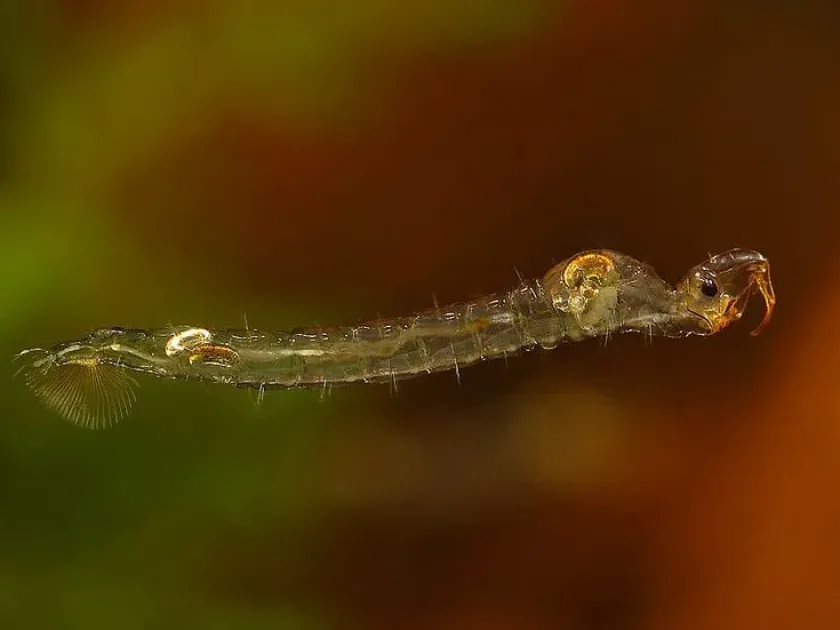
The larvae are known as phantom larvae due to their transparent, glass-like bodies which make them nearly invisible in the water column.
They possess specialized hydrostatic air sacs that allow them to maintain neutral buoyancy and change depth with minimal energy expenditure.
The larvae use modified antennae to capture prey, acting as efficient aquatic predators in various freshwater environments.
Adults lead a short-lived existence focused entirely on mating, as they lack functional mouthparts for feeding and do not pose a threat to humans.
What it damages
In aquaculture, Chaoborus larvae are considered significant pests because they compete with fish fry for food resources.
They are voracious predators that consume large quantities of zooplankton, such as Daphnia and copepods, which are essential for fish development.
In nursery ponds, high densities of phantom midge larvae can directly attack and injure young fish larvae, increasing mortality rates.
Their presence significantly reduces the overall productivity of aquaculture ponds by depleting the natural food supply for farmed fish.
In ornamental settings, their predatory behavior can disrupt the established balance of a pond by eliminating beneficial micro-fauna.
When it appears
The life cycle of Chaoborus is highly dependent on water temperature, with peak activity occurring during the warmer months of spring and summer.
Larvae overwinter in the benthic zone of ponds, often burrowing into the sediment to survive low temperatures and hypoxic conditions.
As water temperatures rise in late spring, the larvae become highly active and move through the water column to feed and reach maturity.
Adults emerge during the summer to mate and lay eggs on the water surface, which quickly hatch into the next generation of larvae.
The duration of the cycle varies based on environmental factors, allowing for multiple generations in warmer climates or extended cycles in cooler areas.
Control measures
Draining and drying ponds is the most effective cultural method to eliminate populations by exposing overwintering larvae to desiccation.
Managing the bottom substrate by removing excess organic silt and muck helps to reduce the areas available for larvae to hide during winter.
Biological control methods, such as stocking ponds with fish species that prey on aquatic larvae, can keep population numbers in check.
- Complete draining and drying of pond beds.
- Mechanical removal of bottom sludge and debris.
- Stocking with appropriate fish species for predation.
Chemical control is generally avoided in aquaculture environments due to the potential toxicity to fish stock and the risk to the aquatic ecosystem.
Taxonomy
- Latin name
- Corethra
- Order
- Diptera (flies)
- Family
- Culicidae
- EPPO code
- CORESP
Discussion
No discussions yet — be the first.