
Anopheles sinensis
Anopheles sinensis
Description
How to identify
Anopheles sinensis is a species of mosquito within the Culicidae family, known for its specific ecological niche and characteristic resting posture, where the body is angled away from the surface.
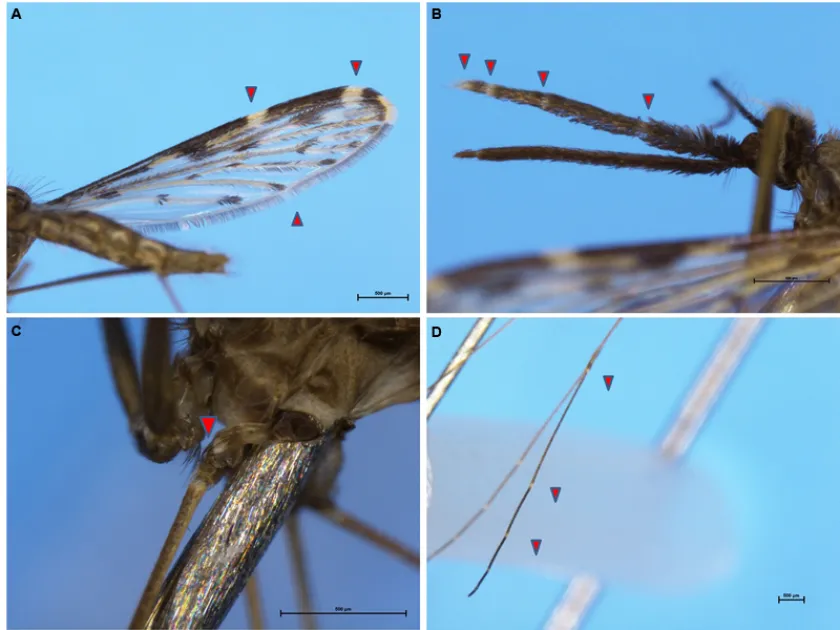
The adult mosquitoes display a distinct pattern of light and dark scales on their wings, which is a key feature for field identification. They are primarily active during the crepuscular hours and at night.
Larvae develop in stagnant water bodies, including rice paddies, where they lie parallel to the water surface. They possess a specialized siphon for breathing air from the surface.
Pupae are highly mobile and remain near the surface, exhibiting rapid downward movement when disturbed by predators or human activity in the irrigation channels.
The life cycle undergoes complete metamorphosis. Environmental factors such as water temperature and the presence of organic nutrients significantly influence the speed of development from egg to adult.
What it damages
While Anopheles sinensis does not feed on plant tissues, its impact on agricultural systems is significant due to the disruption of farming labor productivity in infested regions.
High population densities in rice paddies create uncomfortable working conditions, often causing laborers to limit their time in fields, which delays critical cultural practices such as weeding or fertilizing.
The species serves as a biological competitor for resources within the aquatic micro-ecosystems of paddy fields, consuming microorganisms that support a healthy habitat for rice plants.
There is also an indirect economic cost related to public health interventions required in rural agricultural communities to manage the mosquito population and prevent disease transmission.
Management of the insect in agricultural settings often requires an integrated approach to balance pest control with the environmental safety of the cultivated crops and the health of the workers.
When it appears
The seasonal activity of this mosquito begins in late spring, following the warming of water temperatures in irrigation systems. Activity peaks during the hottest summer months.
Throughout the growing season of rice, the population density fluctuates based on irrigation schedules. Constant flooding provides a stable environment for continuous breeding cycles.
As autumn approaches and temperatures decrease, the metabolic rate of the mosquitoes drops, leading to the preparation for hibernation in sheltered spots near the agricultural fields.
The number of generations per season is determined by the cumulative heat units; in tropical and subtropical regions, the breeding season can last for the majority of the year.
Weather patterns, specifically heavy rainfall, can sometimes flush larvae from fields, temporarily reducing the population density before it recovers with the next generation.
Control measures
Biological control, such as introducing larvivorous fish like Gambusia affinis into irrigation canals, is a highly effective way to manage larvae population sustainably.
Water management is a crucial practice. Intermittent drainage of paddy fields disrupts the larval stage, forcing the drying of habitats and significantly decreasing successful maturation rates.
Microbial larvicides, particularly those derived from Bacillus thuringiensis israelensis, are recommended for their high specificity and minimal impact on the broader ecosystem.
Community-based interventions, including the removal of dense floating weeds in irrigation channels, reduce breeding sites and help maintain better water flow throughout the farm.
- Periodic draining of irrigation paddies.
- Release of mosquito-eating fish species.
- Use of targeted biological larvicides.
- Removal of aquatic vegetation in waterways.
Taxonomy
- Latin name
- Anopheles sinensis
- Order
- Diptera (flies)
- Family
- Culicidae
- EPPO code
- ANPHHS
Discussion
No discussions yet — be the first.