
Common malaria mosquito
Anopheles maculipennis
Description
How to identify
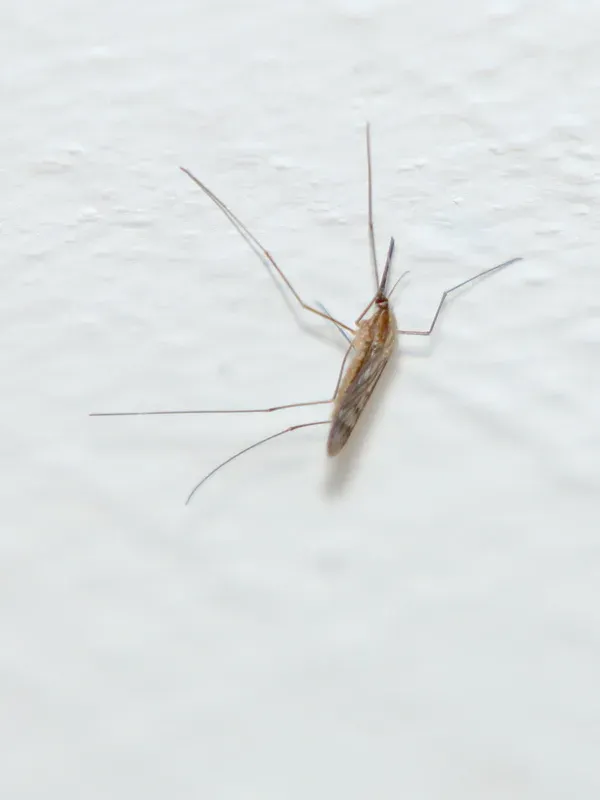
The common malaria mosquito (Anopheles maculipennis) is a member of the Culicidae family, belonging to the order Diptera. Adult individuals possess a slender frame, long delicate legs, and wings decorated with distinct dark spots, which serve as a primary identifying characteristic.
A key distinguishing feature of this species is its resting posture. Unlike common mosquitoes, the malaria mosquito tilts its abdomen upward at a significant angle relative to the surface it rests on, creating a recognizable diagonal silhouette.
The coloration of the imago is typically shades of grey or brown, providing effective camouflage against various natural surfaces. Males display feathery, bushy antennae that assist in mate recognition, contrasting with the simpler, thinner antennae of the females.
The larval stage resides in aquatic environments. As they lack a respiratory siphon, the larvae remain parallel to the water surface, anchored by specialized appendages to the surface tension, which is vital for their oxygen intake.
Their life cycle undergoes complete metamorphosis, including egg, larva, pupa, and imago. The success of the species is heavily dependent on the presence of calm, standing water bodies where the larval development occurs.
What it damages
It is important to note that the malaria mosquito is not a plant pest. It does not feed on foliage, stems, or roots, nor does it carry plant-pathogenic viruses. Therefore, it causes no direct damage to crops or agricultural yields.
The negative impact of this species on agriculture is primarily related to labor productivity. High populations of these insects in working areas can significantly disturb human staff, making outdoor operations during dawn or dusk difficult and inefficient.
In livestock farming, malaria mosquitoes act as a stressor for animals. Frequent bites and the presence of clouds of insects can lead to restlessness in cattle, which may indirectly affect milk production and the overall health of the herd.
The presence of these mosquitoes may necessitate additional investment in facility maintenance. Agricultural buildings often become overwintering sites, requiring regular inspections and sanitation to keep populations under control.
Ultimately, the main "damage" is related to health and safety regulations. Agricultural employers are tasked with protecting their workers from mosquito-borne risks, which adds an administrative and operational burden to farm management.
When it appears
The seasonal activity cycle begins in the spring, typically when daily temperatures consistently exceed 10–12 degrees Celsius. Overwintering females emerge from their shelters to seek suitable aquatic environments for oviposition.
Peak population density is observed throughout the summer months. Favorable water temperatures in June and July allow for rapid development of multiple generations, leading to significant increases in insect numbers by mid-season.
The decline in activity begins as autumn approaches. As temperatures drop, females prepare for hibernation by seeking protected areas, such as barns, warehouses, cellars, and abandoned outbuildings, to survive the winter.
The number of generations per season is determined by local climatic conditions. In temperate zones, three to four generations per year are common, allowing the species to rebound quickly from localized environmental stressors.
The diurnal activity pattern is highly specific, with peak biting behavior occurring during crepuscular hours (dawn and dusk). This timing is crucial for planning field tasks to avoid high-exposure periods.
Control measures
The most effective long-term control strategy is hydrological management. Eliminating small, stagnant water bodies, filling in puddles, and maintaining proper drainage in irrigation ditches significantly reduces available breeding habitats.
Biological control methods involve encouraging natural predators. Supporting local populations of dragonflies, water beetles, and native fish species in ponds can effectively regulate the number of mosquito larvae without using chemical agents.
Chemical control is generally targeted at the overwintering sites. Treating the interior walls of agricultural buildings with approved contact insecticides can drastically reduce the size of the spring generation emerging from hibernation.
Personal protection remains the first line of defense for staff. The use of high-quality repellents and long-sleeved, protective clothing is a standard requirement for ensuring worker safety in infested rural areas.
- Drain stagnant water sources.
- Enhance biological predator populations.
- Sanitize wintering shelters.
- Deploy personal repellent gear.
- Implement workplace safety protocols.
Taxonomy
- Latin name
- Anopheles maculipennis
- Order
- Diptera (flies)
- Family
- Culicidae
- EPPO code
- ANPHMC
Discussion
No discussions yet — be the first.