
Anopheles funestus
Anopheles funestus
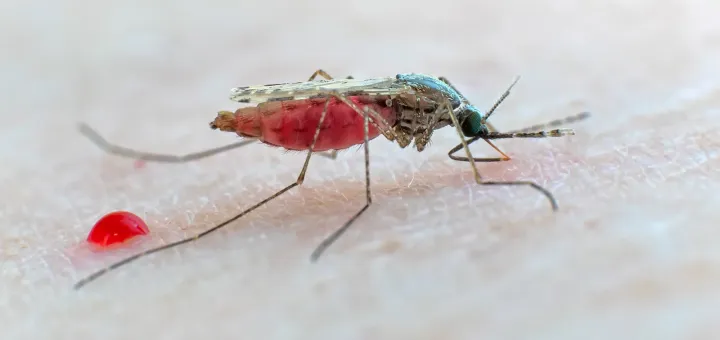
Description
How to identify
Anopheles funestus belongs to the Culicidae family, order Diptera. These small insects are distinguished by their long legs and a characteristic resting posture where the body is angled towards the surface.
Adults exhibit a slender, dark body, often with subtle wing markings. This species is highly adaptive and frequently establishes itself near agricultural areas and human infrastructure.
The larval stage is strictly aquatic. Larvae prefer clean, stagnant, or slow-moving water bodies that contain abundant aquatic vegetation for shelter and feeding.
The life cycle encompasses four distinct stages: egg, larva, pupa, and adult. The rate of development is heavily influenced by ambient temperature and humidity levels.
Females are obligate blood-feeders, which is a physiological necessity for egg production. Their high reproductive rate allows them to rapidly colonize suitable habitats.
What it damages
This species is not a phytophagous pest and does not cause direct damage to plant tissues. Its impact on agriculture is primarily indirect but significantly detrimental.
The primary concern is the creation of hazardous working conditions for field laborers, often disrupting essential farming operations during peak seasons.
Large populations of Anopheles funestus near irrigation networks or paddy fields limit the utility of these lands and reduce the efficiency of agricultural workflows.
As a vector for diseases, the presence of this insect jeopardizes the workforce, leading to labor shortages and decreased economic output for farms.
High densities of mosquitoes cause stress and health issues in livestock, leading to reduced meat or milk production in affected agricultural settings.
When it appears
The activity of Anopheles funestus peaks during wet seasons, when high humidity and warmth create ideal conditions for rapid breeding cycles.
During drier periods, populations diminish, yet individuals aggregate near permanent water sources that serve as critical refugia for survival.
Adult activity is primarily nocturnal, necessitating careful planning of field activities to avoid peak contact times in high-risk zones.
The synchronization between the insect's life cycle and irrigation cycles in agro-ecosystems is a key factor in predicting population spikes.
In tropical environments, the species remains active for most of the year, maintaining stable population levels due to consistent climatic conditions.
Control measures
Management strategies focus on environmental modifications, particularly the drainage of stagnant water sites to eliminate larval habitats.
Regular maintenance of irrigation canals and drainage systems is essential to prevent the accumulation of water, which significantly limits breeding success.
Biological control methods, including the use of targeted bacterial insecticides, help suppress larval populations without causing extensive ecological disruption.
Indoor residual spraying and localized chemical treatments are employed to reduce adult mosquito populations near residential and labor areas.
An integrated approach involving personal protective measures, improved field management, and strategic irrigation scheduling is vital for effective control.
Taxonomy
- Latin name
- Anopheles funestus
- Order
- Diptera (flies)
- Family
- Culicidae
- EPPO code
- ANPHFU
Discussion
No discussions yet — be the first.