
Western malaria mosquito
Anopheles freeborni
Description
How to identify
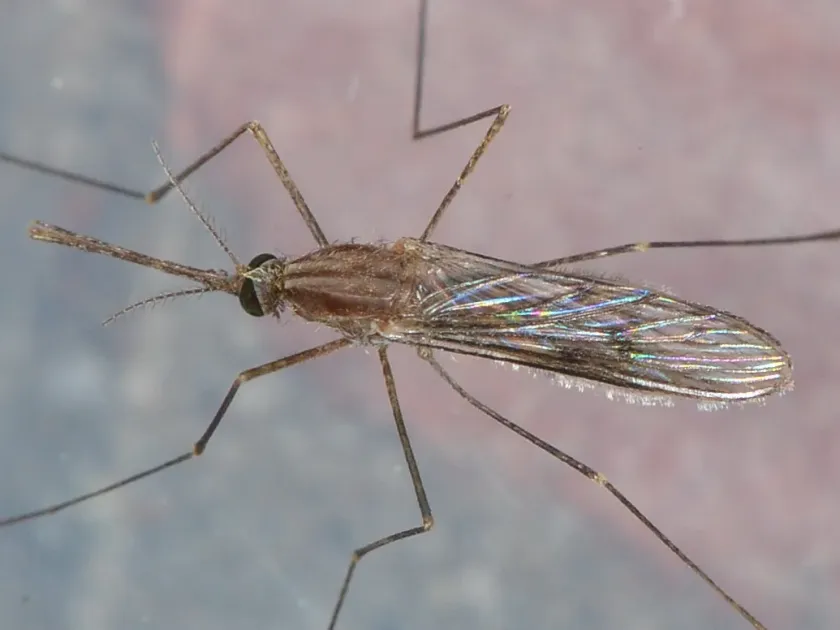
Anopheles freeborni is a species of mosquito belonging to the Culicidae family. Adults are slender insects with long legs and a characteristic resting posture where the abdomen is held at an angle to the surface.
The wings display a spotted pattern due to the presence of dark and light scales. Accurate identification typically requires microscopic examination of the mouthparts and wing venation.
Larvae develop in aquatic environments, primarily in standing water. Unlike other mosquitoes, they lack a respiratory siphon and lie parallel to the water surface, feeding on suspended organic matter.
These mosquitoes are predominantly nocturnal. During the day, they seek out cool, shaded environments such as barns, dense vegetation, or crawl spaces to rest and conserve energy.
The species is primarily distributed across the western regions of North America, where it thrives in landscapes dominated by irrigation systems and agricultural water management.
What it damages
While Anopheles freeborni does not consume crops, it is classified as a pest due to its status as a vector for pathogens and its negative impact on agricultural labor efficiency.
Mass infestations in farming areas can restrict outdoor working hours, as labor must be minimized during peak biting times to prevent the transmission of mosquito-borne diseases.
The presence of high mosquito populations requires significant expenditure on pest control programs, including chemical and biological treatments, which increases the overhead costs of farm management.
Livestock are also impacted by these mosquitoes. Persistent biting leads to reduced health and productivity in cattle and other farm animals, directly affecting the profitability of the enterprise.
The extensive use of irrigation canals and drainage systems provides permanent and temporary breeding grounds, creating a cyclical problem that requires ongoing agricultural oversight.
When it appears
The active life cycle of the mosquito is strictly dependent on temperature. Development typically begins in late spring and continues through the summer until the onset of cool autumn weather.
Hibernation is a crucial survival mechanism. Only inseminated females survive the winter by entering a state of diapause, hiding in protected environments like cellars, caves, or farm outbuildings.
Spring emergence occurs as temperatures rise. Females then seek out suitable water bodies to lay eggs, with the larval cycle taking approximately 10 to 14 days depending on ambient temperatures.
Population peaks are often observed during mid-to-late summer, coinciding with peak irrigation schedules. The availability of water on fields and in ditches facilitates rapid population growth.
As autumn approaches, females prepare for overwintering by feeding more aggressively to accumulate the necessary lipid reserves to survive the dormant winter months.
Control measures
Water management is the most effective cultural control method. Proper leveling of fields and maintaining clean drainage ditches to ensure water movement prevents larval development.
Biological control using microbial insecticides, specifically Bacillus thuringiensis israelensis (Bti), is highly effective in treating irrigation water without leaving toxic residues in the soil.
Mechanical exclusion methods, such as the use of fine-mesh screens on housing and livestock sheds, are essential for minimizing human and animal exposure to the mosquitoes.
Vegetation management around agricultural water sources, including the removal of dense weeds along canals, eliminates the resting sites used by adult mosquitoes during the daytime.
Implementing a comprehensive Integrated Pest Management (IPM) program that includes monitoring population densities helps farmers target control efforts only when thresholds are exceeded.
Taxonomy
- Latin name
- Anopheles freeborni
- Order
- Diptera (flies)
- Family
- Culicidae
- EPPO code
- ANPHFB
Discussion
No discussions yet — be the first.