
Faro malaria mosquito
Anopheles farauti
Description
How to identify
Anopheles farauti is a species of mosquito belonging to the family Culicidae and the order Diptera. It is part of the Anopheles punctulatus complex, which consists of several closely related species.
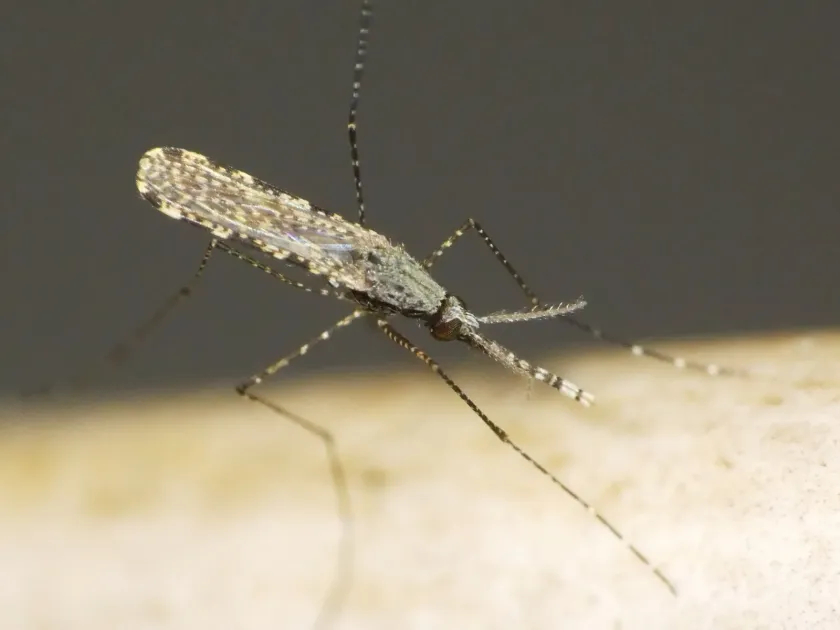
The adult mosquitoes are distinguished by their resting position, where the abdomen is held at an angle to the surface. Their wings often display a speckled appearance due to dark and light scales.
Larvae develop in aquatic habitats and are easily identified by their horizontal orientation at the water's surface, as they lack the long respiratory siphon found in other mosquito genera.
Precise species identification often requires molecular analysis or detailed examination of the male genitalia, as external morphology can be highly variable.
The life cycle involves four stages: egg, larva, pupa, and adult. Development is highly sensitive to environmental factors, particularly temperature and water quality.
What it damages
While this mosquito does not feed on plant tissues, it poses a significant threat to agricultural productivity by endangering the health of farm workers and agricultural laborers.
As a primary vector of malaria parasites (Plasmodium falciparum and P. vivax), the presence of this species can lead to outbreaks of disease among human populations in agricultural regions.
The economic impact manifests as loss of labor, increased medical costs, and the disruption of critical field operations during peak agricultural seasons.
Farming operations often face increased overhead costs due to the necessity of implementing vector control programs and providing protective equipment for employees.
Consequently, in an agricultural context, Anopheles farauti is classified as a hazardous biological factor that requires management to ensure safe working conditions.
When it appears
The population dynamics are heavily influenced by the tropical climate, with peaks in activity usually following rainy seasons that create numerous breeding sites.
Irrigation systems in agricultural zones provide a stable environment for larval development, allowing the mosquito population to thrive even during drier periods.
Optimal development occurs at water temperatures between 25 and 30 degrees Celsius, leading to a shortened life cycle and rapid population growth.
Adult mosquitoes show peak flying activity during twilight and night hours, when they migrate from breeding sites to find hosts for blood meals.
Environmental monitoring of humidity levels and rainfall is essential for predicting periods of high mosquito activity and potential disease transmission risk.
Signs of infestation
Signs of an Anopheles farauti presence include the existence of slow-moving or stagnant water sources within or near the agricultural site.
Increased sightings of adult mosquitoes in outdoor areas during the early evening hours indicate a nearby breeding site or established population.
Visual identification of larvae in irrigation ditches or pools, characterized by their parallel positioning to the water surface, confirms their presence.
Reports of frequent mosquito bites by field workers are a major indicator that warrants an immediate site inspection and population density assessment.
Professional monitoring involves using light traps or CO2-baited traps to collect adult specimens for laboratory analysis and density estimation.
Control measures
Effective control strategies focus on integrated pest management practices to reduce mosquito populations and mitigate the risk of disease transmission.
- Drainage of stagnant water pools to eliminate breeding habitats.
- Clearing vegetation from irrigation channels to reduce shelter for larvae.
- Introduction of biological control agents, such as predatory fish or bacteria (Bacillus thuringiensis israelensis).
- Utilization of personal protective measures and repellents for all personnel working in high-risk zones.
- Targeted application of insecticides to breeding sites during periods of high population density.
Taxonomy
- Latin name
- Anopheles farauti
- Order
- Diptera (flies)
- Family
- Culicidae
- EPPO code
- ANPHFA
Discussion
No discussions yet — be the first.