
Anopheles culicifacies
Anopheles culicifacies
Description
How to identify
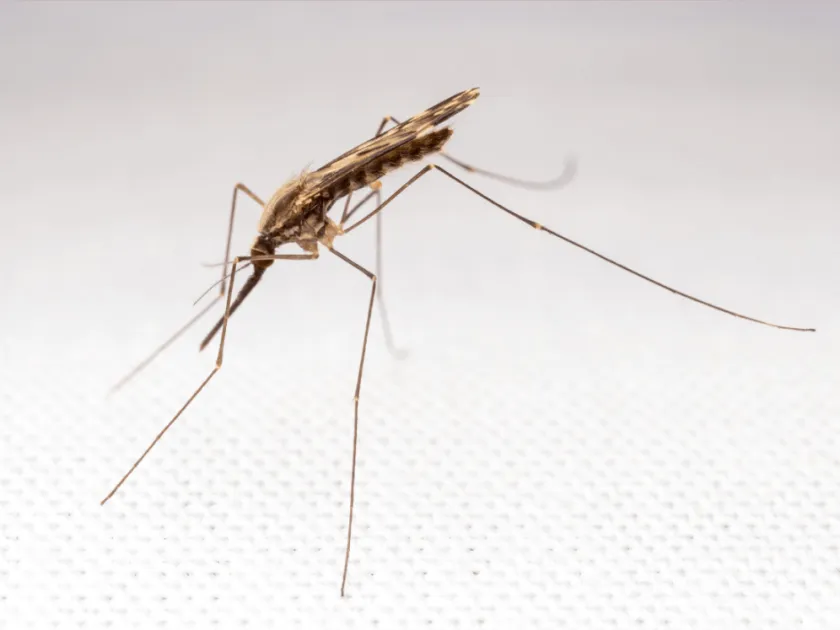
Anopheles culicifacies belongs to the Culicidae family. Adult specimens are recognized by their slender appearance, long legs, and wings that feature distinct dark spot patterns.
A key identifying feature is their resting posture; when landing on a surface, these mosquitoes hold their abdomen at an angle to the substrate, distinguishing them from other species.
The larvae are exclusively aquatic, lack a respiratory siphon, and typically lie parallel to the water surface, which is a major morphological indicator for field identification.
Coloration of the adults ranges from light gray to dark brown, providing effective camouflage against vegetation and soil backgrounds during daylight hours.
The life cycle encompasses four distinct stages: egg, larva, pupa, and adult, with the developmental rate heavily dependent on ambient temperature and water availability.
What it damages
This species is not a plant feeder and does not directly damage crops. However, it is an indirect pest that severely impacts agricultural operational efficiency.
High population densities in irrigated lands and rice paddies disrupt field operations, forcing producers to limit working hours to avoid peak insect activity.
The presence of this vector creates significant health risks for farm workers, which can lead to labor shortages and delayed critical agronomic interventions.
Economic damage is often indirect, involving increased costs for site sanitation, pest control measures, and potential regulatory restrictions on land use.
In regions where this mosquito is prevalent, its presence complicates the management of water-dependent agricultural systems and requires strict protective protocols.
When it appears
Seasonal activity is strictly linked to irrigation schedules and the rainy season, which provide the stagnant water necessary for breeding and larval development.
Peak populations usually coincide with the rice growing season, as paddies create vast, optimal habitats for the mosquito to complete its reproductive cycle.
Under favorable tropical conditions, a single generation can mature in approximately 10 to 14 days, allowing for rapid population surges during the growing season.
The activity declines sharply when water bodies dry up during the off-season, as the insects lose their essential sites for egg-laying and larval survival.
Temperatures ranging from 25 to 30 degrees Celsius facilitate the most rapid development and highest reproductive output of the species in agricultural settings.
Control measures
Water management is the primary control strategy; alternating water levels in irrigation ditches and rice fields disrupts the larval environment significantly.
Biological control, including the use of Bti (Bacillus thuringiensis israelensis) formulations, offers an environmentally friendly way to reduce larval density.
Introducing larvivorous fish species into drainage and irrigation canals is a proven sustainable method for suppressing mosquito populations near crop fields.
Personnel protection remains essential, involving the use of protective clothing and insect repellents for those operating in high-risk zones during field activities.
- Drainage of unnecessary standing water near fields.
- Routine clearing of aquatic vegetation in channels.
- Integrated pest management using selective biopesticides.
Taxonomy
- Latin name
- Anopheles culicifacies
- Order
- Diptera (flies)
- Family
- Culicidae
- EPPO code
- ANPHCU
Discussion
No discussions yet — be the first.