
Balabac mosquito
Anopheles balabacensis
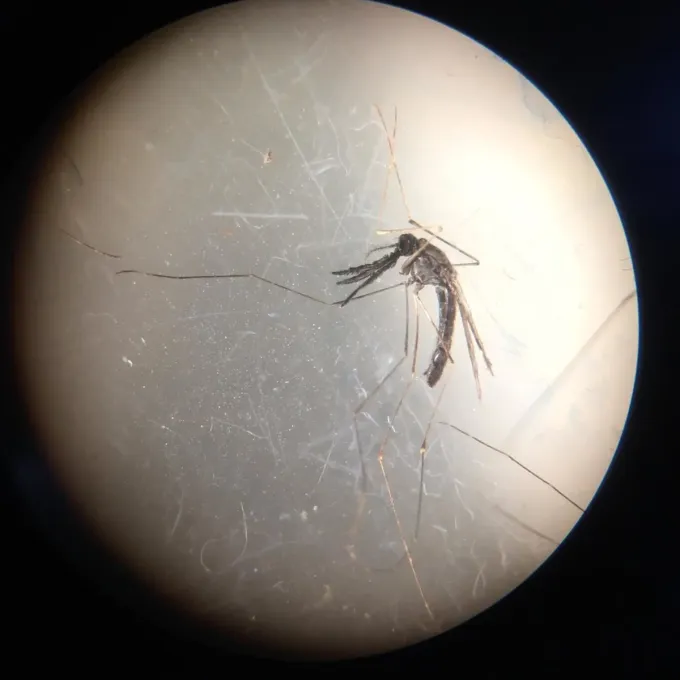
Description
How to identify
Anopheles balabacensis is a member of the Diptera order and the Culicidae family. This species possesses a slender body, long legs, and specialized mouthparts adapted for blood-feeding in females.
Identification is primarily performed through microscopic examination of wing scales and the morphology of male terminalia. Adult specimens typically exhibit a greyish-brown coloration, which aids in camouflage within their natural forest habitats.
Unlike many other mosquito species, A. balabacensis is known for its aggressive host-seeking behavior. The specific arrangement of scales on its wings serves as a primary diagnostic feature for entomologists during field identification.
The larval stages develop exclusively in small, shaded, and clean water bodies. They occupy an important niche as primary consumers, feeding on organic matter and aquatic microorganisms found in stagnant water sources.
Adult mosquitoes are nocturnal, showing high activity levels during twilight and throughout the night. They are capable of traveling significant distances from breeding sites to find blood meals, which complicates management efforts.
What it damages
While Anopheles balabacensis is not a direct phytophagous pest and does not damage crops, it is a significant public health threat in agricultural regions. Its impact is indirect but severe, affecting the productivity of the workforce.
This species is a known vector for malaria parasites. Outbreaks among farm workers can lead to labor shortages during critical periods, such as planting or harvest, resulting in significant agricultural losses.
The economic burden extends to the agricultural sector, as management must invest in health protection for workers and vector control operations. Controlling this mosquito is vital for maintaining steady production cycles.
The damage caused is effectively a reduction in human capital performance in tropical regions. Without proper management, the health risks posed by this mosquito can lead to the abandonment of field operations in high-risk zones.
Overall, while the mosquito does not affect plant physiology, it is a critical pest in the context of agricultural sustainability and rural economic stability in Southeast Asian territories.
When it appears
The activity of Anopheles balabacensis is heavily dependent on climate patterns, specifically rainfall and humidity. Populations reach their peak during the rainy season when numerous breeding sites become available.
Optimal temperatures for larval development range between 25 and 30 degrees Celsius. In these favorable conditions, the life cycle can be completed in less than two weeks, leading to rapid population explosions.
Females are most active at night, especially in humid conditions. During the dry season, population densities drop sharply as most water sources for egg-laying dry up, limiting the mosquito's reproduction.
Adult migration increases significantly after heavy rains, as individuals disperse from breeding grounds into surrounding agricultural areas to seek blood meals from both human and animal hosts.
Professionals monitor population density using light traps and landing catches. These data are essential for forecasting periods of high risk and implementing necessary control measures before outbreaks occur.
Signs of infestation
The first indication of Anopheles balabacensis presence is an increase in mosquito bites reported by personnel working in fields or near forest edges. Bites typically cause localized itching and skin irritation.
The presence of breeding sites is determined by visual inspection of ponds, streams, or puddles near cultivation zones. Larvae can often be seen floating near the surface of stagnant, shaded water.
Modern monitoring includes the use of specialized traps to track adult population trends. High trap counts provide an early warning of potential malaria transmission risks in specific areas.
Adult mosquitoes can be detected at night by their high-pitched buzzing near light sources. Their presence in significant numbers around houses or field shelters is a clear indicator of high infestation levels.
Regular surveys of nearby water bodies are the most reliable method for identifying larval presence, allowing for intervention before the emergence of a new generation of adults.
Control measures
Effective management of Anopheles balabacensis centers on environmental control. Draining small, temporary water bodies after rainfall is the most sustainable way to disrupt the mosquito's life cycle.
Biological control using Bacillus thuringiensis israelensis is highly recommended. These bacterial agents specifically target mosquito larvae without harming other beneficial insects or the surrounding agricultural ecosystem.
Chemical control involves the use of pyrethroid insecticides applied in areas where adults congregate. This helps reduce immediate mosquito numbers and protects workers in high-traffic field zones.
Personal protection for farm staff is essential, including the use of treated clothing and personal repellents. These measures significantly reduce the risk of bites during night or twilight hours.
Cooperation between agricultural enterprises and public health services is mandatory for success. A coordinated, multi-faceted approach ensures that rural labor forces remain healthy and productive throughout the year.
Taxonomy
- Latin name
- Anopheles balabacensis
- Order
- Diptera (flies)
- Family
- Culicidae
- EPPO code
- ANPHBB
Discussion
No discussions yet — be the first.