
Malaria mosquito
Anopheles
Description
How to identify
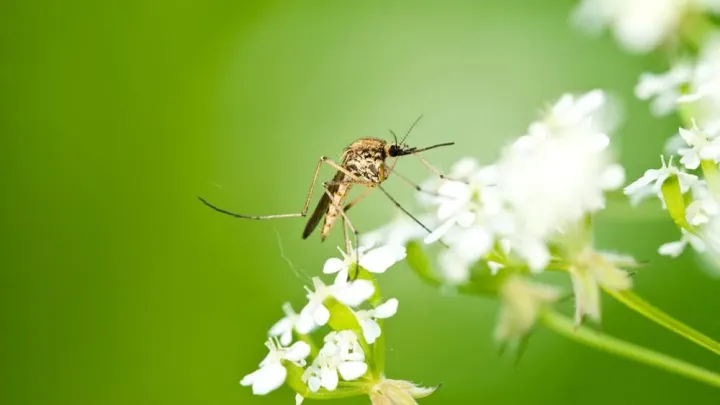
The malaria mosquito (Anopheles) is a genus within the order Diptera and family Culicidae. Unlike other mosquito species, adult Anopheles typically rest with their abdomen angled upwards, creating a distinct posture against the landing surface.
Adult mosquitoes possess slender bodies, long legs, and narrow wings often marked with clusters of dark scales. Their identification is crucial for environmental monitoring near farm infrastructures and irrigation systems.
The larval stage of Anopheles is strictly aquatic. Lacking a respiratory siphon, these larvae rest horizontally along the surface of the water, which is a key diagnostic feature for distinguishing them from common house mosquitoes.
The development from egg to adult goes through four distinct stages: egg, larva, pupa, and imago. The duration of this cycle is highly dependent on ambient water temperatures and the availability of organic matter in the breeding habitat.
While male mosquitoes feed on floral nectar, females are haematophagous. Their presence around agricultural sites poses a risk to animal welfare and operational efficiency, although they do not consume crops directly.
Control measures
The most effective management strategy involves habitat modification. Draining temporary stagnant pools and properly maintaining irrigation canals are fundamental steps to prevent larvae development in agricultural fields.
Biological control methods include the introduction of predatory fish into water reservoirs and the protection of natural insect predators such as dragonflies and aquatic beetles, which significantly reduce larval populations.
Microbial insecticides, particularly those containing Bacillus thuringiensis israelensis (Bti), provide a targeted solution that effectively controls larvae without damaging the surrounding ecosystem or commercial crops.
Routine maintenance of grazing areas, including weed control and vegetation management, is essential. Reducing dense vegetation limits resting sites for adult mosquitoes, thus lowering the pressure on livestock.
Integrated Pest Management (IPM) programs should incorporate monitoring through light traps and larval sampling to ensure that interventions are timely and ecologically sound, protecting both agricultural yield and workers' safety.
Taxonomy
- Latin name
- Anopheles
- Order
- Diptera (flies)
- Family
- Culicidae
- EPPO code
- ANPHSP
Discussion
No discussions yet — be the first.