
Aedes vittiger mosquito
Aedes vittiger
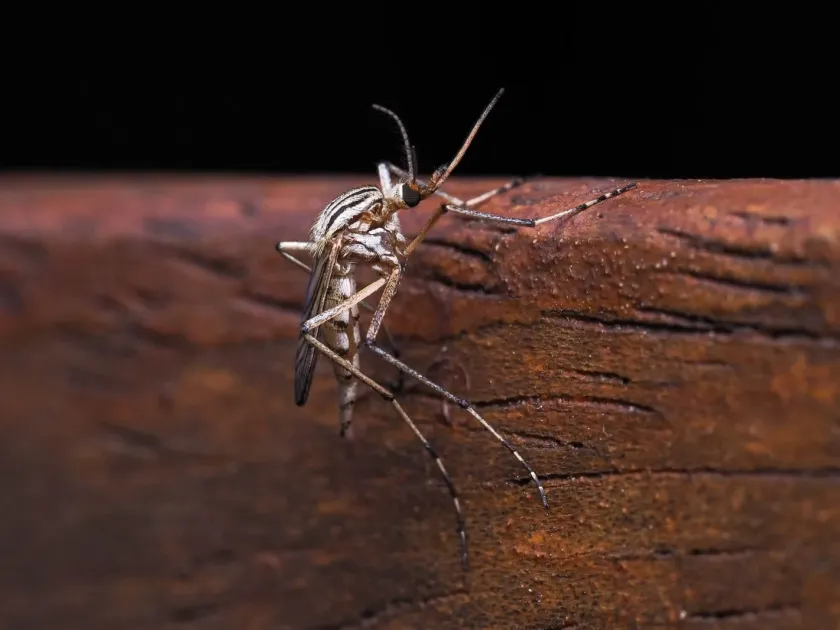
Description
How to identify
The Aedes vittiger mosquito belongs to the order Diptera and the family Culicidae. This insect features a robust body structure typical of the Aedes genus, with pale scales on the thorax and abdomen that form a specific, identifiable pattern.
Adults are highly active during twilight hours. Identifying this species in the field is difficult due to its resemblance to other members of the Aedes complex, thus laboratory microscopic examination of the reproductive organs is often required for precise classification.
Females of this species are obligate hematophages, with mouthparts adapted for piercing the skin and feeding on the blood of warm-blooded animals. Conversely, males feed primarily on plant nectar and juices, causing no direct harm to living organisms.
The insect undergoes a complete metamorphosis cycle: egg, larva, pupa, and adult. The aquatic stages (larva and pupa) occur in small, temporary water bodies created by heavy rainfall or seasonal flooding.
Eggs of this species exhibit high resistance to desiccation, allowing them to remain viable in the soil at the bottom of dried-up pools for long periods, waiting for favorable conditions to hatch once the area is flooded again.
What it damages
Although Aedes vittiger does not feed directly on plant tissues, it causes significant indirect damage to agriculture. The primary harm arises from mass attacks on livestock, which lead to severe stress among the animals.
Persistent biting causes intense itching, dermatitis, and extreme restlessness in cattle, negatively affecting productivity by reducing milk yields and slowing weight gain in meat-producing breeds.
This mosquito species is a potential vector for transmissible diseases affecting both wildlife and domestic livestock. Viruses and parasites transmitted through blood meals can trigger epidemic outbreaks on farms.
In regions with high populations of Aedes vittiger, farm personnel work is significantly hindered as the aggressive behavior of females makes outdoor livestock management extremely difficult and uncomfortable during peak hours.
The lack of effective population control near livestock facilities leads to substantial economic losses, requiring increased expenditures on veterinary treatments, pest repellents, and livestock protection measures.
When it appears
The phenology of Aedes vittiger is directly dependent on the hydrological regime of the area. The emergence of adults generally correlates with rainy seasons or periods of intense snowmelt that create necessary conditions for breeding.
The active period for adults begins in spring and continues until early autumn. Population numbers can reach peak values when periods of heavy rainfall are followed by rising air temperatures.
The rate of larval development is heavily influenced by water temperature; in hot weather, the cycle from egg to adult can be significantly accelerated, leading to sharp population spikes just one week after water accumulation.
Migratory activity of adult mosquitoes allows them to travel significant distances in search of food sources, creating a wide impact radius around breeding sites that covers large pasture areas.
Towards the end of the season, population growth slows down due to falling average daily temperatures; however, diapause eggs successfully overwinter in the soil substrate, ensuring the species' recovery the following year.
Control measures
The most effective method for controlling Aedes vittiger is the suppression of the population at the pre-adult stages. This requires draining temporary water bodies or performing land reclamation on pastures.
Where drainage is not feasible, biological agents based on the bacterium Bacillus thuringiensis israelensis are used, which selectively target mosquito larvae without harming the environment or beneficial insects.
To protect livestock from adult attacks, it is recommended to use insecticidal treatments in animal housing and apply specialized ear tags or sprays containing long-acting repellents.
An essential element of protection is the regular clearing of debris and containers from areas near farms where stagnant water may collect, as these serve as ideal substrates for the pest to lay its eggs.
- Drainage of small temporary water bodies.
- Application of biolabricides at breeding sites.
- Treatment of livestock with certified repellents.
- Installation of insecticidal screens in barns.
Taxonomy
- Latin name
- Aedes vittiger
- Order
- Diptera (flies)
- Family
- Culicidae
- EPPO code
- AEDSVT
Discussion
No discussions yet — be the first.