
Saltmarsh mosquito
Aedes vigilax
Description
How to identify
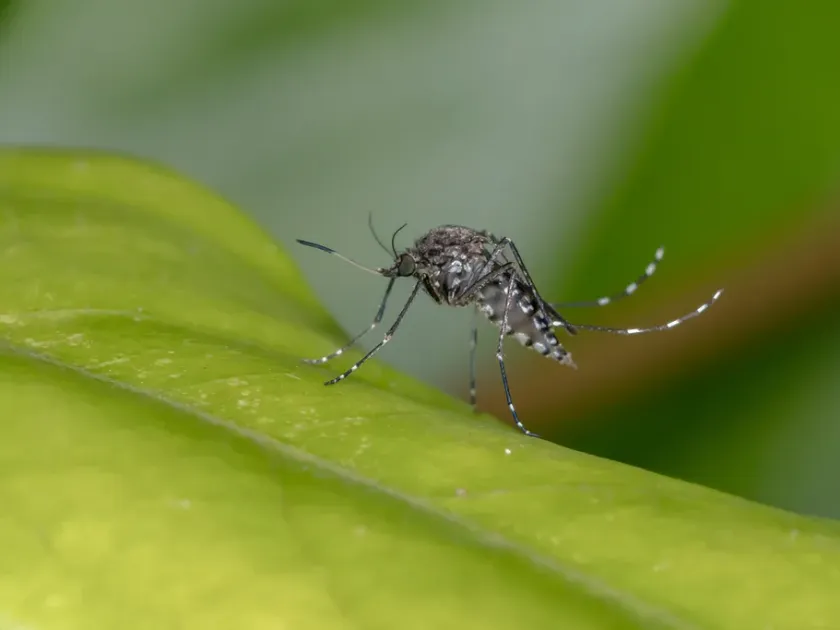
The saltmarsh mosquito (Aedes vigilax) belongs to the order Diptera and the family Culicidae. This insect is characterized by its dark brown appearance and distinct pale bands on its legs and abdomen.
Adult mosquitoes are highly mobile and capable of flying long distances from their breeding sites, which complicates local containment and management efforts.
Larval stages are uniquely adapted to brackish water environments, salt marshes, and tidal pools, which serve as the primary indicators for the presence of this species.
Visual identification of Aedes vigilax can be challenging due to its morphological similarities with other species in the Aedes genus, often requiring expert entomological examination.
The survival of larvae is closely linked to the salinity levels of their habitat, allowing them to occupy ecological niches that are unsuitable for many other mosquito species.
What it damages
Although the saltmarsh mosquito does not directly feed on crops, it exerts a significant negative impact on agricultural productivity by disturbing livestock and farm workers.
Intense biting causes severe distress to cattle, leading to significant drops in milk yield and reduced weight gain due to constant agitation and disruption of grazing patterns.
Animals affected by persistent swarms exhibit signs of anxiety, constant movement, and refusal to graze during peak activity hours, leading to overall herd health degradation.
The bites can result in skin irritation and secondary infections in livestock, increasing veterinary costs and demanding additional management inputs to maintain animal welfare.
Furthermore, human productivity in agricultural fields located near salt marshes is heavily impacted, as large swarms make outdoor work nearly impossible during peak hours.
When it appears
The activity period for Aedes vigilax typically spans from late spring through autumn, depending on environmental temperature and rainfall patterns.
Mass emergences are highly correlated with tidal cycles and rainfall events that flood brackish marshes and temporary depressions, providing optimal breeding conditions.
Adult mosquitoes are most active during dawn and dusk, seeking shelter in dense vegetation or shaded areas during the heat of the day to prevent desiccation.
The reproductive rate is strongly influenced by ambient temperatures, with warmer climates accelerating the lifecycle and allowing for multiple generations within a single season.
Monitoring the frequency of tidal floods and rainfall in coastal agricultural zones is essential for forecasting potential population surges of the saltmarsh mosquito.
Control measures
Controlling Aedes vigilax requires an integrated approach that combines environmental management and biological or chemical interventions to suppress local populations.
Habitat modification, such as improved drainage of marshy areas and salt flats, is the most sustainable long-term strategy for reducing breeding habitats.
Biological control using Bacillus thuringiensis israelensis is highly effective for treating standing water where mosquito larvae are present without harming the surrounding ecosystem.
Physical protection for livestock, including insect-proof shelters and the use of repellents, can mitigate the impact of adult mosquito attacks on herd productivity.
- Drainage of tidal pools and stagnant water
- Application of bio-larvicides in breeding grounds
- Installation of screening on animal housing
- Strategic timing of grazing to avoid peak activity
Taxonomy
- Latin name
- Aedes vigilax
- Order
- Diptera (flies)
- Family
- Culicidae
- EPPO code
- AEDSVG
Discussion
No discussions yet — be the first.