
Inland floodwater mosquito
Aedes vexans
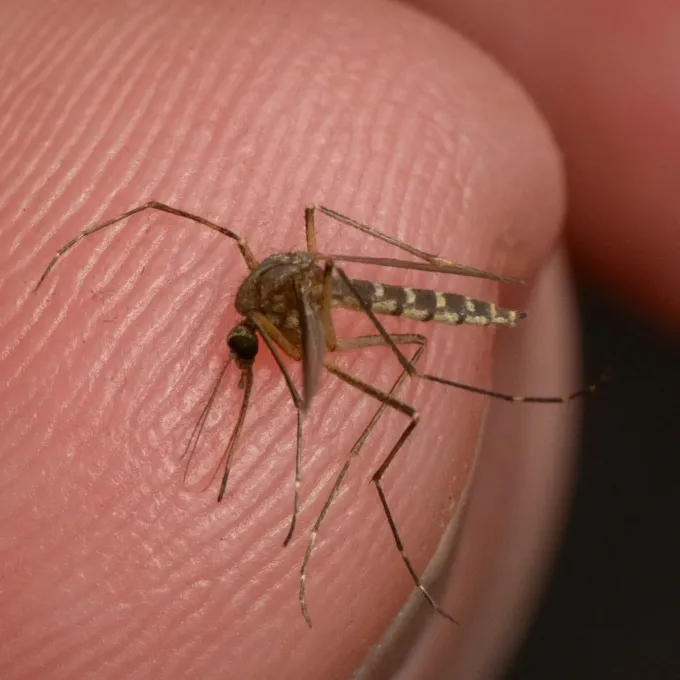
Description
How to identify
The Inland floodwater mosquito (Aedes vexans) is a significant species within the Culicidae family, known for its wide distribution and aggressive biting behavior.
Adults are easily recognized by their dark coloration, which is accented by distinctive white rings on the base of their tarsi and segments of the abdomen.
Their larvae prefer temporary aquatic habitats, such as flooded fields, irrigation ditches, and areas saturated by seasonal rainfall or spring thaws.
This species is highly mobile, capable of migrating long distances from their original breeding sites to attack hosts in surrounding agricultural areas.
The eggs have a remarkable ability to remain viable in the soil for several years, allowing them to wait for the exact moisture conditions needed for hatching.
What it damages
While Aedes vexans does not cause direct physical injury to crops, it serves as a major nuisance that severely impacts the efficiency of livestock production.
Continuous attacks on cattle and horses cause severe annoyance, leading to significant drops in milk yield and reduced weight gain in grazing animals.
They act as vectors for various diseases, posing a constant health risk to herds and requiring increased veterinary surveillance in affected regions.
The presence of large swarms during peak seasons forces farmers to limit outdoor operations, which can lead to delays in critical field management tasks.
Reduced productivity of workers due to heavy mosquito pressure contributes to indirect economic losses within the broader agricultural management framework.
When it appears
The seasonal emergence of this species is tightly linked to hydro-meteorological cycles, typically spanning from late spring through the early autumn months.
The initial generation follows the spring floods, where the rapid warming of stagnant water triggers the hatching of overwintered eggs in the soil.
Mid-summer rain events often lead to synchronized hatching pulses, causing sudden and intense population spikes that can overwhelm local control efforts.
Generational overlap is common, meaning multiple waves of adults emerge throughout the growing season, necessitating ongoing vigilance by pest managers.
As temperatures drop in late autumn, the active population declines, and the final generation deposits eggs into the dry soil to prepare for the following year.
Control measures
Integrated Pest Management (IPM) for this species focuses primarily on eliminating larval habitats through land improvement and water management.
Biological larvicides, particularly those containing Bacillus thuringiensis israelensis, are highly effective when applied to stagnant pools and drainage systems.
- Improving soil drainage to prevent stagnant water accumulation.
- Applying larvicides in identified breeding sites early in the season.
- Installing physical barriers and protective equipment for workers.
- Utilizing insecticidal treatments in and around livestock barns.
- Maintaining clear field edges to eliminate adult resting habitats.
Effective management requires a regional approach, as these mosquitoes are capable of flying several kilometers from their natal water sources.
Long-term success depends on consistent monitoring of rainfall and flood patterns to anticipate and preemptively treat emerging larval populations.
Taxonomy
- Latin name
- Aedes vexans
- Order
- Diptera (flies)
- Family
- Culicidae
- EPPO code
- AEDSVX
Discussion
No discussions yet — be the first.