
Trivittatus mosquito
Aedes trivittatus
Description
How to identify
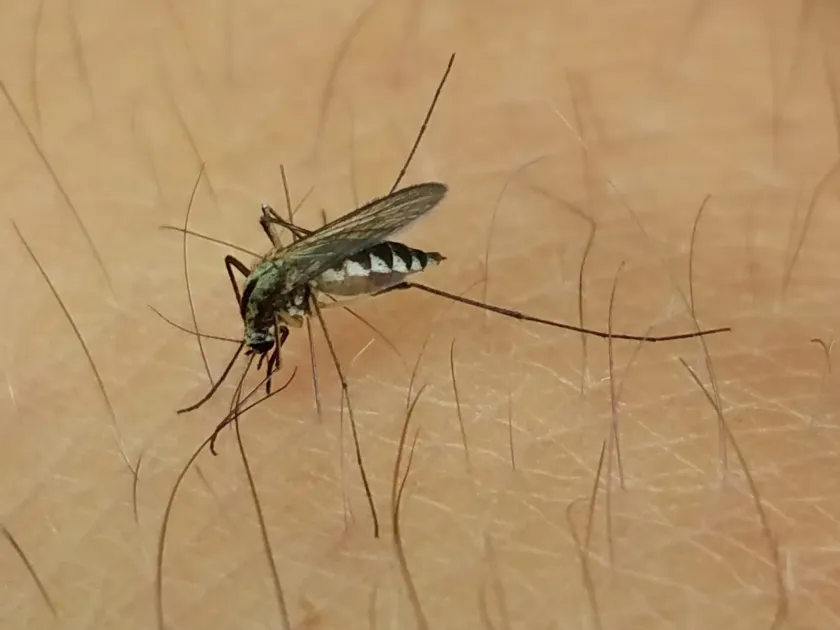
The trivittatus mosquito (Aedes trivittatus) is a member of the Diptera order and the Culicidae family. It is distinctively identified by three prominent light-colored longitudinal stripes running down the dorsal side of its thorax, which serve as its primary diagnostic feature.
Adult mosquitoes are dark in color, appearing brown or blackish. Their wings are transparent and covered in fine scales, while their legs display a characteristic banded pattern, allowing for accurate differentiation from other species within the Aedes genus.
Females are active blood-feeders, possessing specialized piercing-sucking mouthparts designed to feed on the blood of various mammals, including livestock. Males, conversely, do not feed on blood and subsist primarily on floral nectar and plant juices.
The species follows a complete metamorphosis life cycle: egg, larva, pupa, and adult. Their eggs are remarkably resistant to desiccation, allowing them to remain viable in soil or dry depressions for extended periods until suitable flooding occurs.
These mosquitoes are typically found in open fields, woodland edges, and moist lowland areas. Their activity is highly dependent on environmental conditions, particularly humidity and temperature, with peak biting periods occurring during dusk and cloudy days.
What it damages
While the trivittatus mosquito does not directly consume or damage crops, it is a significant pest in the livestock industry. It acts as an ectoparasite, causing major distress to cattle, horses, sheep, and other domesticated animals through aggressive biting.
Heavy infestations of these mosquitoes lead to intense irritation for livestock, causing animals to spend excessive energy swatting and moving to escape the pests. This reduces time spent grazing and directly impacts weight gain and milk production.
These mosquitoes serve as vectors for various transmissible diseases and parasites. They can transmit viruses and helminths that negatively affect the health of farm animals, leading to increased veterinary costs and potential loss of livestock productivity.
The constant stress and secondary health issues caused by mosquito bites force farmers to invest in preventative veterinary treatments, insecticides, and physical barriers, which adds to the overall operational costs of the agricultural business.
Larval development occurs in temporary pools of stagnant water. Poor field drainage or improper landscape management on a farm can create ideal breeding sites, effectively turning agricultural land into a source of infestation.
When it appears
The seasonal activity of Aedes trivittatus is closely linked to precipitation cycles. Population surges typically follow heavy rainfall events that flood lowland depressions where the eggs have been deposited in the soil.
Peak adult activity is generally observed during the summer months, specifically from June through August. If weather conditions remain favorable with intermittent rainfall, the species can produce multiple generations within a single season.
Adults are most active and aggressive during the early morning and evening hours. During these times, the ambient temperature and humidity levels are optimal for their flight activity and survival, as they are sensitive to dry, hot conditions.
Activity gradually declines as temperatures drop in autumn. However, in regions with warm late seasons, adult mosquitoes can remain active and continue to pose a threat to livestock until the arrival of the first sustained frost.
The species survives the winter stage as eggs. These eggs are well-adapted to survive freezing temperatures in the soil, ensuring that the population is ready to hatch and resume its life cycle as soon as spring weather patterns trigger the necessary flooding.
Signs of infestation
A primary indicator of a trivittatus mosquito infestation is a sudden change in animal behavior. Grazing animals will exhibit signs of severe agitation, including tail flicking, head tossing, and grouping together to reduce the surface area exposed to mosquitoes.
Visual observation of mosquito clusters near puddles, field drainage ditches, or muddy areas is a strong sign of a local breeding population. These mosquitoes often congregate in dense vegetation near temporary water sources during the day.
Examination of the animals may reveal localized skin irritation, inflammation, and allergic reactions at bite sites. In severe cases, the constant scratching and biting can lead to skin abrasions that are susceptible to secondary bacterial infections.
The presence of stagnant water pools that form after rain and persist for a few days in pastures is an immediate red flag that conditions are favorable for this species to thrive, even if adults are not immediately visible.
Monitoring using carbon dioxide-baited traps or light traps is an effective practice for farm managers to track population levels and determine the precise timing for implementing control measures before the infestation reaches damaging levels.
Control measures
Control of Aedes trivittatus focuses primarily on eliminating breeding sites. The most effective long-term strategy involves land management practices, such as improving drainage in low-lying areas and leveling pastures to prevent the accumulation of stagnant water.
Biological control agents, specifically those containing the bacteria Bacillus thuringiensis israelensis (Bti), can be applied to temporary water sources. These treatments effectively target and kill larvae without harming livestock, humans, or beneficial insects.
For livestock protection, the application of insecticidal and repellent products directly to the animals is recommended before they are released into high-risk pastures. Devices such as insecticide-impregnated ear tags are also highly effective.
Installing fine-mesh screening in barns and using indoor fumigation or fans in livestock housing can provide a necessary refuge for animals, allowing them to rest and eat without the constant pressure of biting mosquitoes.
Strategic grazing management, such as avoiding known low-lying, damp pastures during the peak evening hours of mosquito activity, can significantly reduce the impact of these pests and improve the overall welfare and productivity of the herd.
Taxonomy
- Latin name
- Aedes trivittatus
- Order
- Diptera (flies)
- Family
- Culicidae
- EPPO code
- AEDSTV
Discussion
No discussions yet — be the first.