
Eastern tree hole mosquito
Aedes triseriatus
Description
How to identify
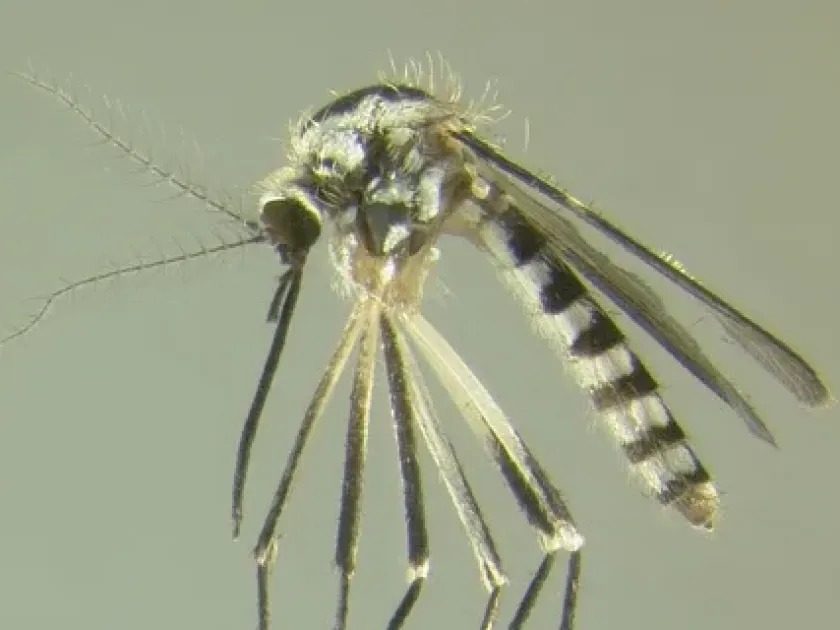
The Eastern tree hole mosquito, scientifically known as Aedes triseriatus, is a common member of the Culicidae family, well-known for its role as a disease vector.
Adults are small to medium-sized, characterized by distinct dark and white patterns on their legs and thorax, which help them blend into tree bark.
Unlike other mosquitoes that prefer open water, this species specifically utilizes water-filled tree holes or artificial containers as breeding sites.
The life cycle undergoes complete metamorphosis, consisting of egg, larva, pupa, and adult stages, with the entire cycle being water-dependent for the immature stages.
They are primarily identified by their preference for shaded, wooded environments and their specific breeding habits near human structures.
What it damages
While Aedes triseriatus does not feed on foliage or crops, it poses a severe nuisance that significantly impacts labor productivity in orchards and gardens.
They are known vectors for the La Crosse encephalitis virus and other pathogens, making the garden environment hazardous for agricultural workers and homeowners.
The intense biting behavior of the females disrupts gardening tasks and causes stress to livestock, potentially lowering milk or meat yields in some farming operations.
Larval development in irrigation containers or water barrels can lead to degraded water quality, which is counterproductive for clean horticultural practices.
Their presence essentially dictates management protocols, forcing owners to prioritize sanitary measures over other garden maintenance activities.
When it appears
The activity of the Eastern tree hole mosquito begins in late spring, coinciding with the arrival of warmer temperatures and higher humidity levels.
Population peaks typically occur in mid-summer, especially when rainfall creates an abundance of suitable water-holding sites for larval development.
The species is highly adaptive, with eggs capable of surviving winter dormancy in dry tree holes, ready to hatch when conditions become optimal.
Throughout the season, adults remain active during crepuscular hours, often hiding in cool, dense foliage during the heat of the day.
As autumn approaches and photoperiods shorten, the population gradually declines, and the insects transition into survival mode for the cold season.
Signs of infestation
Increased biting frequency during outdoor work is the most immediate sign that an Aedes triseriatus population is present in the immediate vicinity.
The presence of larvae in standing water, such as abandoned tires, birdbaths, or tree hollows, provides clear evidence of an active breeding ground.
Audible high-pitched buzzing near the ears is a characteristic behavior of females hunting for a blood meal during dusk hours.
Dense vegetation around the perimeter of a garden often harbors resting adult mosquitoes, which can be disturbed by walking through the area.
Frequent skin irritations and allergic reactions among workers are practical indicators that the population density has reached a problematic level.
Control measures
The most effective strategy is the elimination of standing water sources, commonly referred to as "source reduction" in mosquito control programs.
Regularly cleaning gutters, emptying discarded containers, and treating non-potable water with Bti (Bacillus thuringiensis israelensis) are standard control measures.
Landscaping adjustments, such as pruning dense shrubs and removing debris, help decrease the number of cool, shaded daytime resting spots for adults.
The use of personal protective equipment (PPE) and EPA-approved repellents is highly recommended to prevent pathogen transmission during field operations.
In cases of high infestation, perimeter spraying with appropriate insecticides can significantly suppress adult populations around sensitive garden zones.
Taxonomy
- Latin name
- Aedes triseriatus
- Order
- Diptera (flies)
- Family
- Culicidae
- EPPO code
- AEDSTS
Discussion
No discussions yet — be the first.