
Stimulating mosquito
Aedes stimulans
Description
How to identify
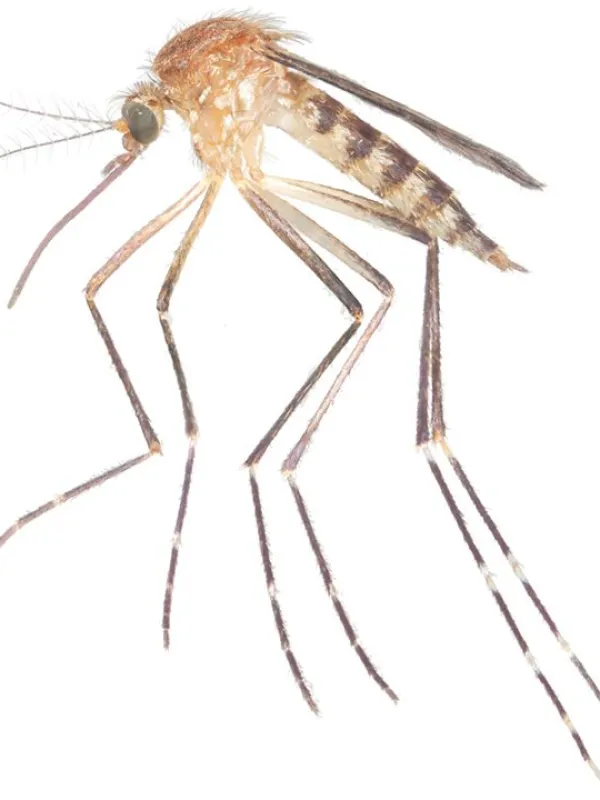
The stimulating mosquito (Aedes stimulans) belongs to the order Diptera and the family Culicidae, which includes some of the most aggressive biting pests.
Adult specimens are characterized by a specific arrangement of scales on their thorax and abdomen, which differentiates them from other mosquito species.
The larvae are exclusively aquatic and rely on a siphon located at the end of their abdomen to breathe atmospheric oxygen at the water's surface.
Pupae represent the stage of metamorphosis, where the organism does not feed but remains highly mobile, exhibiting quick flight-like movements if threatened.
Scientific identification typically involves examining the male genitalia and the scaling patterns on the wings and legs of the mature insect.
What it damages
While Aedes stimulans does not feed on vegetation, it acts as a significant economic pest for livestock production and agricultural labor efficiency.
High infestation levels cause severe stress in cattle, leading to significant drops in milk yield and reduced weight gain during the peak season.
The constant physical annoyance prevents animals from grazing properly, often forcing them to cluster together in an attempt to avoid bites.
Agricultural personnel operating in rural areas often experience a decline in productivity due to the constant presence of these aggressive insects.
Furthermore, these mosquitoes are known potential vectors for various pathogens, which poses a long-term risk to livestock health management.
When it appears
This species is univoltine, meaning it produces only one generation per year, strictly timed with the spring snowmelt and early summer warmth.
The life cycle begins with eggs deposited in moist soil depressions that are flooded by rising water levels during the spring season.
Larval development is highly temperature-dependent and occurs rapidly as ambient and water temperatures increase in late spring.
Adult emergence typically happens over a concentrated period, allowing the population to reach massive numbers within a very short timeframe.
The adult lifespan is relatively short, usually lasting a few weeks, which is the time required for females to seek a host and lay eggs.
Signs of infestation
The presence of mosquito larvae in temporary meltwater pools is a clear early indicator of an impending emergence of this species.
A noticeable increase in buzzing activity and biting incidents near pastures and forest edges confirms the arrival of the adult stage.
Animal distress, characterized by tail flicking, stomping, and the avoidance of certain grazing areas, signals high local infestation.
Large numbers of flying adults in the vicinity of livestock buildings during the twilight hours indicate significant breeding success.
Frequent bites on workers in the field are a reliable field sign that the mosquito population has reached its peak density.
Control measures
Effective management focuses on environmental modification, particularly the drainage of stagnant water bodies that serve as breeding grounds.
Biological control agents, specifically those targeting mosquito larvae, are the preferred method for managing populations without damaging water quality.
Livestock protection requires the use of specialized topical repellents and insecticides applied to the animals to minimize the stress caused by bites.
Strategic management of vegetation around facilities can reduce resting sites for adult mosquitoes, thus lowering the local nuisance.
- Drainage of stagnant water
- Biological larval treatment
- Application of animal repellents
- Physical barriers in stables
Taxonomy
- Latin name
- Aedes stimulans
- Order
- Diptera (flies)
- Family
- Culicidae
- EPPO code
- AEDSSM
Discussion
No discussions yet — be the first.