
Coastal Saltmarsh Mosquito
Aedes squamiger
Description
How to identify
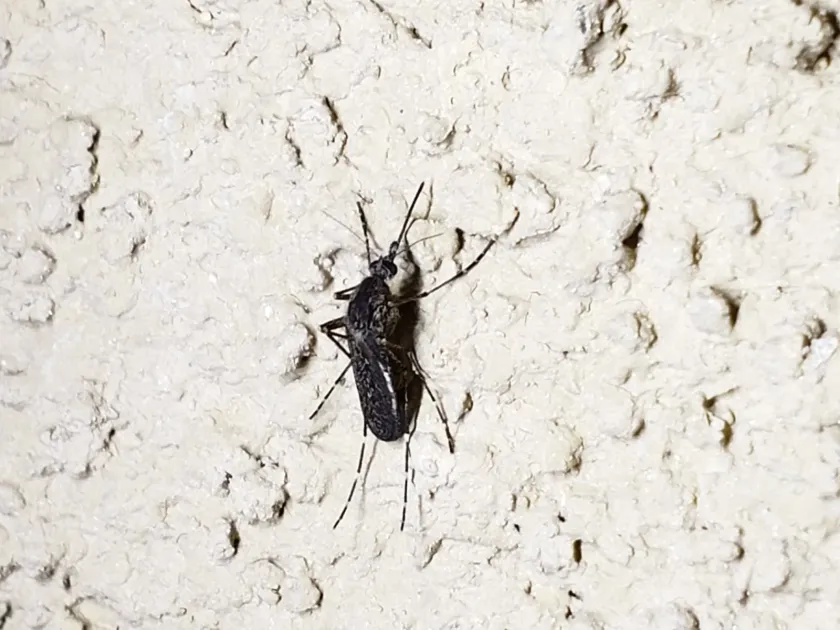
The coastal saltmarsh mosquito, Aedes squamiger, is a member of the Culicidae family within the Diptera order. It is identified by its scaly wing pattern and a coloration that provides excellent camouflage within the vegetation of coastal salt marshes and brackish water environments.
Its life cycle is closely tied to tidal and storm-induced flooding. Females deposit their eggs on damp soil in areas that are subject to intermittent inundation. These eggs exhibit high tolerance to desiccation, allowing them to remain dormant for long periods until favorable flooding occurs.
Larvae thrive in brackish or freshwater pools where they feed on microorganisms and organic detritus. The speed of their larval development is heavily influenced by water temperature and the presence of abundant nutrient sources in their breeding habitats.
Adults are known for their strong flight capabilities, enabling them to disperse over significant distances from their birth sites to seek blood meals. This high mobility makes them a persistent threat to agricultural activities located near coastal regions.
Adult mosquitoes are highly aggressive, with females actively seeking blood meals from livestock and humans. This behavior is most pronounced during daylight hours and at dusk, significantly impacting the working environment in agricultural zones.
What it damages
While Aedes squamiger does not feed on crops directly, it causes significant indirect damage to the agricultural sector. The most severe economic losses occur in livestock farming, where persistent mosquito attacks lead to extreme stress and reduced animal health.
Animals continuously harassed by swarms of mosquitoes experience decreased grazing time and increased energy expenditure to fend off the pests. This results in significant losses in milk yield and weight gain, impacting the farm's overall profitability.
These mosquitoes are also recognized as potential vectors for various diseases affecting livestock. The transmission of pathogens via bites necessitates increased veterinary oversight and expenses to maintain the health and safety of the herd.
The high density of mosquitoes in fields and grazing areas creates hazardous working conditions for farm laborers. During peak activity, manual tasks become difficult to execute, often requiring the use of protective gear and altering standard operating procedures.
Ultimately, the presence of the coastal saltmarsh mosquito forces farmers to incur additional costs for pest control and protective measures, thereby reducing the net income of agricultural enterprises located in affected territories.
When it appears
The seasonal activity of the coastal saltmarsh mosquito is primarily governed by precipitation patterns and tidal cycles. Peak populations are typically observed in spring and early summer when seasonal floods create the ideal conditions for mass larval hatching.
Temperature serves as a key accelerator for the mosquito's life cycle. Warmer water temperatures shorten the time required for larval development, leading to rapid and large-scale adult emergence shortly after a flooding event occurs.
As conditions become drier or cooler, the population levels typically taper off. However, in regions with frequent rain or unpredictable water levels, multiple generations can occur throughout the warmer months, causing sustained pest pressure.
Agronomists and farm managers monitor water levels in drainage ditches and low-lying coastal areas to predict mosquito emergence. This allows for early intervention before the insects reach the adult stage, when they become much harder to control.
Understanding these seasonal dynamics is critical for planning effective pest management. By aligning field operations with mosquito cycles, agricultural managers can minimize exposure and optimize the use of control products.
Control measures
Management of the coastal saltmarsh mosquito focuses on Integrated Pest Management (IPM) strategies, with a primary emphasis on controlling the larval stages. The use of biological larvicides, particularly Bacillus thuringiensis israelensis, is highly effective and environmentally selective.
Agricultural modifications such as ditch maintenance, improved soil drainage, and the removal of stagnant water help eliminate breeding grounds. Managing vegetation around pastures and barns also reduces the shelter available to adult mosquitoes, making the area less attractive to them.
Chemical control should be reserved for periods of high population density and applied with careful consideration of environmental impacts. It is essential to protect non-target organisms and water quality during any insecticide application.
Livestock protection measures include the application of veterinarian-approved repellents, the installation of insect screens in stables, and the use of physical barriers. Maintaining animal health through consistent care helps mitigate the stress caused by mosquito infestations.
- Monitor irrigation and drainage systems for standing water.
- Apply biological larvicides to breeding habitats.
- Clear weeds and dense vegetation near grazing zones.
- Use appropriate insect repellents on livestock.
Taxonomy
- Latin name
- Aedes squamiger
- Order
- Diptera (flies)
- Family
- Culicidae
- EPPO code
- AEDSSQ
Discussion
No discussions yet — be the first.