
Western treehole mosquito
Aedes sierrensis
Description
How to identify
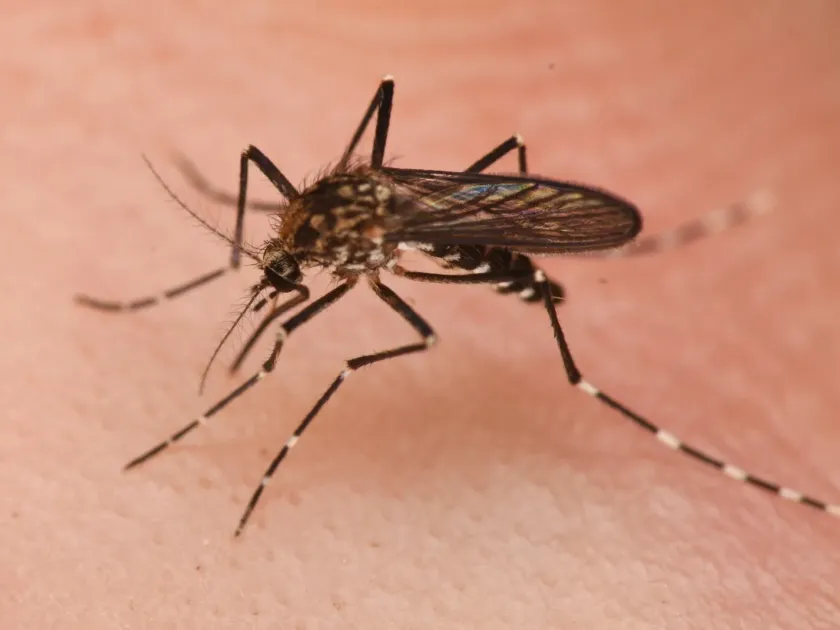
The Western treehole mosquito (Aedes sierrensis) belongs to the order Diptera and the family Culicidae. It is a specialized species that primarily utilizes tree holes as its larval habitat.
The adults are small, dark-colored mosquitoes. They are known for being persistent biters, often found in wooded areas, forests, and landscaped residential gardens containing old trees.
Their biological success is linked to their ability to utilize small amounts of stagnant water collected in tree hollows, which provide a protected environment for larval development.
The larvae possess a unique breathing apparatus that allows them to thrive in the confined, often nutrient-rich environment of decaying wood and water within trees.
Unlike other mosquitoes that prefer larger ponds, this species has evolved specifically to exploit the isolated micro-habitats found in tree trunks and cavities.
What it damages
This mosquito is not a traditional agricultural pest that damages plants directly, but it acts as a significant operational hazard for farmers and forest workers.
High populations of Aedes sierrensis can render outdoor areas unusable, preventing essential agricultural labor, pruning, and harvesting activities during peak hours.
They are known vectors for diseases such as canine heartworm (Dirofilaria immitis), posing a direct health risk to working dogs and other domestic livestock.
Their presence forces farm owners to invest in personal protective equipment or alter work schedules, leading to decreased efficiency and increased operational costs.
In suburban orchards, their aggressive behavior during the day can cause discomfort, reducing the overall quality of land management and routine care of the crops.
When it appears
The activity of the Western treehole mosquito is strictly determined by rainfall patterns, as they rely on water accumulation in tree hollows for their life cycle.
The peak season usually spans from spring through early summer, coinciding with the period of frequent rain and optimal temperatures for larvae to mature.
The development time from egg to adult is highly temperature-dependent, with warmer weather accelerating the emergence of new adult generations.
Dry summer conditions can suppress their breeding cycle by drying out tree hollows, though eggs can withstand short periods of desiccation, awaiting the next rain.
As temperatures drop in late autumn, the adult population declines, though some activity may persist in milder climates until freezing temperatures occur.
Signs of infestation
The primary sign of infestation is an abundance of mosquitoes in the immediate vicinity of mature trees that have visible holes or deep rot cavities.
Observing adult mosquitoes resting in shaded, humid spots on tree bark during the day is a clear indication that a breeding site is located nearby.
Inspecting the water found in tree cavities after rainfall may reveal the presence of larvae, which is definitive proof of this species' active reproduction.
Persistent biting by mosquitoes during daylight hours, especially in wooded or densely planted areas, strongly suggests a local population of Aedes sierrensis.
A sudden increase in mosquitoes in an area where there are no ponds or standing water on the ground points toward tree-based breeding sources.
Control measures
The most effective long-term strategy is the physical elimination of breeding sites by filling tree holes with mortar or expanding foam to prevent water collection.
Applying biological larvicides, such as those containing Bacillus thuringiensis israelensis, directly into tree holes is a highly targeted and environmentally safe control method.
Sanitation practices should include removing dead or decaying trees that provide large, water-holding cavities, thereby reducing the localized mosquito population.
Using personal repellents and wearing protective clothing is essential for personnel safety while working in infested zones during the peak season.
- Filling tree cavities with inert materials to stop water collection.
- Using Bti-based biological agents for larval control.
- Pruning and removing senescent trees prone to holding water.
Taxonomy
- Latin name
- Aedes sierrensis
- Order
- Diptera (flies)
- Family
- Culicidae
- EPPO code
- AEDSSI
Discussion
No discussions yet — be the first.