
Woodland mosquito
Aedes punctor
Description
How to identify
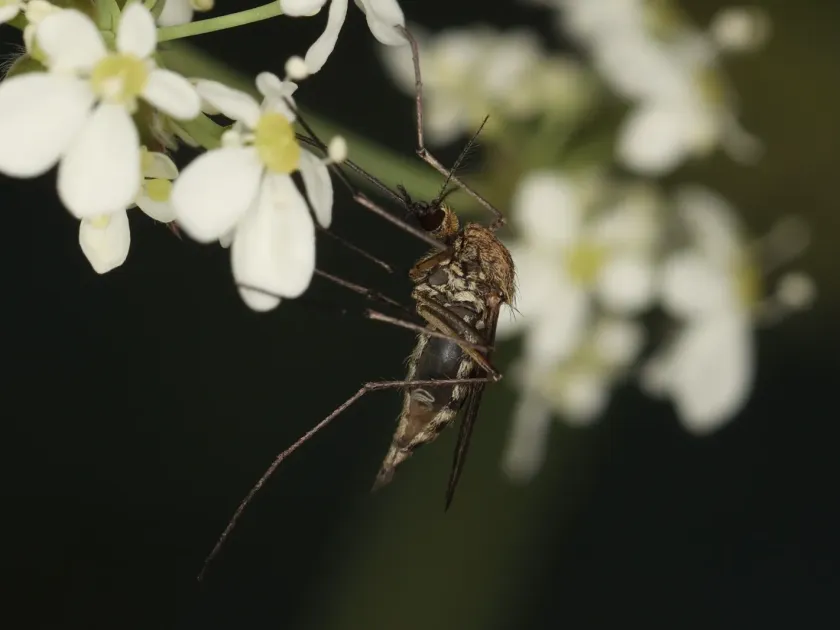
The woodland mosquito (Aedes punctor) is a prominent member of the Culicidae family within the order Diptera, known for its persistent biting behavior in rural areas.
Adult females are recognized by their dark scaling and specific thoracic patterns, which are distinguishing features used for scientific identification.
The life cycle begins in temporary spring pools, forest depressions, or boggy terrains where the larvae develop during the warmer months of early spring.
While the females are notorious for their aggressive blood-feeding habits, males rely primarily on plant nectar and do not pose a threat to livestock or humans.
Detailed taxonomic identification typically involves examining the wing venation and hair-like structures (setae) on the mosquito's thorax under magnification.
What it damages
While not a direct crop pest, Aedes punctor creates significant economic pressure on livestock farming by interfering with animal health and management.
High densities of these mosquitoes induce extreme stress in cattle and sheep, leading to reduced grazing time and consequently lower productivity and weight gain.
Milk yield in dairy farms can drop significantly during peak mosquito seasons due to the constant irritation and discomfort experienced by the animals.
The presence of large swarms hinders human operations on the farm, making manual labor outdoors difficult and reducing the overall efficiency of agricultural tasks.
Additionally, they can act as vectors for various pathogens that threaten the health of livestock, potentially leading to costly veterinary interventions.
When it appears
The seasonality of Aedes punctor is heavily influenced by spring temperatures and the availability of snowmelt or rainwater in potential breeding sites.
Adult emergence typically begins in early spring, following the warming of seasonal water bodies where eggs have remained dormant through the winter.
Peak population levels are generally observed throughout May and June, coinciding with the prime season for early agricultural activities and livestock turnout.
Population density fluctuations are highly correlated with rainfall patterns, as dry summers significantly limit the survival of larvae in temporary breeding sites.
Activity diminishes as temperatures drop in late summer and early autumn, at which point the insect shifts its life cycle back to the egg stage for overwintering.
Control measures
Managing Aedes punctor requires an integrated pest management (IPM) approach that focuses on habitat modification and chemical or biological intervention.
Draining or filling small temporary depressions and ditches on agricultural land is the most sustainable way to eliminate larval habitats.
Targeted use of biological larvicides, such as those containing Bacillus thuringiensis israelensis, is highly effective for water bodies where drainage is not feasible.
Providing physical barriers like mesh screens in livestock housing can significantly reduce the impact of mosquito swarms on animal welfare.
- Elimination of standing water near livestock.
- Application of bio-larvicides in breeding sites.
- Use of livestock repellents and protective housing.
- Monitoring population peaks for timely intervention.
Taxonomy
- Latin name
- Aedes punctor
- Order
- Diptera (flies)
- Family
- Culicidae
- EPPO code
- AEDSPU
Discussion
No discussions yet — be the first.