
Dark-legged mosquito
Aedes nigromaculis
Description
How to identify
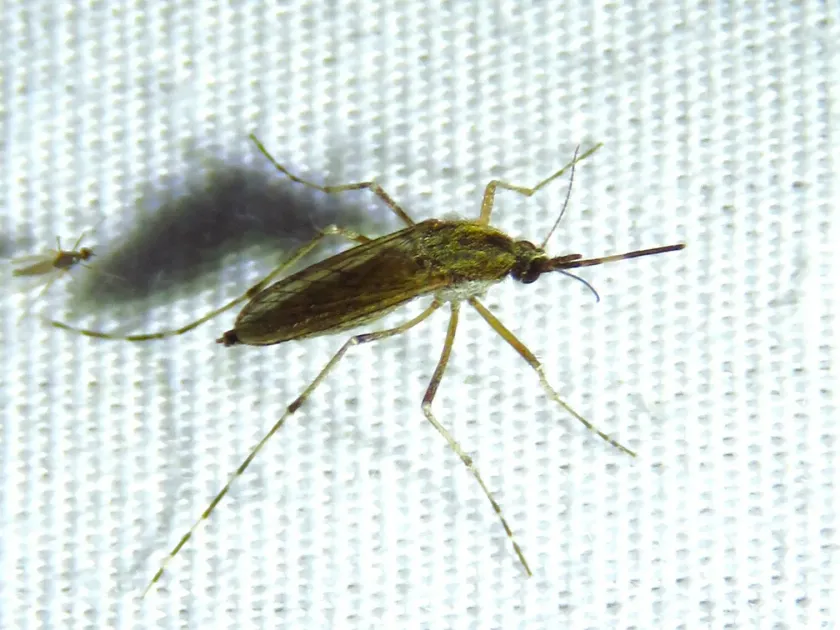
The Dark-legged mosquito (Aedes nigromaculis) is a species of mosquito known for its aggressive biting behavior. It belongs to the Culicidae family and is widely recognized by its dark-colored legs and specific abdominal markings.
Adult females are persistent blood-feeders that search for hosts over long distances. Their physical structure is optimized for flight and rapid identification of warm-blooded animals using complex sensory receptors.
The life cycle begins when eggs are laid in moist soil in areas prone to periodic flooding. These eggs can remain dormant for extended periods, waiting for the necessary moisture to trigger hatching.
Field identification involves examining the morphological features of the adult insect, specifically the pattern of scales on the thorax and the coloration of the legs, which distinguishes it from related species.
Due to their mobility, these mosquitoes are often found in agricultural areas with extensive irrigation systems, where temporary pools of water provide optimal conditions for larval development.
What it damages
The primary economic damage caused by this species is directed at the livestock industry. Massive mosquito swarms cause significant distress to cattle, sheep, and other farm animals throughout the grazing season.
Frequent biting leads to reduced feeding times, as animals are forced to spend energy warding off insects. This results in weight loss, lower milk production, and an overall decrease in animal health.
Besides physical injury, Aedes nigromaculis serves as a vector for various viral diseases, such as West Nile virus. Disease transmission can lead to high morbidity rates among livestock populations.
The presence of high densities of these insects forces farmers to relocate herds to less optimal pastures, which may cause long-term soil degradation and reduced forage quality due to overgrazing.
Management of the associated veterinary costs and the necessity of implementing protection strategies represent a constant financial burden for modern livestock farms in infested regions.
When it appears
The seasonal occurrence of the Dark-legged mosquito is highly correlated with rainfall patterns and irrigation cycles. As temperatures rise in late spring and summer, the mosquito population explodes.
Development from the egg stage to an adult can occur in as little as seven to ten days under warm, humid conditions. This rapid turnover leads to multiple generations per season if irrigation remains constant.
Activity levels are highest during dusk and dawn, which are the primary hunting hours for these mosquitoes. During the heat of the day, they usually rest in shaded vegetation near the ground.
As the season progresses toward autumn and temperatures drop, the frequency of new egg hatches decreases. However, the eggs produced during the peak season are highly resistant to winter cold.
Monitoring the moisture levels in soil and nearby water bodies allows agronomists to predict potential outbreaks and prepare control interventions before the population reaches an uncontrollable level.
Control measures
Effective management focuses on source reduction. Draining standing water in fields and improving irrigation efficiency are the most critical steps in preventing larval development and population growth.
Biological control agents, such as formulations containing Bacillus thuringiensis israelensis (Bti), are highly effective at targeting larvae in water while maintaining the safety of the local ecosystem.
Livestock protection measures include the use of insecticidal ear tags, pour-on treatments, and providing physical barriers or shelters that allow animals to escape during peak mosquito activity hours.
- Improvement of field drainage systems.
- Elimination of stagnant water pools.
- Application of targeted biological larvicides.
- Use of veterinary insect repellents for herds.
Integrated pest management (IPM) strategies, combining habitat modification and animal protection, are essential for mitigating the negative impact of the Dark-legged mosquito on agricultural operations.
Taxonomy
- Latin name
- Aedes nigromaculis
- Order
- Diptera (flies)
- Family
- Culicidae
- EPPO code
- AEDSNM
Discussion
No discussions yet — be the first.