
Yellow mosquito
Aedes fulvus
Description
How to identify
The yellow mosquito, Aedes fulvus, is a species of blood-feeding insect belonging to the Culicidae family within the order Diptera.
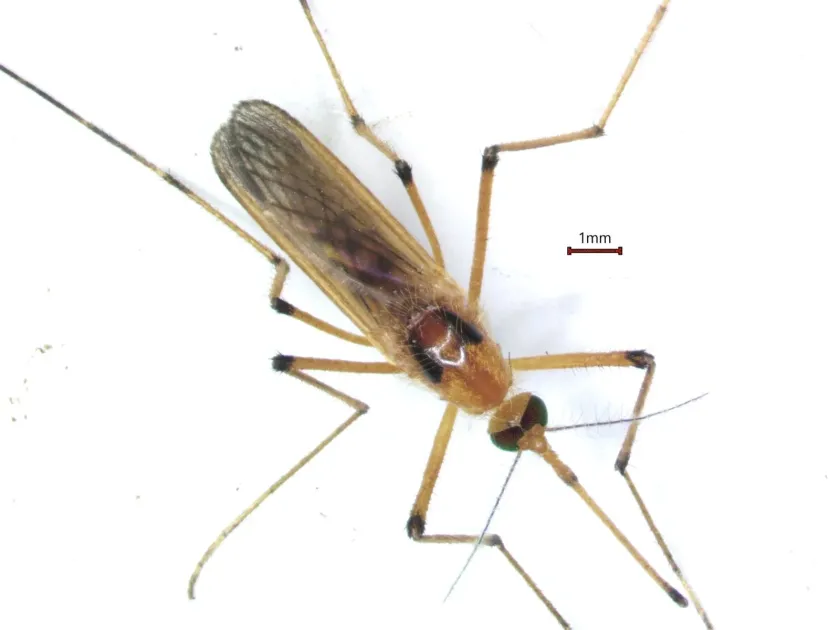
It is easily distinguished from other species in the Aedes genus by its distinctive yellow to orange-golden body coloration.
The species undergoes a complete metamorphosis, including egg, larval, pupal, and adult stages, which is typical for all mosquitoes.
Adult females are characterized by specialized mouthparts designed for piercing skin and consuming blood from various mammalian hosts.
Their life cycle depends heavily on aquatic environments, where larvae develop by consuming organic matter and microorganisms found in small stagnant pools.
What it damages
Aedes fulvus does not cause direct physical damage to plants, as it is not a phytophagous pest feeding on crops or vegetation.
However, the species is considered a nuisance to agricultural operations due to its aggressive biting behavior towards livestock and humans.
Constant biting induces significant stress in grazing animals, which directly leads to decreased milk yield and lower weight gain in cattle.
The presence of high mosquito populations often hinders the efficiency of field labor, forcing workers to limit time spent in infested areas.
Furthermore, these mosquitoes are recognized as potential vectors for various pathogens that can cause diseases in domestic animals.
When it appears
The activity of Aedes fulvus is strictly regulated by environmental factors such as temperature, humidity, and precipitation levels.
The population typically peaks during the warm months, especially following heavy rainfall events that create temporary breeding habitats.
Developmental rates of larvae are temperature-dependent, with warmer climates accelerating the transition to the adult stage.
The adult mosquitoes are most active during twilight hours, although they may also exhibit feeding behavior during the day in shaded, humid environments.
Prolonged dry spells result in a significant decline in the mosquito population, as the lack of stagnant water prevents the survival of eggs and larvae.
Control measures
Management of Aedes fulvus in agricultural settings focuses on habitat reduction and the protection of livestock and workers.
Land improvement practices, such as draining stagnant pools and leveling low-lying fields, are highly effective in eliminating breeding grounds.
Biolarvicides, specifically those containing Bacillus thuringiensis israelensis, are recommended for targeted control of larvae in standing water.
Vegetation management around farms, including regular mowing of weeds and brush, reduces the availability of daytime resting sites for adult mosquitoes.
The application of approved insect repellents and the use of physical barriers remain essential strategies for protecting personnel in heavily infested fields.
Taxonomy
- Latin name
- Aedes fulvus
- Order
- Diptera (flies)
- Family
- Culicidae
- EPPO code
- AEDSFU
Discussion
No discussions yet — be the first.