
Fitch's mosquito
Aedes fitchii
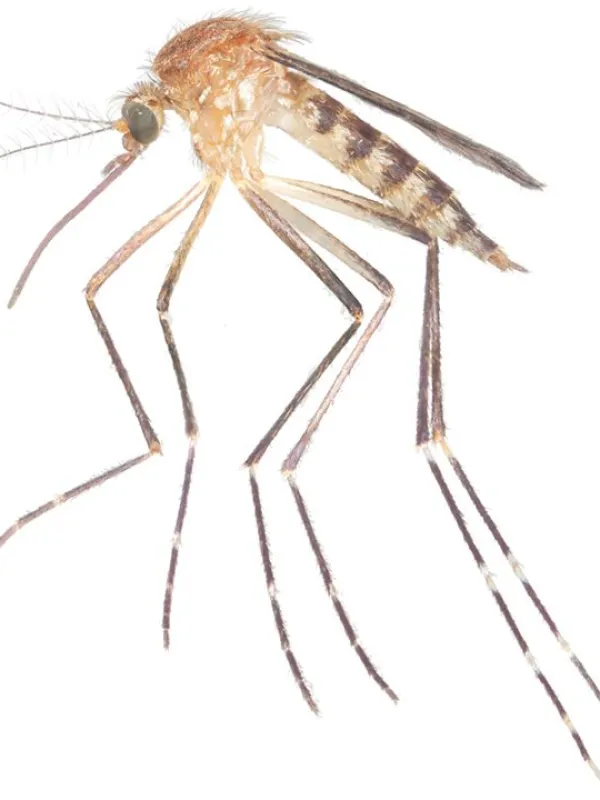
Description
How to identify
Fitch's mosquito (Aedes fitchii) is a species of mosquito in the family Culicidae, well-known for its role as a nuisance pest in temperate regions of North America.
The adult mosquito features a distinct coloration pattern, with light-colored stripes on the thorax and banded legs that help in camouflaging within the undergrowth.
These insects undergo a complete metamorphosis, moving through the stages of egg, larva, pupa, and adult, with each stage requiring specific environmental conditions.
While the males feed on nectar and plant juices, the females are specialized hematophages that require a blood meal to provide the necessary proteins for egg development.
This species is morphologically similar to other Aedes mosquitoes, often requiring professional microscopic examination to differentiate it from closely related woodland species.
What it damages
Although Aedes fitchii does not consume agricultural crops directly, it causes indirect economic damage through its aggressive hematophagous behavior towards livestock and humans.
Animals subjected to persistent mosquito attacks often experience increased stress levels, which negatively impacts their weight gain, milk production, and overall health.
Farmers and field workers facing heavy infestation deal with increased health risks and decreased work efficiency, as the presence of high densities of mosquitoes makes manual labor difficult.
Mosquitoes can act as vectors for various pathogens, potentially increasing the burden of veterinary care needed to maintain the health of farm animal populations.
The overall quality of life and land utility is diminished in infested areas, necessitating significant expenditures on protection and pest management strategies.
When it appears
The lifecycle of Aedes fitchii is strictly seasonal, being highly dependent on the emergence of temporary water bodies resulting from spring snowmelt and rains.
Larval development typically peaks during the mid-to-late spring, with the timing being dictated by water temperature and the duration of pool stability.
Adults emerge as the water starts to dry up, usually appearing in late spring and early summer, which coincides with the busiest agricultural season for many growers.
This species is univoltine, meaning it produces only one generation per year, with the eggs surviving the winter in a state of dormancy on the soil surface.
Once the local seasonal pools have dried up, the activity of the adult population begins to decline, effectively ending their primary impact until the following spring.
Signs of infestation
The most prominent sign of an infestation is the sudden and overwhelming appearance of flying insects in wooded areas, field margins, and wetlands during dawn and dusk.
Visible presence of mosquito larvae in temporary puddles, forest pools, or poorly drained low-lying agricultural fields indicates active breeding sites.
Unusual agitation and defensive behavior in livestock, such as tail flicking, stomping, and attempts to move to higher or windier areas, point to significant mosquito pressure.
High-pitched buzzing sounds near human skin and the development of itchy, swollen wheals after outdoor work are clear symptoms of active feeding by female mosquitoes.
Sampling water from suspected breeding sites during the early spring allows for the confirmation of larvae presence long before the adults emerge and begin their harassment.
Control measures
Effective management focuses on eliminating breeding habitats, which is the most sustainable approach to reducing the mosquito population on any farm or property.
Engineered solutions such as improving soil drainage, filling in depressions, and eliminating standing water sources are the primary long-term defense strategies.
Biological control agents, particularly Bti (Bacillus thuringiensis israelensis), are highly effective at targeting larvae in water without harming crops or livestock.
Physical barriers like window screens and proper barn ventilation help protect livestock and workers from the immediate annoyance of flying mosquitoes.
- Implement a water management plan for fields.
- Use professional mosquito fogging in infested zones.
- Provide personal protection for farm workers.
- Monitor low-lying areas for seasonal pooling.
Taxonomy
- Latin name
- Aedes fitchii
- Order
- Diptera (flies)
- Family
- Culicidae
- EPPO code
- AEDSFI
Discussion
No discussions yet — be the first.