
Caspian mosquito
Aedes caspius
Description
How to identify
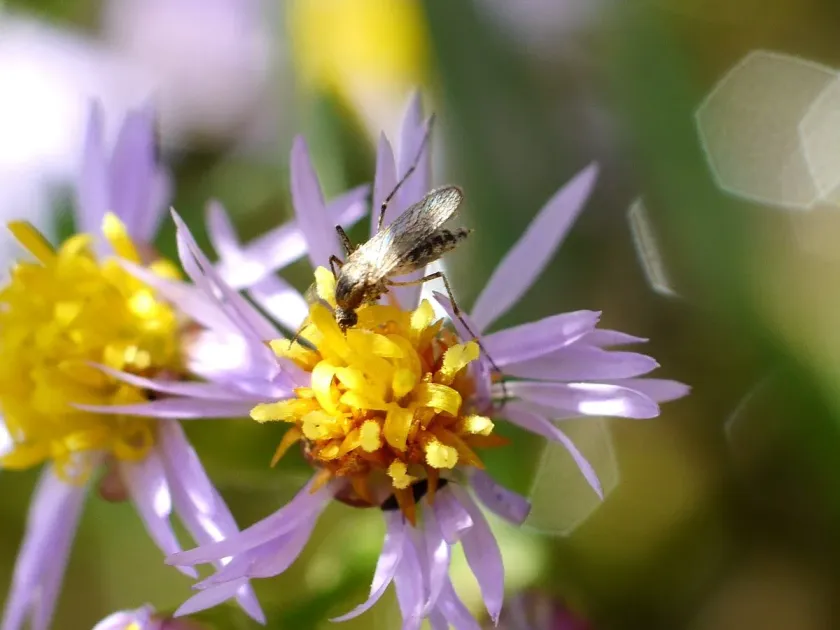
The Caspian mosquito (Aedes caspius) is a blood-sucking insect belonging to the family Culicidae and the order Diptera. The adult has a grayish-yellow color with a distinctive pattern on the back and light scales on the legs.
Females of this species are highly aggressive and capable of long-distance flights from breeding sites to feeding areas. The adult size ranges from 5 to 7 millimeters, making them one of the larger mosquito species in the region.
Larvae develop in a variety of water bodies, including temporary, brackish, and estuarine pools. They are aquatic, feeding on microorganisms and organic matter accumulated in the water column.
The life cycle includes four stages: egg, larva, pupa, and adult. Unlike many other species, the eggs of this mosquito can withstand long periods of desiccation, allowing the population to survive drought.
Species identification in the field is performed by entomologists based on the morphology of the male hypopygium and the specific scale patterns on the wings of the females.
What it damages
Although this object is not a direct pest of agricultural crops, it causes significant indirect economic losses to the agricultural sector through its impact on animal husbandry.
The primary damage is the intense irritation caused to livestock, such as cattle, sheep, and horses. Mass attacks by mosquitoes reduce daily weight gains and milk yields significantly.
Animals subjected to constant attacks experience severe stress, which leads to a weakened immune system, making them more susceptible to various infectious diseases.
In regions with high mosquito populations, field operations during morning and evening hours become difficult due to the constant annoyance of the pests, affecting both labor and machinery use.
The Caspian mosquito acts as a vector for several viral and parasitic diseases, requiring expensive veterinary measures to protect the herd.
When it appears
The activity season starts in early spring, as soon as water bodies warm up, and continues until late autumn, depending on regional climatic conditions.
Mass emergence of adults is most frequently observed following heavy rainfall, which provides the necessary conditions for flooding egg-laying sites.
Throughout the season, the species can produce multiple generations, the number of which depends on the local hydrological regime and average daily temperatures.
The peak activity of blood-suckers occurs during twilight hours, but they remain active throughout the day in cloudy weather or shaded, sheltered areas.
Overwintering occurs at the egg stage, as the eggs maintain their viability in the topsoil layer until the next breeding season arrives.
Signs of infestation
A key indicator of a high population on the farm is the restless behavior of livestock: constant tail switching, running across pastures, and attempts to hide in water or thick vegetation.
Signs of redness, swelling, and scratch marks are visible on the skin of animals, which can lead to secondary infections if left untreated.
Inside livestock buildings, adults are often found resting on ceilings, walls, and dark corners, especially during the hottest parts of the day.
When inspecting water bodies on the farm, larvae can be visually detected as they quickly dive to the bottom upon detecting movement in the water.
Declining productivity in livestock despite a good feed supply is an indirect but reliable sign of a large blood-sucking insect population in the pasture areas.
Control measures
Effective protection includes draining temporary pools, ditches, and stagnant water bodies where mosquito larvae develop, which is the most important preventive measure.
For livestock protection, topical insecticide treatments using veterinary-approved products with repellent properties are highly recommended.
Around livestock facilities, the use of traps, fumigators, and light-based pest control devices can significantly reduce the adult mosquito population in confined spaces.
Biological control methods involve the application of Bacillus thuringiensis-based products into water bodies, which target larvae without harming the wider ecosystem.
Regular disinfection of farm premises, pastures, and livestock housing areas using certified chemical agents is a critical component of a comprehensive farm pest management strategy.
Taxonomy
- Latin name
- Aedes caspius
- Order
- Diptera (flies)
- Family
- Culicidae
- EPPO code
- AEDSCS
Discussion
No discussions yet — be the first.