
Woodland mosquito
Aedes canadensis
Description
How to identify
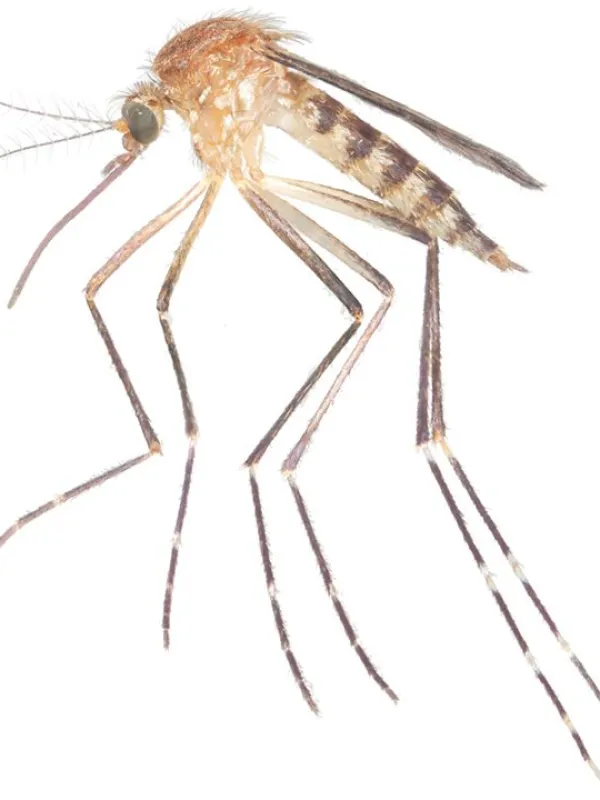
The woodland mosquito (Aedes canadensis) is a member of the Culicidae family within the order Diptera. It is easily identified by the distinctive pale-colored scales found on its tarsi, which differentiate it from other common mosquito species.
Adult females are specialized blood-feeders, actively seeking hosts during the spring and early summer seasons. They thrive in forested areas and are known for being particularly aggressive biters during daylight hours.
The lifecycle consists of four distinct stages: egg, larva, pupa, and adult. Eggs are typically laid in moist soil or leaf litter, possessing a high degree of cold-hardiness that allows them to overwinter successfully.
Larvae develop exclusively in temporary pools created by snowmelt or spring rains. Their developmental rate is highly sensitive to water temperature, accelerating as the season warms.
The emergence of the adult population usually follows the flooding of these woodland depressions, leading to high densities that persist until the mid-summer drying phase.
What it damages
While Aedes canadensis is not a plant-feeding pest, it represents a significant economic burden in agricultural settings due to the disruption of essential farm labor and operations.
Farm workers are frequently deterred by high mosquito activity, which limits the hours available for crop maintenance, harvesting, and routine machinery checks in outdoor fields.
In livestock production, high populations of this mosquito cause constant irritation to animals, which can lead to reduced weight gain and decreased productivity in both cattle and smaller livestock.
The need for large-scale insecticide application to manage these populations can negatively impact non-target insects, including vital pollinators essential for successful crop yields.
Effective pest management is required to maintain a sustainable work environment and ensure the comfort of personnel working in orchard and field environments.
Control measures
Management of Aedes canadensis primarily focuses on source reduction through the drainage of temporary woodland pools and wet depressions where larvae concentrate in early spring.
Biological control agents, such as Bacillus thuringiensis israelensis (Bti), provide an environmentally sound method for treating breeding sites without harming other aquatic invertebrates.
Cultural practices, including clearing thick brush and mowing tall grass around farm infrastructure, reduce the resting habitats for adult mosquitoes, thereby decreasing the pressure on workers.
Integrated Pest Management (IPM) strategies suggest using personal protective equipment and site-specific barriers to minimize human exposure during peak activity windows.
- Drainage of temporary water pools and ditches.
- Use of microbial larvicides in breeding waters.
- Vegetation management to reduce adult resting sites.
- Installation of exclusion netting for livestock shelters.
Taxonomy
- Latin name
- Aedes canadensis
- Order
- Diptera (flies)
- Family
- Culicidae
- EPPO code
- AEDSCA
Discussion
No discussions yet — be the first.