
Australian mosquito
Aedes australis
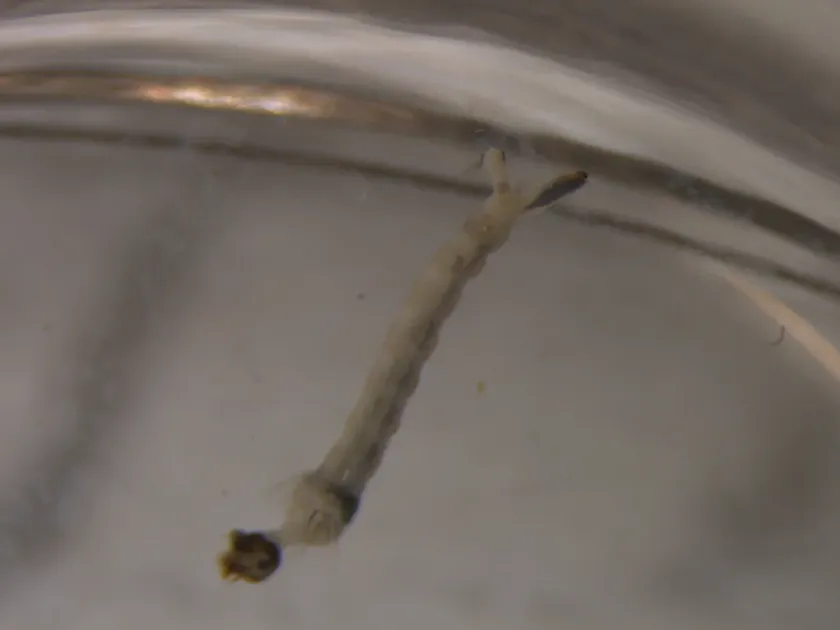
Description
How to identify
The Australian mosquito (Aedes australis) belongs to the order Diptera and the family Culicidae. While not a direct herbivore that consumes crops, it acts as an agricultural pest due to its negative impact on labor efficiency and the health of livestock in farming areas.
Adult specimens exhibit typical mosquito morphology: long, fragile legs, slender wings with distinct scales, and a piercing-sucking mouthpart. Their coloration is generally dark with lighter, silvery markings that provide effective camouflage in tall field vegetation.
The life cycle encompasses four distinct stages: egg, larva, pupa, and adult (imago). Females preferentially deposit eggs near stagnant water sources, which are frequently found in low-lying areas of agricultural fields with inadequate drainage.
Larvae develop in aquatic habitats, feeding on organic debris, microorganisms, and tiny plant particles. The speed of development through these stages is highly dependent on ambient temperatures and the local soil moisture content.
These insects are primarily active during twilight hours, but under conditions of high humidity or heavy cloud cover, they can remain aggressive throughout the entire daylight period, severely hindering farm operations.
What it damages
The primary damage caused by Aedes australis is not through direct plant destruction, but rather through the severe reduction of labor productivity on farms. High mosquito density makes essential field tasks physically impossible for staff.
Agricultural operations such as weeding, crop scouting, and harvesting are often disrupted because workers are unable to withstand the constant pressure from mosquito swarms, leading to missed deadlines and poor field management.
Furthermore, these mosquitoes can act as vectors for various diseases that affect livestock grazing in pastures adjacent to croplands. This impacts the overall health and productivity of the animal husbandry sector in the agricultural enterprise.
Delayed maintenance and chemical applications, caused by pest pressure, increase the risk of fungal outbreaks and the spread of other primary plant pests that thrive when crops are not tended to in a timely manner.
Economic losses associated with this pest include increased costs for protective clothing, repellents, and the need for specialized equipment to maintain a comfortable working environment for farm personnel.
When it appears
The peak activity period for this species coincides with warm and humid conditions, typically between 18 and 25 degrees Celsius. This window aligns with the active vegetative stages of many important agricultural crops.
Increased rainfall during the growing season creates temporary pools and waterlogged areas, which serve as ideal breeding grounds. Soil moisture levels are therefore the primary predictor of the upcoming mosquito population density.
Periods of extreme drought may suppress population growth; however, the ability of their eggs to remain viable under dry conditions ensures that a massive resurgence can occur immediately after the return of wet weather.
Activity tapers off as temperatures drop in late autumn, although unseasonably warm weather with sufficient moisture can lead to late-season population spikes that complicate final harvest activities.
Farmers should implement a monitoring program using light traps or bait stations around the perimeter of their fields to assess population levels and plan control interventions before they reach critical thresholds.
Control measures
The most effective strategy for managing Aedes australis is landscape-level land reclamation, focused on improving soil drainage and eliminating stagnant water sources throughout the farm.
Biological control, specifically the application of Bacillus thuringiensis, offers an effective way to eliminate larvae in standing water without disrupting the ecological balance or harming non-target beneficial insect species.
Targeted insecticide use along field borders and near farm buildings can significantly reduce adult populations and provide a buffer zone for laborers, protecting them during essential daily tasks.
- Draining standing water puddles and filling low-lying field spots.
- Regular cleaning of drainage ditches and removal of weeds.
- Providing personal protective gear and high-quality repellents for field staff.
- Installing ultrasonic repellers in areas where agricultural work is constant.
A systemic approach that integrates infrastructural improvements, biological control agents, and proactive monitoring remains the most sustainable method for controlling this pest in an agricultural environment.
Taxonomy
- Latin name
- Aedes australis
- Order
- Diptera (flies)
- Family
- Culicidae
- EPPO code
- AEDSAU
Discussion
No discussions yet — be the first.