
Atlantic salt marsh mosquito
Aedes atlanticus
Description
How to identify
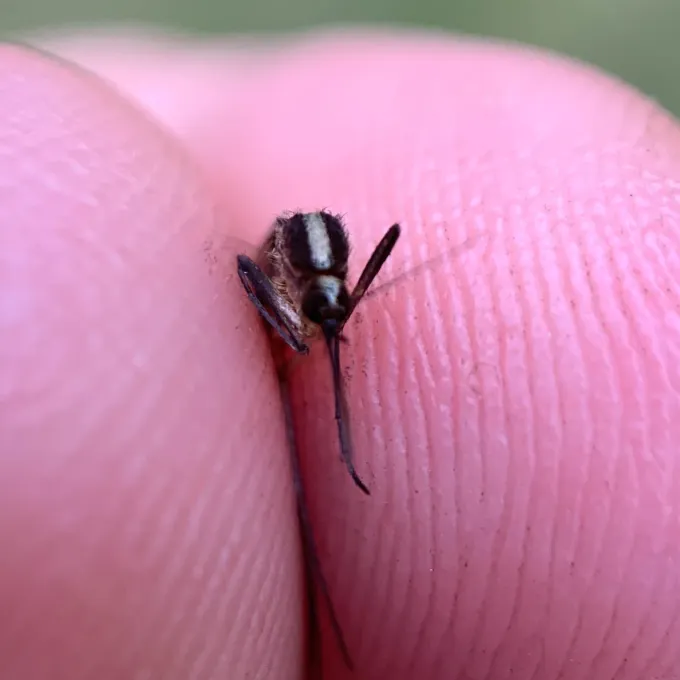
The Atlantic salt marsh mosquito (Aedes atlanticus) belongs to the order Diptera and the family Culicidae. Like other members of the genus Aedes, it is adapted for blood-feeding and thrives in environments where temporary water sources are common.
Adult mosquitoes are characterized by their dark coloration, often featuring white or silvery scales on the thorax that form a distinct pattern. These markings are essential for species identification by entomologists.
The life cycle encompasses four stages: egg, larva, pupa, and adult. The species is well-known for its eggs, which can remain dormant in dry soil for extended periods, waiting for sufficient rain to trigger hatching.
Females are responsible for blood-feeding, which provides the necessary nutrients for egg maturation. While their flight range is limited, they can be highly concentrated in specific areas after heavy rainfall.
Understanding the anatomy and specific breeding site preferences is crucial for effective monitoring and long-term population management in rural landscapes.
What it damages
Aedes atlanticus is not a direct threat to plant life, as it does not consume agricultural crops. However, it imposes significant indirect costs on the agricultural sector, particularly regarding livestock.
The pest causes severe harassment to cattle and other farm animals. High mosquito populations lead to increased stress, reduced feed intake, and potential weight loss in livestock, directly affecting farm productivity.
For agricultural workers, a heavy infestation makes outdoor tasks nearly impossible during peak activity hours. This creates labor management challenges and decreases overall efficiency during critical field work.
Additionally, the mosquito acts as a vector for various viruses that impact animal health. This increases the veterinary burden and the necessity for robust disease surveillance programs in affected regions.
The cumulative impact involves reduced production performance, increased animal healthcare expenses, and the need for frequent pesticide applications to maintain a manageable environment.
When it appears
Seasonal patterns of Aedes atlanticus are heavily dictated by rainfall intensity and temperatures. Populations surge following periods of heavy rain that create transient pools in low-lying fields.
The development from egg to adult is rapid, often completed within a few weeks during warm summer months. Multiple generations may occur depending on the frequency of flood events.
Adult mosquitoes are primarily active during dawn and dusk. However, they may remain active during the day if the environment provides enough shade or humidity to prevent dehydration.
As autumn temperatures begin to drop, the activity of adults significantly declines, and the population shifts to the dormant egg stage to survive the colder months.
Predictive monitoring of weather patterns helps farmers prepare for outbreaks, allowing for timely application of prevention methods before adult populations reach critical levels.
Control measures
Effective control requires a focus on habitat management. Improving drainage in agricultural fields and removing low-lying areas that collect water are the most sustainable ways to prevent outbreaks.
Biological control agents, specifically Bacillus thuringiensis israelensis (Bti), can be applied to standing water to target larvae without harming crops or beneficial insects in the vicinity.
Mechanical protection, such as installing screen enclosures for workers and utilizing livestock repellents, helps mitigate the immediate impact of the mosquitoes on the farm workforce and herd.
Cultural practices, including regular maintenance of irrigation ditches and clearing vegetation around pasture edges, reduce the availability of resting sites for adult mosquitoes.
- Field drainage to eliminate standing water.
- Application of microbial ларвициды.
- Maintaining clear paths and edges.
- Strategic use of insect traps.
Taxonomy
- Latin name
- Aedes atlanticus
- Order
- Diptera (flies)
- Family
- Culicidae
- EPPO code
- AEDSAC
Discussion
No discussions yet — be the first.