
Aedes alternans
Aedes alternans
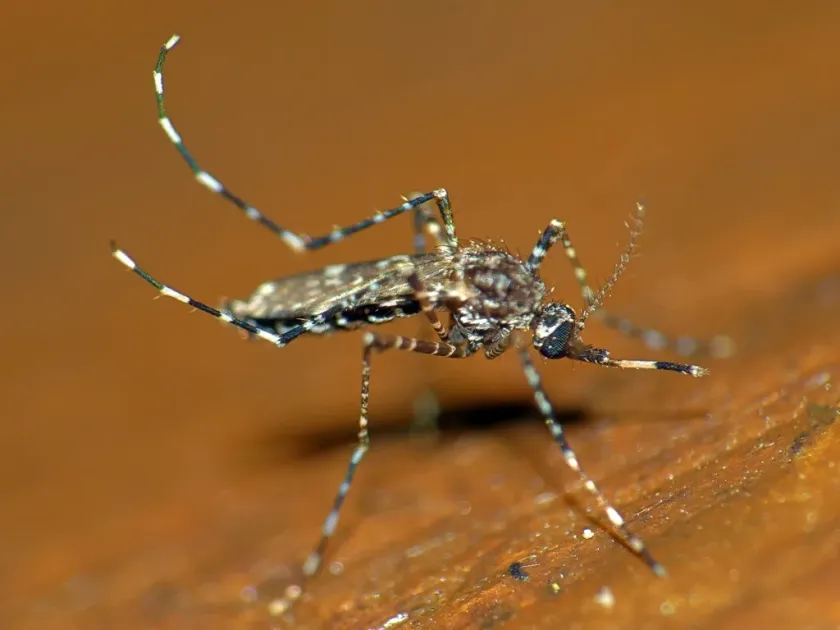
Description
How to identify
The mosquito Aedes alternans is a relatively large species of fly belonging to the family Culicidae. Adult individuals are characterized by a distinct pattern on their abdomen and wings, along with a prominent proboscis adapted for blood-feeding.
Larvae of this species develop in standing water, temporary pools, or marshy soils. They possess a specialized breathing siphon that allows them to survive in oxygen-poor aquatic environments.
Systematically, this species belongs to the order Diptera, family Culicidae. Their life cycle undergoes complete metamorphosis, consisting of four distinct stages: egg, larva, pupa, and adult.
Adults are visibly larger than common urban mosquitoes, making them easily noticeable during flight. Their coloration is predominantly dark, often with whitish or golden scales on their legs and body segments.
Scientific identification typically involves analyzing the male genitalia and the specific arrangement of setae on the thorax, which is crucial for distinguishing this species from related taxa.
What it damages
It is important to clarify that Aedes alternans is not a plant pest in the conventional sense, as adults feed on the blood of vertebrates, while larvae consume microorganisms.
However, the agricultural impact is significant in the livestock sector. Mass occurrences of these mosquitoes cause severe stress to cattle, leading to reduced milk production and slower weight gain.
On pastures located near breeding sites, the presence of mosquitoes disrupts the grazing cycle, forcing farmers to adjust their livestock management schedules.
Although they do not damage plant tissues, high population densities can impede field operations during evening hours, limiting the time available for essential crop care.
The economic significance lies in the nuisance factor, which requires effective pest management to maintain a comfortable environment for both workers and farm animals.
When it appears
The activity of Aedes alternans is closely tied to rainfall and flood patterns, which create the temporary pools necessary for larval development.
In temperate climates, population peaks occur during summer months when high temperatures accelerate the development of larvae in warmed-up water.
The life cycle from egg to adult can be very rapid, allowing the species to quickly colonize large areas whenever environmental conditions remain favorable and moisture is abundant.
Adult mosquitoes show peak activity during twilight hours and early morning, while seeking shelter in dense vegetation during the hot daylight hours.
As temperatures drop in autumn, the breeding intensity declines, and the species often enters a diapause state as eggs, which are highly resistant to environmental stress.
Signs of infestation
The primary sign of Aedes alternans presence is a sudden increase in the number of aggressive biting mosquitoes near river floodplains, marshes, or drainage canals after rains.
Larvae can be detected by inspecting stagnant water surfaces, where they typically hang at an angle, utilizing their siphon to breathe at the water-air interface.
The presence of adults is confirmed by their characteristic high-pitched buzzing and aggressive behavior toward humans and livestock, even at a distance from water sources.
Accumulations of insects are often observed in shaded, humid areas such as under the leaves of large plants, in thick grass, or near farm buildings.
Restless behavior in livestock, such as constant tail-flicking or erratic movement, serves as a clear indicator that the surrounding area serves as a primary breeding site.
Control measures
Control strategies for Aedes alternans focus on hydro-technical measures, such as draining temporary water pools and eliminating standing water on agricultural lands.
Biological control using Bacillus thuringiensis-based products is highly effective, as it targets larvae selectively without harming the wider ecosystem or beneficial insects.
For the protection of personnel and livestock, the use of repellents, perimeter insecticide treatments, and the installation of protective screens are recommended.
- Drainage and maintenance of irrigation canals.
- Removal of containers where water might stagnate.
- Use of light traps for population monitoring.
- Application of eco-friendly insecticides in breeding zones.
Implementing a systematic approach to eliminate breeding sites during the early season is key to keeping the population at a manageable level throughout the summer.
Taxonomy
- Latin name
- Aedes alternans
- Order
- Diptera (flies)
- Family
- Culicidae
- EPPO code
- AEDSAT
Discussion
No discussions yet — be the first.