
Asian tiger mosquito
Aedes albopictus
Description
How to identify
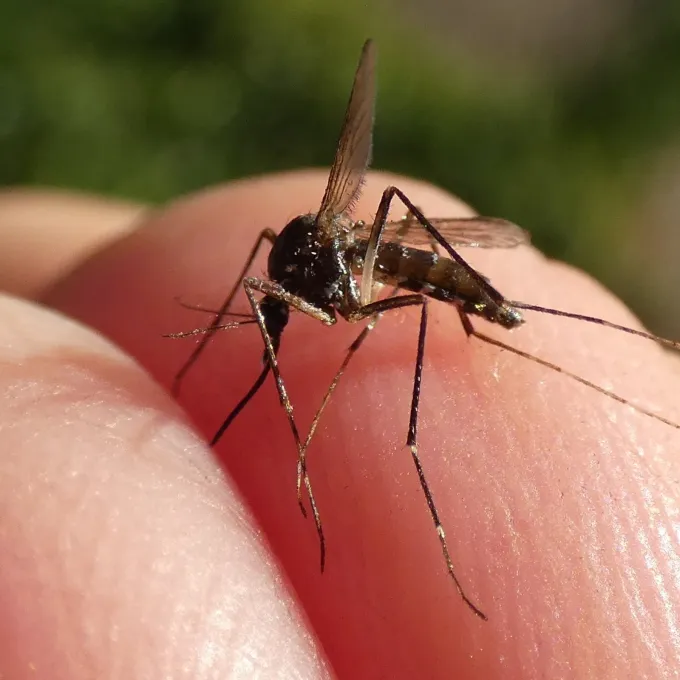
The Asian tiger mosquito (Aedes albopictus) is a distinctively marked insect, easily recognizable by its black body covered with white scales and striking white stripes on its legs and thorax.
Adult mosquitoes are typically 5–7 millimeters in length. Their most prominent feature is a single, vivid white longitudinal line running down the center of the thorax.
There is a clear division of labor in their feeding habits: females are hematophagous, requiring blood meals to develop their eggs, while males feed exclusively on plant nectar.
Unlike many other mosquito species that are nocturnal, the Asian tiger mosquito is primarily a diurnal hunter, meaning it is most active during the day, particularly during morning and late afternoon.
The life cycle undergoes complete metamorphosis, including egg, larva, pupa, and adult stages. Under optimal warm and humid conditions, the entire development cycle can occur within a few days.
What it damages
From an agronomical perspective, the Asian tiger mosquito is not considered a crop pest. It does not feed on plant tissues, foliage, stems, or fruits.
The insect causes no direct mechanical or physiological damage to agricultural crops, meaning that typical crop protection measures against pests are generally not applicable to this species.
The primary nuisance is the disruption of agricultural operations. High populations of these mosquitoes make it extremely difficult for laborers to perform routine fieldwork or maintenance in greenhouses.
Their presence on a farm is often an indicator of poor water management, such as clogged drainage, leaky irrigation systems, or stagnant water stored in open containers.
Although they do not harm plants, their ability to act as vectors for various pathogens makes them a high-priority management concern to ensure the health and safety of the staff.
When it appears
The activity of Aedes albopictus is strictly linked to temperature and moisture. In temperate zones, they typically begin their activity in late spring as temperatures rise.
Peak population densities occur during the summer months, especially following periods of heavy rain, as this creates a vast number of artificial breeding sites.
In the autumn, activity decreases as temperatures drop, but the species is highly resilient; their eggs can enter a state of diapause, surviving harsh winter conditions to hatch in the following season.
In regions with mild winters or within controlled environment greenhouses, the population may continue to thrive and reproduce throughout the year without a winter dormancy phase.
Humidity is a critical factor for their survival; even short-term droughts can significantly reduce their breeding success, while irrigation allows them to thrive in arid areas.
Signs of infestation
The most reliable sign of an Asian tiger mosquito infestation is the presence of small, aggressive, black-and-white mosquitoes biting humans during daylight hours.
Detection of larvae in stagnant water sources, such as irrigation barrels, potted plant saucers, gutters, or abandoned tires, is a definitive indicator of an active breeding population.
Staff complaining of painful, itchy bites during the working day provides a strong clue that the population density has reached a level requiring immediate management.
Using carbon dioxide-baited traps or specialized egg-laying (oviposition) traps can help confirm the species and monitor population levels across an agricultural facility.
The absence of plant injury, such as skeletonized leaves or chewed roots, confirms that the issue is related to human annoyance and health safety rather than a typical phytophagous pest.
Control measures
The primary management strategy is source reduction: systematically eliminating all stagnant water containers where the mosquito can deposit its eggs.
- Remove or empty all water-holding containers around the farm.
- Apply mesh covers over water storage tanks and irrigation barrels.
- Maintain clear, flowing drainage systems to prevent water pooling.
- Introduce biological controls like Bacillus thuringiensis israelensis in essential water reservoirs.
- Install mosquito screens on greenhouse ventilation inlets.
Chemical control directed at adult populations should be used sparingly and strategically to avoid harming beneficial pollinators and natural predators of other crop pests.
Integrated Pest Management (IPM) for this species focuses almost entirely on sanitation and physical exclusion rather than broad-spectrum insecticide spraying, ensuring a safe work environment.
Taxonomy
- Latin name
- Aedes albopictus
- Order
- Diptera (flies)
- Family
- Culicidae
- EPPO code
- AEDSAO
Discussion
No discussions yet — be the first.