
Yellow fever mosquito
Aedes aegypti
Description
How to identify
The yellow fever mosquito (Aedes aegypti) belongs to the order Diptera and the family Culicidae. It is a small mosquito, typically measuring about 4–7 mm in length.
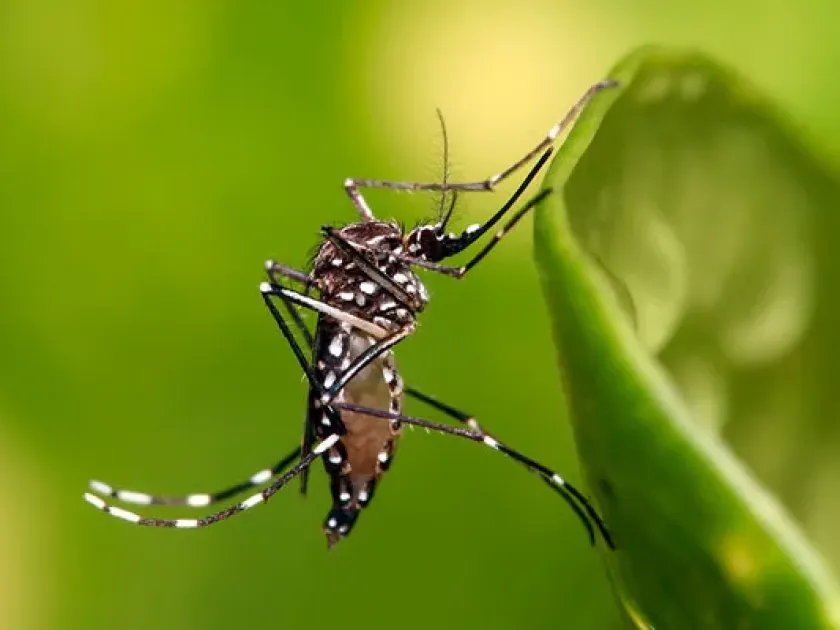
It is easily identified by the presence of a distinct lyre-shaped silver-white pattern on the dorsal surface of its thorax.
The legs of the adult mosquito exhibit characteristic white banding, which serves as a key morphological feature for identification purposes.
The wings are clear, and the body is covered in small scales that contribute to its dark, often black appearance.
Females are responsible for biting and blood-feeding, which they perform primarily during daylight hours to acquire the necessary protein for egg development.
What it damages
The yellow fever mosquito is not an agricultural pest and does not feed on or damage crops, ornamental plants, or any other botanical specimens.
It possesses no mechanisms for chewing or sucking plant juices, meaning its presence does not impact the health or productivity of agricultural ecosystems.
The primary concern regarding this species is its status as a highly efficient vector for pathogens, including the yellow fever, dengue, Zika, and chikungunya viruses.
Consequently, its impact on the agricultural sector is indirect, manifesting as a significant health risk to farmers, field workers, and livestock managers.
Control measures are focused entirely on public health and workplace safety rather than crop protection or integrated pest management of flora.
When it appears
The lifecycle of Aedes aegypti consists of four distinct stages: egg, larva, pupa, and adult, with the first three being strictly aquatic.
Eggs are deposited on damp surfaces just above the waterline, where they can remain viable for several months even in dry conditions.
Once flooded with water, eggs hatch into larvae, which develop in small, contained bodies of water like containers, buckets, and discarded tires.
The development from egg to adult can take as little as seven to ten days, depending heavily on the prevailing ambient temperature and humidity.
In tropical and subtropical regions, the mosquito remains active and reproduces throughout the year, provided that suitable humidity levels are maintained.
Signs of infestation
Signs of an Aedes aegypti infestation include the presence of adult mosquitoes being particularly active and aggressive during the morning and late afternoon.
They are frequently found in close proximity to human habitats and are known for their habit of resting indoors in dark, cool, or sheltered areas.
The presence of numerous potential breeding sites, such as flower pots, bird baths, or blocked gutters, indicates a high risk of infestation.
Humans often report noticeable, itchy bites that occur during the day, which is a departure from the night-biting behavior of many other mosquito species.
Observing small, dark mosquitoes with characteristic white markings on their body or legs confirms the presence of this specific species in the area.
Control measures
Control strategies for the yellow fever mosquito center on environmental management to eliminate breeding habitats rather than using synthetic pesticides on plants.
Regular sanitation of the premises to remove any standing water is the most effective and sustainable method for long-term population reduction.
Personal protection measures, including the use of high-quality repellents and long-sleeved clothing, are essential for individuals working in affected zones.
- Eliminating or emptying standing water containers
- Covering stored water tanks with mesh screens
- Applying biological larvicides in unavoidable water bodies
- Maintaining clear surroundings around houses and barns
Professional pest control services may apply targeted space sprays in cases where local transmission of mosquito-borne diseases is identified.
Taxonomy
- Latin name
- Aedes aegypti
- Order
- Diptera (flies)
- Family
- Culicidae
- EPPO code
- AEDSAE
Discussion
No discussions yet — be the first.