
Cryptochetum iceryae
Cryptochetum iceryae
Description
How to identify
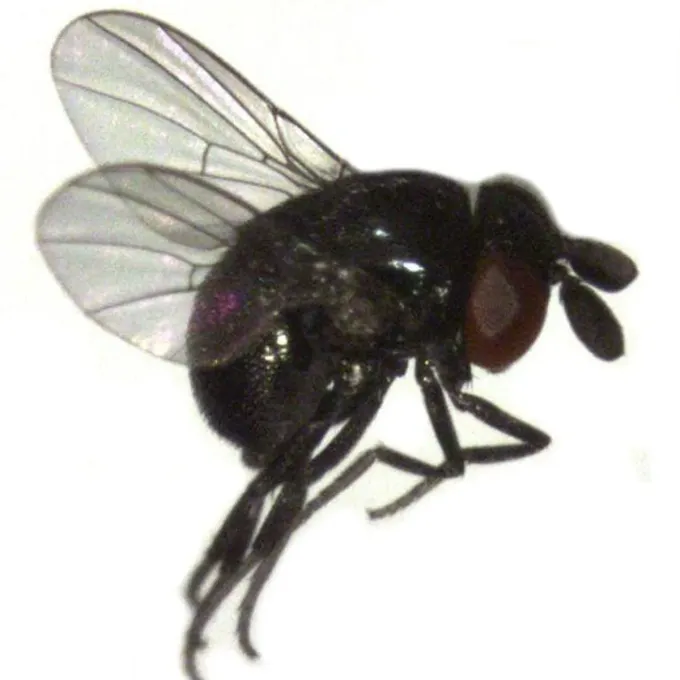
Cryptochetum iceryae is a specialized parasitoid fly belonging to the family Cryptochetidae. It is a highly efficient natural enemy of the cottony cushion scale (Icerya purchasi).
Adult flies are small, dark, and agile insects well-adapted to navigating the complex structures of host plants to locate scale insect colonies.
The life cycle involves an egg-to-larva development stage inside the body of the host. This obligate parasitism is the basis of its effectiveness as a biocontrol agent.
The morphology of the larvae is uniquely adapted to thrive within the host organism, ensuring that the host's population is successfully suppressed.
Entomological studies emphasize the role of this species in maintaining ecological balance in subtropical and citrus-growing regions globally.
What it damages
It is important to clarify that Cryptochetum iceryae is not a plant pest; rather, it is a highly beneficial insect that serves as a biological control agent.
By parasitizing the cottony cushion scale, these flies prevent the widespread sap-sucking damage that scale insects cause to citrus trees and various ornamental plants.
The larvae consume the internal tissues of the scale insect, effectively stopping its growth and reproduction, which saves the host plant from severe infestation.
By keeping scale populations under control, the fly helps maintain plant vitality and prevents the indirect development of sooty mold caused by honeydew excretion.
The presence of this insect is an asset to sustainable agriculture, providing a free and effective service that limits the need for external chemical inputs.
Signs of infestation
The primary sign of Cryptochetum iceryae presence is a natural decline in cottony cushion scale populations without any manual or chemical intervention.
Field monitoring may reveal adult flies near the infested branches of citrus trees, where they search for suitable hosts to parasitize.
Observing a high percentage of non-viable or dead scale insects within a colony often indicates successful parasitism by the fly larvae.
Absence of new scale growth and healthier tree appearance in areas where scale was previously present are positive indicators of biocontrol activity.
Integrated pest management (IPM) professionals use these signs to evaluate the status of the local biological control program.
Control measures
The most effective strategy regarding Cryptochetum iceryae is conservation biocontrol—preserving its population by minimizing the use of broad-spectrum pesticides.
Implementing a rigorous IPM program ensures that insecticide applications are targeted only when necessary and use substances that are compatible with beneficial insect survival.
Maintaining floral strips or hedgerows near orchards provides essential food sources for adult flies and enhances their overall fitness.
Avoid applying synthetic chemicals during periods when the flies are most active or during their reproductive cycles to prevent population collapse.
Sustainable management practices, such as choosing selective insecticides, are essential for keeping this natural ally working efficiently in the field.
Taxonomy
- Latin name
- Cryptochetum iceryae
- Order
- Diptera (flies)
- Family
- Cryptochetidae
- EPPO code
- CRYAIC
Discussion
No discussions yet — be the first.