
Cryptochetum
Cryptochetum
Description
How to identify
Cryptochetum is a genus of flies belonging to the family Cryptochetidae, within the order Diptera. These insects are highly regarded in agricultural science as specialized natural enemies of scale insects.
Adult flies are typically small and dark in color, often exhibiting a metallic luster. Their morphological structure is highly adapted to locating hosts in the dense foliage of trees and shrubs.
The taxonomic classification of this genus is unique due to the larval stage's highly specialized endoparasitic lifestyle within the body of a host.
In the field, identifying these flies often involves observing them near colonies of scale insects or mealybugs, where they hunt for suitable hosts to oviposit.
Their life cycle is intricately linked with that of their hosts, making them a cornerstone of sustainable biological control programs in subtropical and tropical regions.
What it damages
Cryptochetum flies are not agricultural pests; they are beneficial parasitoids. They do not feed on plant tissues, stems, or fruits in a way that damages crops.
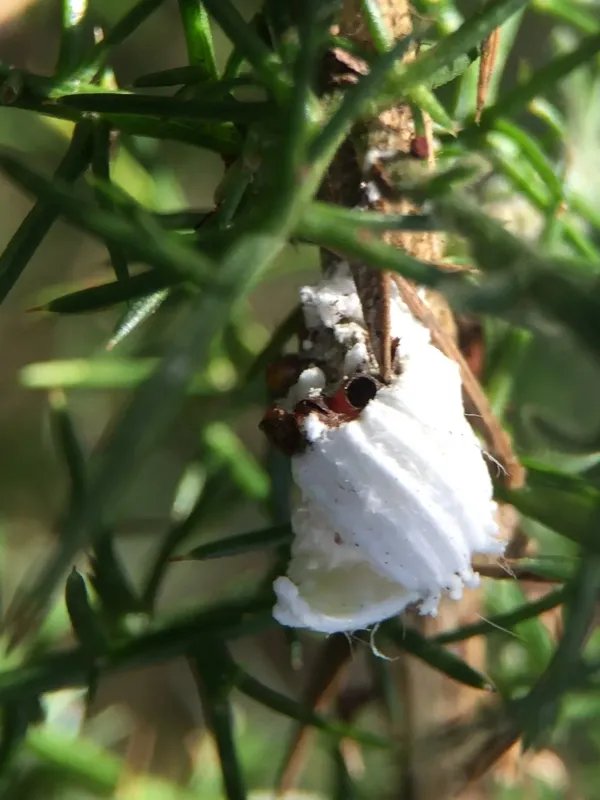
Their primary targets are specific species of scale insects, most notably the cottony cushion scale (Icerya purchasi), which causes extensive damage to citrus, pomegranate, and various ornamental plants.
By parasitizing these pests, the larvae of Cryptochetum consume the internal tissues of the scale insect, effectively killing the host before it can reproduce further.
This natural predatory action significantly reduces the population density of the scale insects, preventing the development of sooty mold caused by the pests' secretions.
Consequently, these flies act as a natural, free-of-charge pest management service, enhancing the health and productivity of the orchard ecosystem.
When it appears
The seasonal activity of Cryptochetum follows the population dynamics of their hosts. They are most active during the warmer seasons when scale insect activity is at its peak.
Multiple generations can occur per year, depending on the climate. The flies align their reproductive cycles with the availability of vulnerable host stages.
Early spring marks the emergence of the first generation of adults from overwintering sites, often triggered by temperature rises and host activity.
During the summer months, their population increases as they take advantage of the abundant food supply provided by the scale insect infestation.
Overwintering usually occurs in the pupal or larval stage inside the mummified remains of the host, protecting them from winter extremes.
Control measures
Conservation biological control is the primary strategy for managing and supporting Cryptochetum populations in agricultural settings.
The most important measure is the avoidance of broad-spectrum synthetic insecticides, which can decimate the populations of these beneficial parasitoids.
Agronomists should adopt Integrated Pest Management (IPM) practices, using selective biopesticides that target the pest while sparing the natural enemies.
Maintaining floral diversity near orchards provides a source of nectar, which is essential for the longevity and reproductive success of adult flies.
- Eliminate non-selective chemical spraying schedules.
- Implement selective pest management strategies.
- Preserve habitats for natural predators and parasitoids.
- Regularly monitor pest colonies to avoid unnecessary interventions.
Taxonomy
- Latin name
- Cryptochetum
- Order
- Diptera (flies)
- Family
- Cryptochetidae
- EPPO code
- CRYASP
Discussion
No discussions yet — be the first.