
Zagrammosoma melinum
Zagrammosoma melinum
Description
How to identify
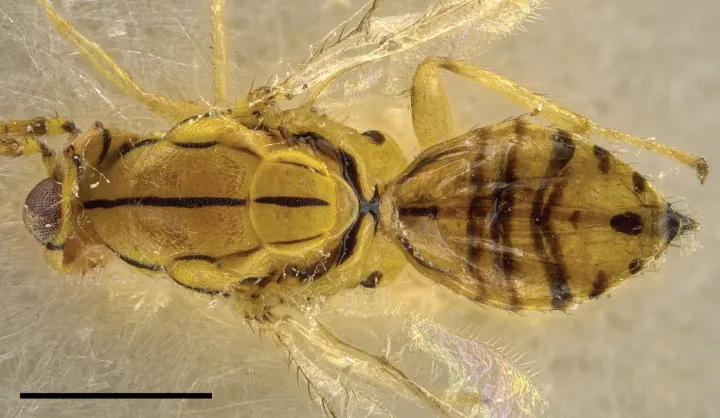
Zagrammosoma melinum is a minute insect belonging to the order Hymenoptera and the family Eulophidae, which consists mostly of parasitoid wasps.
The adult insect is characterized by a small, golden-yellowish body that provides excellent camouflage against green foliage, making it hard to detect.
They possess delicate wings with minimal venation, which allows them to move effectively within the dense canopy of their host plants to find food or mates.
The larvae are small, legless, and vermiform, perfectly adapted for a hidden life within the plant tissues where they develop throughout their larval stages.
Identification is primarily based on microscopic analysis or by observing the distinct patterns they leave behind during their development within the leaves.
What it damages
This pest is known to affect a variety of agricultural crops, including beans, tomatoes, and other ornamental plants grown in both fields and greenhouses.
The primary damage is caused by the larvae, which feed on the leaf parenchyma, creating tunnels known as mines that disrupt the plant's physiological functions.
This disruption significantly reduces the photosynthetic capacity of the plant, leading to stunted growth and lower yields for farmers.
Severe infestations cause leaves to yellow, wither, and eventually drop off, which can compromise the entire plant's health during critical growth stages.
Furthermore, the physical damage created by the tunnels serves as an entry point for various plant pathogens, potentially causing secondary bacterial or fungal infections.
When it appears
The activity of this pest is highly dependent on environmental factors, typically starting in early spring when temperatures rise above the threshold for development.
Population density usually reaches its peak in mid-summer, when the warmer climate facilitates a faster turnover of generations.
The entire lifecycle, from egg to adult, takes a few weeks, with duration heavily influenced by the humidity and local climate patterns of the region.
In temperate zones, the insect prepares for winter in a dormant state, whereas in tropical or controlled environments, it may breed continuously throughout the year.
Multiple generations per season pose a high risk of crop damage, requiring consistent surveillance and a proactive approach from agricultural managers.
Signs of infestation
The most recognizable symptom is the presence of pale, serpentine mines that appear on the leaf surface, created as the larva consumes the leaf tissue.
Small, dark spots found within these tunnels are excrements left by the larvae, which confirm that the leaf is currently inhabited by active pests.
As the infestation progresses, leaves will display signs of chlorosis, curling, and dry margins, reflecting the loss of photosynthetic area.
On the underside of the leaves, one might observe tiny exit holes that adults create when emerging after the pupal stage is complete.
A general decrease in plant vigor and a reduction in the size of fruit or flowers are often indicators of a widespread infestation within the crop.
Control measures
Integrated Pest Management (IPM) is highly recommended, starting with cultural practices like removing crop debris where pupae may overwinter.
Systemic insecticides are effective in managing the population, as they travel through the plant's vascular system to reach the larvae hidden inside the leaves.
Biological control methods, such as utilizing natural predators or parasitoids, can help keep the population in check without chemical intervention.
Yellow sticky traps are vital tools for monitoring adult activity and timing the application of control measures to prevent a population explosion.
- Maintaining crop health through balanced fertilization.
- Practicing crop rotation to break the pest's reproductive cycle.
- Promptly pruning and disposing of heavily infested foliage.
Taxonomy
- Latin name
- Zagrammosoma melinum
- Order
- Hymenoptera
- Family
- Eulophidae
- EPPO code
- ZAGRME
Discussion
No discussions yet — be the first.