
Zagrammosoma
Zagrammosoma
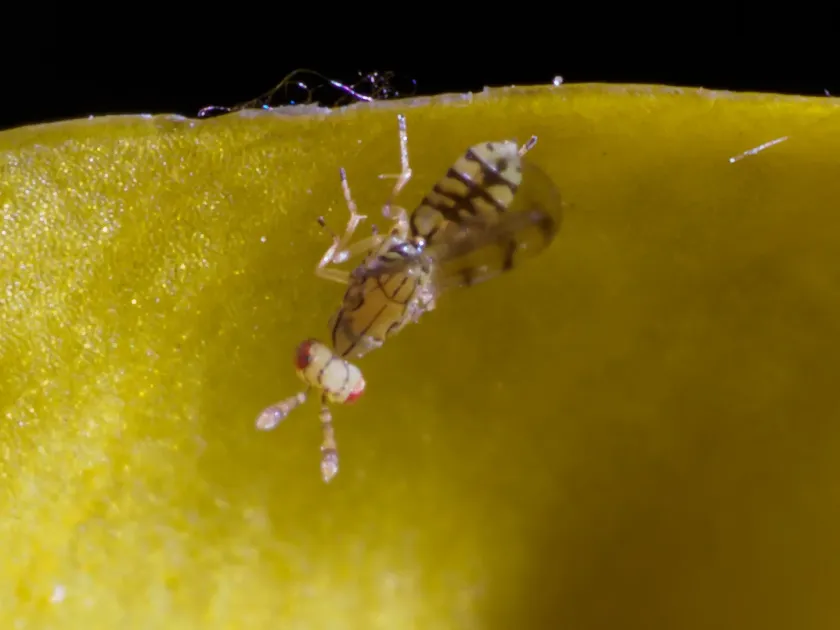
Description
How to identify
Zagrammosoma is a genus of parasitic wasps belonging to the family Eulophidae, within the order Hymenoptera.
These tiny insects are highly specialized, typically measuring between 1 to 2 mm in length, often appearing yellow to brown with dark spots.
They are characterized by their segmented antennae and specialized wing venation typical of the superfamily Chalcidoidea.
Taxonomic identification of species within this genus is complex and usually requires specialist knowledge and laboratory equipment.
As parasitoids, their morphology is adapted for locating and handling host larvae within the leaf tissues of plants.
What it damages
In most agricultural settings, Zagrammosoma is regarded as a beneficial insect rather than a direct pest of plants.
They are primary parasitoids of leaf-mining flies (Agromyzidae), helping to keep pest populations at manageable levels.
However, some species interactions are studied for their potential impact on ornamental crops where cosmetic damage might occur.
The host plants often affected include greenhouse vegetables like tomatoes, beans, and various decorative flower species.
Economic damage caused by the wasp itself is non-existent; instead, they provide a valuable ecosystem service to farmers.
When it appears
The life cycle of Zagrammosoma is synchronized with the availability and density of their specific host populations in the field.
In greenhouses, they can maintain continuous generations throughout the year, provided there is a steady presence of host larvae.
Outdoor activity begins in late spring and continues through summer, peaking as environmental temperatures stabilize for optimal development.
Overwintering usually occurs in protected soil crevices or beneath plant debris, highlighting the need for good field sanitation.
The population growth rate is highly sensitive to fluctuations in the abundance of their prey, ensuring a natural balance.
Signs of infestation
The most common sign of Zagrammosoma presence is the successful parasitization of mining larvae inside leaf tunnels.
One might observe tiny exit holes in the leaf surface where the adult wasp has emerged after pupation.
Yellow sticky traps deployed for general monitoring often capture adults, serving as a sign of their active presence in the canopy.
Reduced progression of leaf miner tunnels on host plants is a strong indicator of successful biological control by these wasps.
Careful inspection using a magnifying glass on the underside of leaves can reveal adult wasps or signs of their oviposition activity.
Control measures
Effective management involves protecting these wasps by avoiding broad-spectrum insecticides that disrupt natural control.
Integrated Pest Management (IPM) strategies emphasize the preservation of Zagrammosoma to reduce reliance on chemical inputs.
When chemical application is absolutely necessary, selective products that are least harmful to beneficial parasitoids should be chosen.
Maintaining clean farming practices, including the removal of infested crop debris, helps manage host density without harming the wasps.
Farmers are encouraged to foster local biodiversity to support stable populations of these essential natural enemies in the ecosystem.
Taxonomy
- Latin name
- Zagrammosoma
- Order
- Hymenoptera
- Family
- Eulophidae
- EPPO code
- ZAGRSP
Discussion
No discussions yet — be the first.