
Late dagger moth
Xylena nupera
Description
How to identify
The Late Dagger Moth (Xylena nupera) is a member of the Noctuidae family, known for its significant impact on various agricultural and ornamental plants.
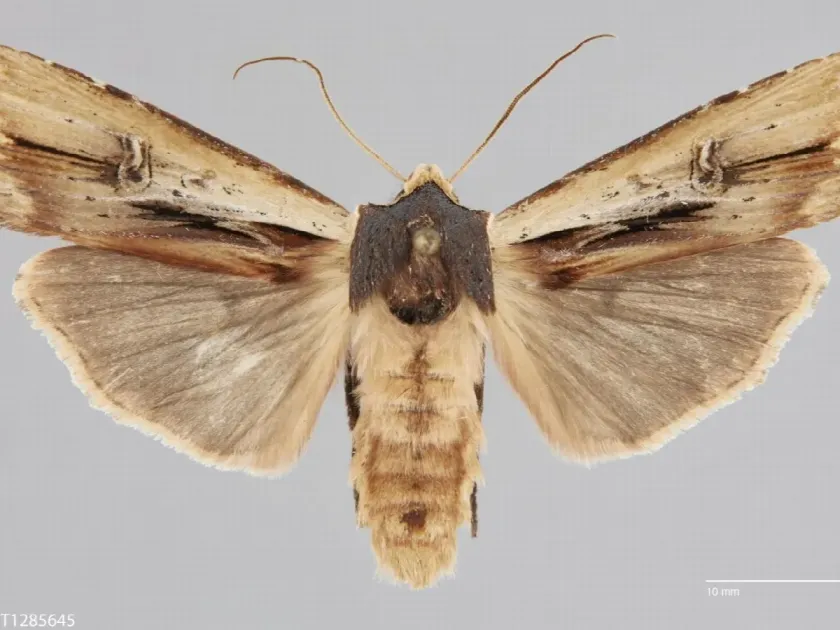
The adult moth has a wingspan of 45–55 mm, with forewings featuring intricate greyish-brown patterns that mimic tree bark, providing excellent camouflage.
The larvae, or caterpillars, display a color variation from pale green to reddish-brown, usually marked with longitudinal lines that blend with plant stems.
They possess a well-developed head capsule suitable for grazing on tough buds and leaves during their active growth phases in the spring.
Pupation typically occurs in the soil, where the moth spends the summer months in a protective cocoon until it emerges in its adult form.
What it damages
This polyphagous pest targets a wide array of woody plants, bushes, and fruit trees, causing primary damage during the early growing season.
The larvae are particularly destructive to buds, often consuming them before they can fully open, which leads to immediate yield loss for fruit growers.
Beyond buds, the caterpillars feed on tender leaves, flowers, and developing fruit, which significantly weakens the overall vigor of the host plant.
Heavy infestations can result in partial defoliation of branches, making the trees more susceptible to secondary environmental stresses or diseases.
The economic damage caused by this moth is most severe in years when environmental conditions favor the rapid population growth of the larvae.
When it appears
The life cycle is typically univoltine, with the species overwintering as adult moths in secluded spots such as under loose bark or in leaf litter.
Activity commences in early spring as soon as temperatures rise, allowing the adults to mate and deposit eggs on developing buds and twigs.
Caterpillars emerge shortly after to feed actively throughout the spring, which is the period when their nutritional requirements are the highest.
By early summer, the larvae descend to the ground to pupate, completing their development before the cycle resets with the next adult emergence.
The duration of the larval stage is strongly influenced by local weather patterns, with warmer springs often accelerating their growth and feeding rate.
Signs of infestation
The most prominent sign of an infestation is the appearance of hollowed-out or partially eaten buds, which may look damaged even before they expand.
Since the caterpillars are nocturnal, they are rarely seen during the day, making indirect evidence such as excrement on leaves a vital diagnostic clue.
Feeding damage on the edges of young leaves, resulting in irregular holes, is another classic indicator of the presence of the Late Dagger Moth.
In cases of severe infestation, a network of fine silk threads may be visible around damaged leaves or buds as the larvae move across the host.
- Hollowed-out floral or leaf buds.
- Irregular feeding damage on the leaf margins.
- Accumulation of frass (droppings) on lower branches.
- Stunted growth of foliage due to early-season feeding.
Control measures
Cultural control involves maintaining a clean orchard floor by removing debris and fallen leaves, which minimizes suitable pupation sites for the pest.
Mechanical control techniques, such as applying sticky bands around tree trunks, can prevent larvae from migrating between different parts of the canopy.
Biological control options, including the use of Bacillus thuringiensis sprays, are highly effective when applied to young larval populations.
Chemical intervention should be reserved for outbreaks exceeding the economic threshold, using systemic insecticides during the critical budding stage.
Frequent monitoring using pheromone traps is recommended to track the timing of the moth's appearance, ensuring that treatments are applied at the most vulnerable stage.
Taxonomy
- Latin name
- Xylena nupera
- Order
- Lepidoptera (butterflies)
- Family
- Noctuidae
- EPPO code
- XYLINU
Discussion
No discussions yet — be the first.