
Xylena fumosa
Xylena fumosa
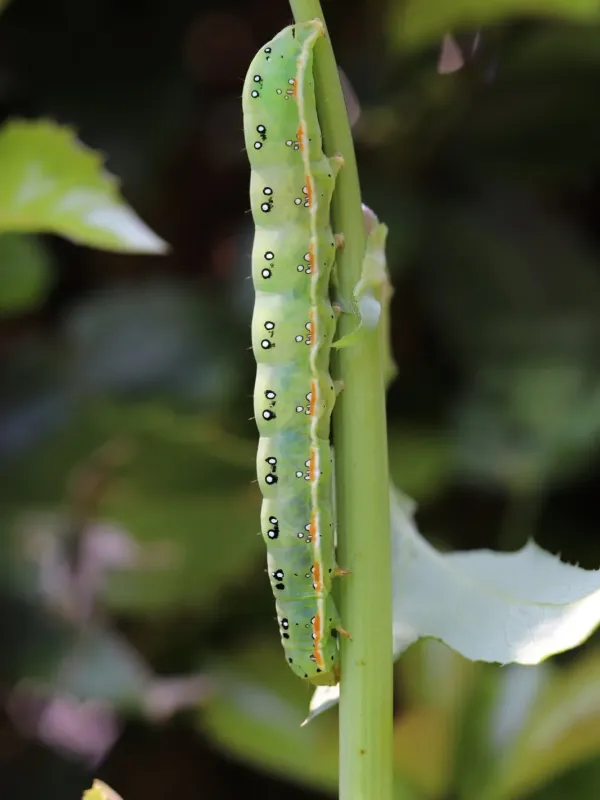
Description
How to identify
Xylena fumosa is a moth species belonging to the family Noctuidae, characterized by its camouflaging appearance that mimics tree bark.
Adult moths have dull, smoke-colored wings which allow them to remain hidden on branches during the daytime hours.
The larvae are typical of the noctuid family, possessing a stout body and a well-developed mouth apparatus designed for aggressive feeding.
The life cycle encompasses four stages: egg, larva, pupa, and adult, with the adult stage being responsible for overwintering.
Identification is best achieved by examining adult wing patterns or rearing larvae until maturity to confirm the specific species morphology.
What it damages
The primary hosts of Xylena fumosa are woody plants, including various fruit trees like apples and pears, as well as berry bushes.
The most critical damage occurs during spring when larvae feed on swelling buds, which can destroy the potential harvest before it fully develops.
Larval feeding also affects young shoots and developing leaves, causing stunted growth and deformity in the plant's canopy.
High infestation levels are typically found in orchards located near unmanaged forests or overgrown garden areas.
Continued feeding weakens the overall vigor of the host plant, making it more susceptible to environmental stress and other diseases.
When it appears
Overwintering adults emerge very early in the season, often when temperatures begin to rise just above freezing in late winter or early spring.
Oviposition occurs shortly after emergence, with eggs deposited on or near the buds of host plants to ensure immediate food access for larvae.
The peak activity of larvae occurs during the months of April and May, closely following the bud-break phase of the host trees.
Pupation takes place in the soil throughout the summer months, allowing the species to bypass the heat of the season.
Adults of the next generation emerge in late summer or autumn and seek protected sites for hibernation.
Signs of infestation
The first indicator of infestation is the appearance of hollowed-out or completely eaten buds during the early spring bloom phase.
As larvae grow, they begin feeding on foliage, creating irregular holes and consuming leaf margins in a distinctive manner.
The accumulation of larval frass on leaves and twigs serves as a clear indication of ongoing pest activity in the tree canopy.
Stunted and twisted shoot development is another common sign, especially when high larval populations feed on tender young growth.
Finding dormant moths under loose bark or in wood crevices during the winter is a sign that the pest is established in the area.
Control measures
Cultural control involves mechanical cleaning of tree trunks to remove loose bark where adults hide and regular tillage of soil to disturb pupae.
Chemical intervention should be timed specifically for the bud-burst period, using contact or systemic insecticides to minimize larval survival.
Biological control using entomopathogenic bacteria or fungi can significantly reduce population levels with minimal impact on beneficial insects.
Regular orchard monitoring is essential to decide the economic threshold for intervention, preventing excessive chemical use.
Implementing integrated pest management (IPM) practices, including pruning and optimal fertilization, helps improve plant resilience against larval pressure.
Taxonomy
- Latin name
- Xylena fumosa
- Order
- Lepidoptera (butterflies)
- Family
- Noctuidae
- EPPO code
- XYLIFU
Discussion
No discussions yet — be the first.