
Xylena
Xylena
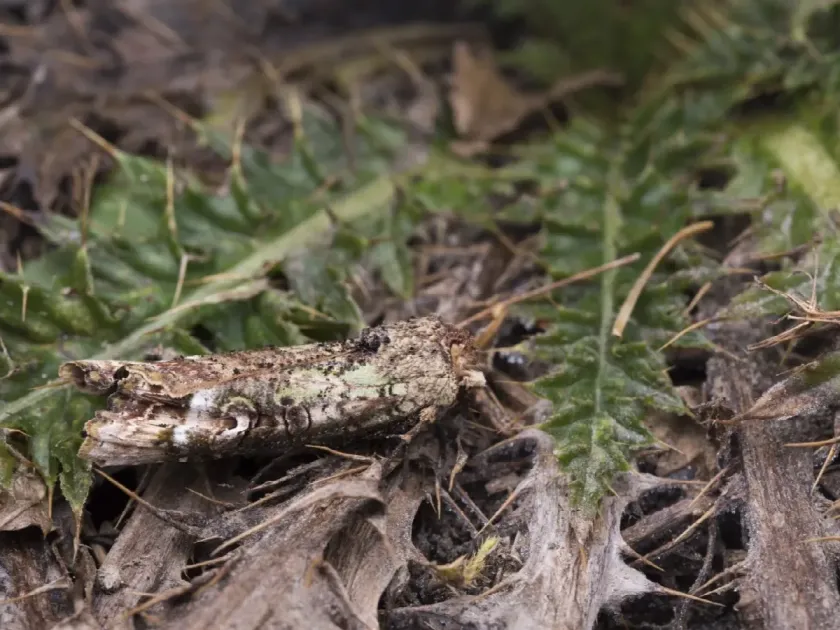
Description
How to identify
Xylena is a genus of moths belonging to the Noctuidae family (the owlet moths). These are medium-sized moths characterized by cryptic coloration that mimics tree bark, providing excellent camouflage.
The larvae, or caterpillars, go through several stages of development. They possess strong mandibles designed for chewing, allowing them to consume plant tissues actively throughout the growth season.
Caterpillars usually exhibit body colors ranging from light green to brown, allowing them to blend into their host plant environment, making them difficult for predators and humans to detect.
Pupation occurs underground inside firm cocoons, where the insect remains dormant during unfavorable periods or over the winter, protected from external stressors.
Adult moths are primarily nocturnal, leading a secretive lifestyle. They are frequently attracted to light sources and fermenting sap flows on damaged tree trunks.
What it damages
The primary damage is caused by the caterpillars, which have a broad host range, feeding on buds, young foliage, and flower buds of various fruit trees and woody shrubs.
In orchards, Xylena species are often found on apple, pear, cherry, and plum trees, where they can cause significant stress to both young saplings and mature trees.
Mass outbreaks during the spring period can result in the destruction of a large percentage of buds, significantly reducing the crop yield and weakening the tree's vitality.
Damage to the tissues of young shoots can lead to stunted growth or deformation, which is particularly detrimental to the development of young trees in nurseries.
The wounds left by caterpillar feeding on shoots or bark can act as entry points for secondary infections, including fungal pathogens and bacterial diseases.
When it appears
The life cycle of Xylena typically involves overwintering as a pupa in the soil or, in some cases, as an adult in sheltered locations, depending on the specific species.
In early spring, as temperatures rise, the moths emerge, which usually coincides with the bud-swelling phase of fruit trees, a critical period for orchard management.
The period of active caterpillar feeding continues until the arrival of summer heat, after which they migrate into the soil to pupate and enter a resting phase.
Monitoring efforts should commence during the bud-burst stage, as this is when the caterpillars are most active and most susceptible to control measures.
Environmental factors, such as spring temperatures and rainfall patterns, significantly influence the timing of emergence and the duration of the larval stage.
Signs of infestation
Key signs of infestation include ragged or partially consumed buds that fail to open properly or display uneven edges due to larval feeding.
Leaves often show irregular holes or complete defoliation, where caterpillars leave behind only the central veins, indicating high levels of infestation.
The presence of frass (caterpillar droppings) on the soil beneath the canopy or caught in leaf axils is a clear indicator of active feeding within the tree crown.
Premature fruit drop after flowering can sometimes be attributed to caterpillars feeding on flower stalks during the nocturnal hours.
- Ragged and partially eaten spring buds.
- Skeletonized leaves with only veins remaining.
- Visible caterpillar frass beneath the trees.
Control measures
Cultural control methods, such as deep autumn cultivation of the soil around the base of trees, are effective in destroying overwintering pupae.
The application of biological insecticides containing entomopathogenic bacteria can provide safe control of young-instar caterpillars without harming beneficial insects.
In cases of severe infestation, registered contact-stomach insecticides should be used according to local agricultural guidelines to minimize economic losses.
Timely pruning and destruction of infested twigs containing caterpillars can help suppress the population and prevent further spread throughout the orchard.
The use of pheromone traps serves as an excellent tool for monitoring the flight of adult moths, allowing for the precise timing of protective interventions.
Taxonomy
- Latin name
- Xylena
- Order
- Lepidoptera (butterflies)
- Family
- Noctuidae
- EPPO code
- XYLISP
Discussion
No discussions yet — be the first.