
Double-spotted rustic
Xestia ditrapezium
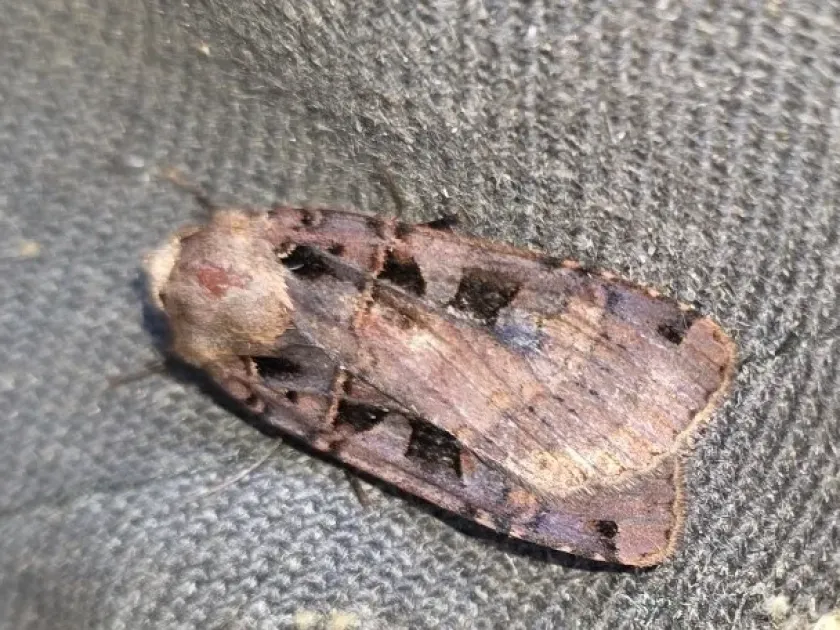
Description
How to identify
The adult double-spotted rustic (Xestia ditrapezium) is a nocturnal moth with a wingspan of approximately 40-45 mm. Its forewings are characterized by greyish-brown or reddish-brown tones.
The name of the species comes from the two distinctive dark spots located on the forewings. The hindwings are generally lighter, usually greyish or yellowish with some dark shading along the edges.
The larvae, or caterpillars, of this moth can grow up to 40 mm in length. They typically exhibit a brown-grey or earthy color, often with light longitudinal stripes that provide excellent camouflage in the soil.
The pupa is shiny and reddish-brown, measuring about 15-18 mm. It develops within a small earthen cell created by the larva a few centimeters below the soil surface for protection.
The eggs of this species are hemispherical with a ribbed surface. They are usually deposited by females on the undersides of leaves or on plant debris near suitable host plants.
What it damages
The double-spotted rustic is a polyphagous insect, meaning it can feed on a wide variety of cultivated and wild plants, making it a versatile and dangerous agricultural pest.
Significant damage is often inflicted on vegetable crops such as potatoes, beets, and cabbage. The caterpillars consume leaf tissue, which decreases the plant's photosynthetic capacity and total biomass.
Young seedlings are particularly vulnerable to these larvae. By cutting through the roots and stems at the soil level, the caterpillars can cause the complete loss of a crop stand in a short period.
In cereal fields, the pest may attack young crops, feeding on both foliage and generative parts, which negatively impacts the final yield and grain quality.
The pest also frequently invades fruit nurseries, where it damages buds and young shoots, leading to stunted growth and permanent deformity of the affected plants.
When it appears
The flight period for adults typically occurs from June through early August. These moths are primarily nocturnal, remaining hidden in shaded areas during the day to avoid predators and heat.
This species generally completes one generation per year in temperate climates. It overwinters in the larval stage, usually as younger or middle-instar caterpillars buried deep in the soil.
In the spring, as soil temperatures rise above 8-10 degrees Celsius, the overwintered caterpillars emerge to resume feeding. This period is critical as they require substantial nutrition for development.
Pupation usually takes place in late spring or early summer. The pupal stage lasts between two and three weeks, depending on environmental factors like humidity and soil temperature.
Population dynamics are highly sensitive to weather conditions; mild and humid springs favor the survival of eggs and young larvae, whereas dry conditions can significantly suppress their numbers.
Signs of infestation
A primary indicator of infestation is the sudden wilting of plants. Closer inspection often reveals that the stem has been cut off at the base, and a larva can be found by digging in the surrounding soil.
Leaves of infested crops often show irregular holes or ragged edges, which are characteristic signs of feeding by older, more voracious caterpillars.
During the night, moths may be observed flying near light sources, which is a common behavior used by scouts for identification and monitoring of the population density.
The presence of frass (caterpillar excrement) on the soil surface or on leaf blades is a strong indication that the larvae are actively feeding in that specific area.
Regular field surveys, especially during the early growth stages of a crop, are essential to detect the presence of cutworms before they cause widespread economic damage.
Control measures
Effective agricultural control starts with deep autumn plowing. This practice disrupts the soil, exposing overwintering larvae and pupae to predators, weather, and dehydration.
Maintaining fields free of weeds is crucial, as many weed species serve as initial food sources for larvae before the main crops become available for feeding.
Biological control using microbial insecticides, such as those based on Bacillus thuringiensis, can be highly effective against early-instar larvae while minimizing the impact on non-target species.
Chemical control involving systemic or contact insecticides is recommended when population thresholds are exceeded. Applications are most effective when carried out in the evening.
For strategic management, the use of pheromone or light traps is highly recommended to monitor adult activity and accurately time the application of defensive measures.
Taxonomy
- Latin name
- Xestia ditrapezium
- Order
- Lepidoptera (butterflies)
- Family
- Noctuidae
- EPPO code
- RHYIDI
Discussion
No discussions yet — be the first.