
C-dotted rustic
Xestia c-nigrum
Description
How to identify
The C-dotted rustic (Xestia c-nigrum) is a common moth species within the Noctuidae family, known for its status as a significant agricultural pest across many regions.
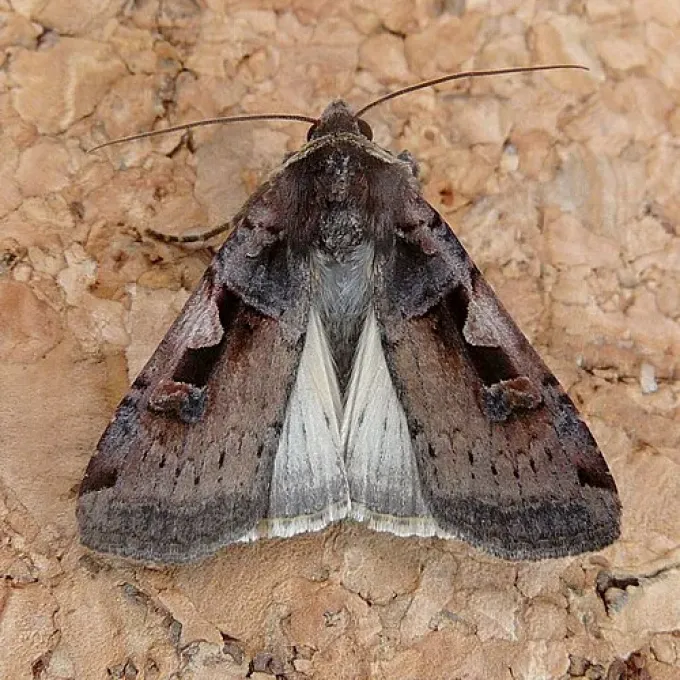
The adult moth features a wingspan of approximately 35–45 mm, with forewings that display mottled shades of brown, grey, and sometimes reddish hues.
Its most distinct identifying mark is a prominent, dark, C-shaped or bracket-like spot situated on the forewings, which is typically edged with a lighter color.
Larvae, commonly referred to as cutworms in their younger stages, exhibit a smooth, cylindrical body that ranges from pale grey to dark brown, often featuring a distinct patterned back.
These insects are nocturnal, meaning they spend the daylight hours hiding under debris or in the soil, which makes them difficult to monitor during normal field inspections.
What it damages
This species is highly polyphagous, meaning it feeds on a vast array of plant species, including major crops and various types of weed vegetation.
Key economic crops susceptible to damage include maize, sunflowers, sugar beets, potatoes, and various leafy green vegetables grown in large-scale agriculture.
Larvae cause damage by consuming leaf tissue, creating irregular holes, and in severe infestations, they can defoliate entire plants, leaving only the primary veins.
Beyond leaf damage, the larvae often feed on the stems and roots of young plants, leading to wilting, plant death, and significant thinning of the crop stand.
The economic loss is exacerbated when the pest attacks the reproductive organs of plants, directly affecting yield quality and the overall marketability of the harvest.
When it appears
The life cycle of the C-dotted rustic typically involves two or more generations per year, depending on the local climatic conditions and the warmth of the season.
The flight period for the first generation of adults generally begins in late spring, with females laying eggs on the foliage of host plants or surrounding weeds.
Larval activity reaches its peak during the summer months, creating significant pressure on young, developing crops that are in their most vulnerable growth stages.
As autumn approaches, the final generation of larvae prepares for diapause, seeking shelter in the soil or under surface litter to survive the winter months.
Monitoring for adult flight via pheromone traps is essential to determine the timing of egg-laying peaks and the subsequent emergence of feeding larvae.
Signs of infestation
The earliest signs of an infestation often include small, irregularly shaped holes appearing on the lower leaves of the plants, which progressively increase in number.
Evidence of frass (larval excrement) on the ground or within the plant canopy serves as a reliable indicator of active feeding by the moth larvae.
Wilting of seedlings or young plants, especially when no signs of fungal disease are present, usually suggests cutworm activity at the base of the plant stem.
Inspecting the soil around the base of damaged plants during early morning hours often reveals the presence of larvae hiding just below the surface.
Significant gaps in rows of crops are a tell-tale sign that larvae have successfully destroyed young plants, necessitating an immediate assessment of the field population.
Control measures
Cultural practices like deep autumn plowing are fundamental in reducing the population, as this physically exposes overwintering pupae and larvae to frost and predators.
Effective weed management is vital to remove alternative food sources, preventing the population from building up in the field edges before moving onto crops.
Chemical control should be timed to coincide with the nocturnal activity of the larvae, ensuring that insecticides are applied when the pests are actively feeding on foliage.
Integrated Pest Management (IPM) strategies, including the use of biological control agents and pheromone monitoring, can significantly reduce the reliance on broad-spectrum pesticides.
Crop rotation and selecting resistant varieties, where applicable, provide long-term benefits in breaking the pest's life cycle and reducing the likelihood of recurring infestations.
Taxonomy
- Latin name
- Xestia c-nigrum
- Order
- Lepidoptera (butterflies)
- Family
- Noctuidae
- EPPO code
- AMATCN
Discussion
No discussions yet — be the first.