
Xestia
Xestia
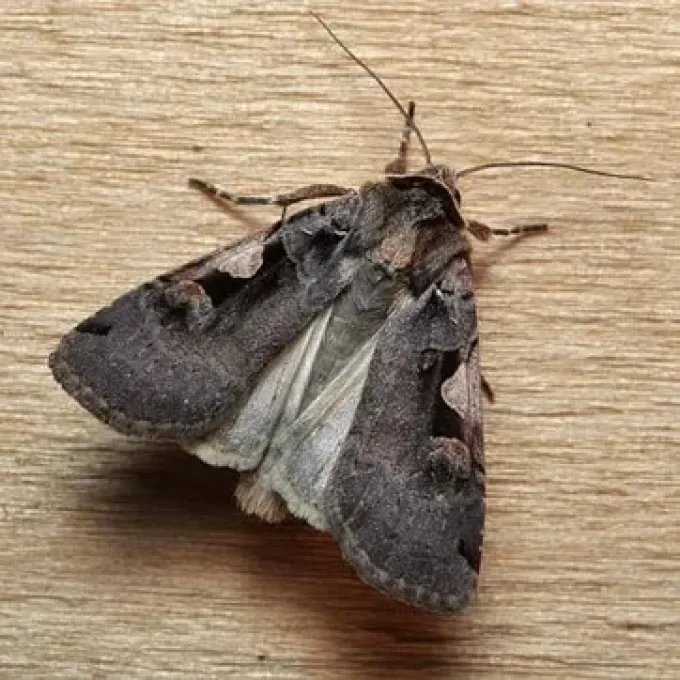
Description
How to identify
The genus Xestia belongs to the family Noctuidae, which includes various species of nocturnal moths often referred to as cutworms or rustic moths.
Adult moths typically have a wingspan ranging from 35 to 50 mm, with cryptic coloration including shades of brown, grey, and red, providing excellent camouflage.
Larvae, commonly known as cutworms, have a robust, cylindrical body often covered with fine setae and are generally active during the night.
Eggs are usually laid in clusters on the underside of leaves or directly onto the soil surface near host plants, making them difficult to spot during scouting.
Accurate species identification often requires microscopic examination of genitalia, as many Xestia species exhibit significant morphological similarities.
What it damages
These moths are significant polyphagous pests, capable of feeding on a wide variety of field crops including cereals, legumes, and various vegetables.
Early-stage larvae skeletonize the leaves, while older larvae consume entire leaf tissues, often leaving only the main veins intact during severe outbreaks.
One of the most destructive behaviors is the severing of seedlings at the base, which leads to plant death and significant reductions in field plant density.
During later stages of plant development, larvae may feed on reproductive parts such as flowers or pods, directly causing yield loss in seed crops.
The pest is known for its ability to create focal points of damage that can rapidly expand across a field under favorable environmental conditions.
When it appears
Adult moth activity typically peaks during the summer months, from June through August, depending on the specific region and seasonal temperature trends.
The life cycle usually involves one or two generations per year, with the overwintering stage consisting of late-instar larvae buried in the soil.
Pupation occurs in the soil, providing the insects with protection against predators and extreme weather fluctuations during the transformation phase.
A second generation of larvae can appear in late summer, posing a threat to winter crops that are emerging during the early autumn months.
Population density is heavily influenced by soil moisture levels during the larval development period and temperature conditions during the preceding winter.
Signs of infestation
The most prominent sign of an infestation is the appearance of irregularly eaten leaf edges and wilting seedlings that have been cut off at the soil line.
- Presence of larval droppings (frass) around the base of damaged plants.
- Sudden patchiness in the crop stand due to seedling loss.
- Visible nocturnal activity of larvae on foliage when using artificial light.
- Damage to flowers and immature seed pods during the reproductive growth phase.
- Partial or complete removal of leaf blades by larvae feeding during the night.
Control measures
Cultural control methods such as deep autumn plowing are effective in exposing larvae and pupae to predators and adverse weather conditions.
Maintaining a diverse crop rotation is a crucial strategy to disrupt the pest's life cycle and prevent the build-up of resident populations in the soil.
Monitoring using pheromone traps is essential for tracking moth flights and determining the optimal timing for insecticide applications.
Chemical control should be targeted at the larval stage, utilizing systemic insecticides applied during the evening to maximize contact with the nocturnal pests.
Integrating biological control agents and preserving natural enemies can help stabilize populations and reduce the reliance on synthetic chemicals over time.
Taxonomy
- Latin name
- Xestia
- Order
- Lepidoptera (butterflies)
- Family
- Noctuidae
- EPPO code
- XSTISP
Discussion
No discussions yet — be the first.