
Xanthopastis timais
Xanthopastis timais
Description
How to identify
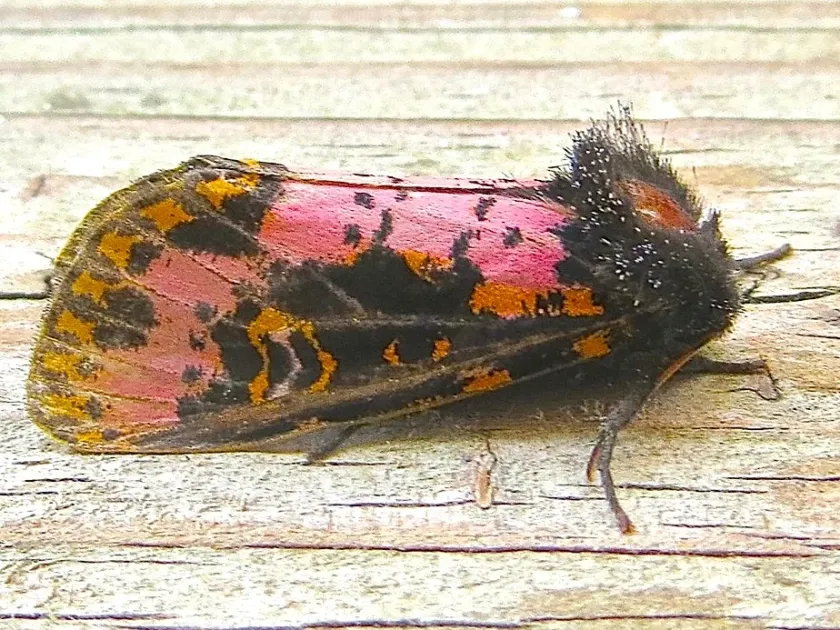
Xanthopastis timais, commonly known as the Spanish moth or convict caterpillar, belongs to the Noctuidae family, order Lepidoptera. The adult moth is easily identified by its striking appearance, featuring pinkish-brown forewings adorned with a black net-like pattern.
The larvae of this species possess a distinctive, highly conspicuous warning coloration consisting of alternating yellow, black, and white transverse stripes. This coloration serves as an aposematic signal, warning predators of their toxicity, which is derived from alkaloids accumulated from their host plants.
Eggs are typically laid in clusters on the undersides of leaves of host plants. The egg masses are often covered in specialized scales, providing an additional layer of protection against environmental stressors and potential predators.
The life cycle encompasses the egg stage, several larval instars, a pupal stage usually occurring in the soil or plant debris, and the adult stage. In warmer regions, multiple generations can occur within a single growing season.
Adult moths are primarily nocturnal. During the day, they remain stationary on vegetation, pressing their wings tightly against their bodies, which allows them to blend in with their surroundings effectively.
What it damages
Xanthopastis timais primarily feeds on plants belonging to the Amaryllidaceae family. The pest is particularly notorious for causing significant damage to ornamental bulbs such as lilies, amaryllis, hippeastrums, and crinum lilies.
The caterpillars are highly voracious feeders. They skeletonize leaves by consuming the soft tissue and leaving only the central veins, which significantly impairs the plant's photosynthetic capacity and aesthetic value.
Under heavy infestation, the pest can quickly strip a plant of its foliage. Severely damaged plants often fail to flower and may suffer from stunted growth or total decline.
Besides leaves, younger larvae can bore into flower stalks, causing them to wilt and buds to die before they have the chance to bloom.
In large-scale commercial nurseries, this moth poses a significant economic threat by degrading the market quality of bulbous crops, requiring immediate and decisive pest management intervention.
Signs of infestation
The first visual indication of an infestation is the presence of frass, appearing as dark, granular pellets scattered on the leaf surfaces and around the base of the plant.
The presence of vividly striped caterpillars sitting openly on the leaves and stems is a definitive sign of an active infestation by this species.
Noticeable mechanical damage, such as irregular holes in the leaves or patches where the tissue has been eaten down to the veins, indicates the activity of later larval instars.
Wilting flower stalks with visible entry holes suggest that the caterpillars have burrowed into the internal tissues, which is a sign of advanced and critical damage.
General plant decline, loss of turgor, and premature yellowing of leaves in areas where the pest populations are dense are final indicators of severe plant stress.
Control measures
For small-scale home gardens, manual collection and destruction of the caterpillars during early morning or evening hours is an effective and environmentally friendly control method.
The application of systemic insecticides containing active ingredients like imidacloprid or deltamethrin can effectively suppress population numbers if applied at the first signs of larval activity.
Biological control options, including products based on Bacillus thuringiensis, provide a selective and safe way to manage caterpillar populations without harming beneficial insects or pollinators.
Deep cultivation or tilling of the soil at the end of the growing season is a recommended cultural practice to disrupt the pupation cycle and reduce the number of overwintering individuals.
- Routine monitoring of host plants for egg masses
- Weed management to eliminate alternative host plants
- Use of light traps to monitor and reduce adult moth populations
Taxonomy
- Latin name
- Xanthopastis timais
- Order
- Lepidoptera (butterflies)
- Family
- Noctuidae
- EPPO code
- XANSTI
Discussion
No discussions yet — be the first.