
Xanthia
Xanthia
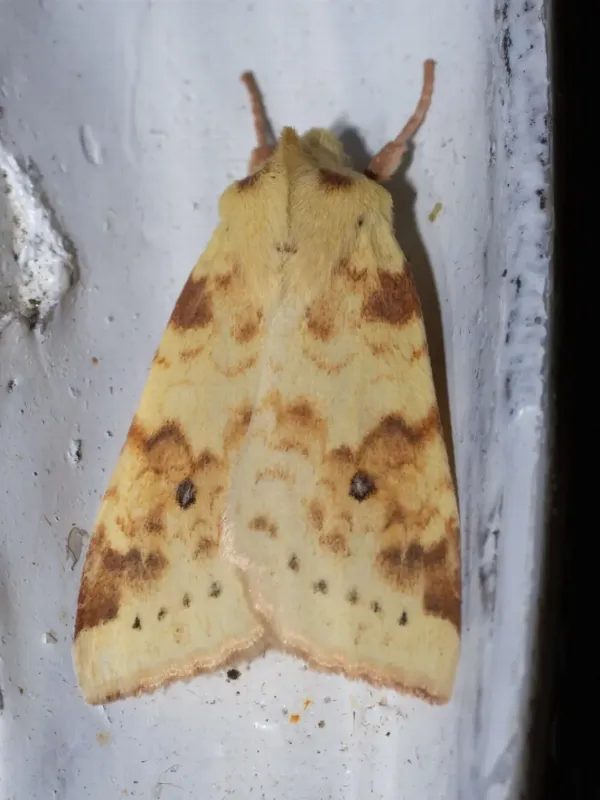
Description
How to identify
The genus Xanthia belongs to the family Noctuidae, a large group of moths known as owlet moths. These insects are characterized by their often brilliant yellow or orange-brown forewings.
Adult moths are nocturnal, exhibiting a typical resting posture with wings folded flat over the abdomen, camouflaging them against bark or leaf litter.
The larvae, commonly known as caterpillars, possess a cylindrical body with distinct markings that assist in blending into their host plants' environment.
Development involves a complete metamorphosis (holometabolism), comprising the egg, larval, pupal, and adult stages, which is essential for timing intervention strategies.
Accurate species identification within this genus often requires specialized entomological study, though general damage patterns are often sufficient for field-level pest management.
What it damages
Xanthia species are polyphagous pests, capable of feeding on a diverse array of host plants, including various deciduous trees, shrubs, and sometimes field crops.
The primary damage occurs during the larval stage, particularly in early spring, as caterpillars target developing buds, blossoms, and young foliage.
By consuming reproductive buds, these pests significantly reduce the potential yield of fruit-bearing trees like apples, pears, and stone fruits.
Heavy infestations can result in severe defoliation, which stresses the plants and reduces their overall vigor, making them susceptible to secondary environmental stressors.
Fruit damage is also a concern, as caterpillars may feed on developing ovaries, leading to deformed fruit or premature fruit drop, causing economic losses for growers.
When it appears
Most species in the genus Xanthia are univoltine, meaning they produce one generation per year, with adults appearing and mating during the autumn months.
Eggs are deposited onto the bark or twigs of host trees, where they undergo diapause and remain throughout the winter months until the arrival of spring.
Hatching is closely synchronized with the phenology of the host plant, specifically the bud-break stage, ensuring that larvae have immediate access to food.
The larval growth period spans several weeks, culminating in late spring when the caterpillars descend to the soil to pupate.
Understanding this life cycle is critical for control, as interventions are most effective when timed with egg-hatching or early larval development.
Signs of infestation
The first signs of an infestation include the appearance of partially hollowed or eaten buds, which may fail to open or appear stunted during spring growth.
Visual inspection of leaves reveals irregular, ragged holes or skeletonized sections where larvae have been actively feeding.
In some cases, silken threads may be found webbing leaves together, providing the larvae with shelter from both predators and environmental exposure.
The presence of frass (larval droppings) on leaves, branches, or the ground beneath the host plant is a reliable indicator of active larval feeding.
In advanced stages of damage, the tree canopy may appear thin or scorched, reflecting significant loss of foliage and buds due to heavy pest pressure.
Control measures
Effective management requires integrated pest management (IPM) strategies, starting with autumn monitoring of adult populations using pheromone traps.
Chemical control involving selective insecticides should be applied during the early larval emergence phase to minimize impact on non-target beneficial insects.
Cultural practices, such as maintaining orchard hygiene, removing leaf litter, and thinning canopy cover, help disrupt the pest's overwintering habitats.
Biological control methods, including the release of egg parasitoids or the use of microbial pesticides like Bacillus thuringiensis, offer environmentally friendly alternatives.
- Monitoring adult moth flight activity in autumn.
- Timely application of contact insecticides at bud-break.
- Encouraging natural predator populations (birds and predatory insects).
Taxonomy
- Latin name
- Xanthia
- Order
- Lepidoptera (butterflies)
- Family
- Noctuidae
- EPPO code
- XNTASP
Discussion
No discussions yet — be the first.