
Wuchereria bancrofti
Wuchereria bancrofti
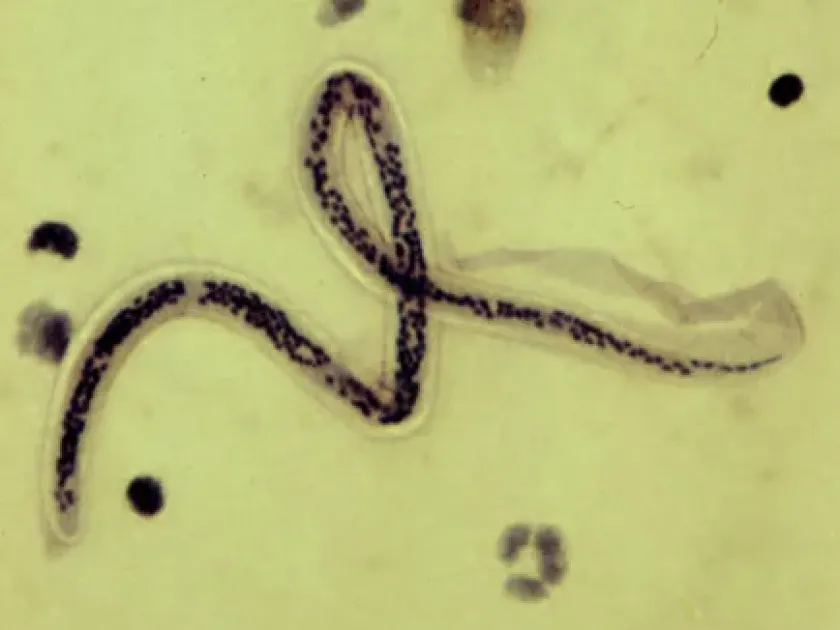
Description
How to identify
Wuchereria bancrofti is a parasitic nematode belonging to the family Onchocercidae in the order Spirurida.
This organism is a human-specific parasite and does not possess any biological characteristics related to plant pathology.
The adult worms inhabit the lymphatic vessels of humans, while the larval stages circulate in the bloodstream.
Its morphology is strictly adapted for a parasitic life cycle within mammalian hosts, not for plant tissues.
It is taxonomically classified as a helminth and is completely unrelated to plant-parasitic nematodes such as Meloidogyne.
What it damages
Wuchereria bancrofti causes no damage to agricultural crops, horticultural plants, or forestry trees.
It lacks the enzymatic or physiological mechanisms required to feed on or penetrate plant material.
Agricultural reports identifying this species as a plant pest are scientifically incorrect and misleading.
There are no recorded instances of this nematode affecting the health, growth, or yield of any vegetation.
Its presence in an ecosystem has no bearing on agricultural productivity or soil health concerning plant damage.
Signs of infestation
Because this species is not a plant pathogen, there are no field symptoms of infestation or damage caused by it.
Farmers or agronomists will never encounter this organism when inspecting crops for pests or disease symptoms.
Symptoms observed on crops should always be attributed to recognized pests, bacteria, fungi, or environmental factors.
Misidentifying this human parasite as a threat to plants is a common error resulting from confusion in terminology.
Monitoring efforts should focus on real phytopathogenic threats rather than helminths that affect vertebrates.
Control measures
There are no control measures, chemical or biological, for this nematode within the context of plant protection.
Agricultural management plans should ignore this species as it poses zero risk to crop health and production.
Integrated Pest Management (IPM) protocols for this organism are non-existent due to its lack of interaction with plants.
Resources should be directed toward managing genuine plant-parasitic nematodes that cause economic losses.
The prevention of crop diseases relies on targeted actions against specific pathogens identified in agronomic standards.
Taxonomy
- Latin name
- Wuchereria bancrofti
- Order
- Nematodes
- Family
- Filariidae
- EPPO code
- WUCHBA
Discussion
No discussions yet — be the first.