
Vryburgia
Vryburgia
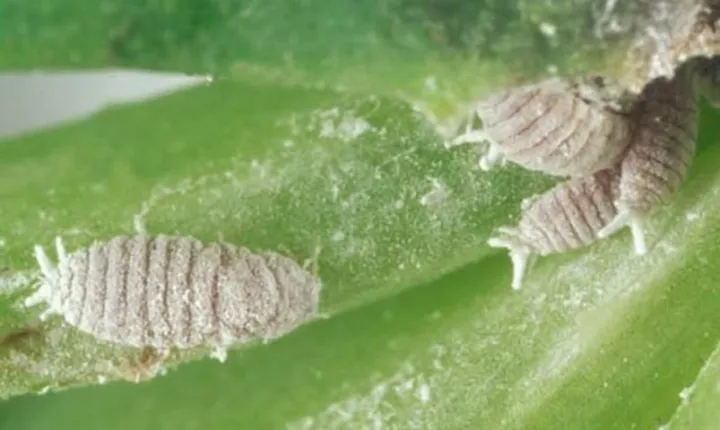
Description
How to identify
Vryburgia is a genus of insects belonging to the mealybug family (Pseudococcidae) within the order Hemiptera. These pests are characterized by a body covered in a white, powdery wax secretion, which serves as a protective layer against environmental stress and various contact pesticides.
Adult females are typically oval in shape and small in size. Unlike many other mealybug genera, some species of Vryburgia exhibit distinct lateral wax filaments that protrude from the edges of their bodies, giving them a recognizable, fuzzy appearance.
Their life cycle includes egg, nymph (instar), and adult stages. Females are largely sedentary, while males are rarely seen and have a very short lifespan, dedicated solely to reproduction.
Eggs are typically laid within protective waxy sacs, often referred to as ovisacs. This structure ensures that the eggs remain shielded from fluctuations in temperature and humidity, as well as chemical treatments.
Identification is often complicated by their cryptic behavior. They prefer to colonize hidden areas of the plant, such as leaf axils, growing tips, or even subterranean root systems, making early detection a significant challenge.
What it damages
Vryburgia causes significant economic and aesthetic damage to ornamental plants, particularly cacti and various succulent species. These pests can colonize both the aerial parts of the plant and its root structure.
Damage is inflicted through the piercing and sucking of plant juices. As the pest feeds, it injects salivary enzymes into the plant tissues, which disrupts normal physiological functions and leads to stunted growth and structural deformation.
A primary consequence of their infestation is the excretion of honeydew, a sticky, sugary substance. This residue acts as a substrate for sooty mold, a fungus that covers plant surfaces and severely inhibits photosynthesis.
Mass infestations lead to yellowing of foliage, premature leaf drop, and eventually the death of the plant. Root-feeding species are particularly dangerous, as they can cause rapid decline and susceptibility to soil-borne pathogens.
The overall horticultural impact includes the loss of market value for ornamental plants and the need for expensive and repeated interventions to manage the pest population.
When it appears
In protected cultivation environments such as greenhouses, nurseries, and indoor plant collections, Vryburgia can complete its life cycle year-round, as stable environmental conditions allow for continuous reproduction.
Pest activity typically peaks during warmer periods or seasons with higher humidity, as these conditions favor faster development rates and higher fecundity among the mealybug population.
The spring and summer seasons present the highest risk of infestation due to the movement of plants between environments, the introduction of new stock, or the proximity to already infested outdoor vegetation.
During colder months, populations may slow down but persist in sheltered areas. These refugia allow the pest to survive and quickly re-colonize the plant once conditions become favorable again.
The population growth rate is highly sensitive to the host plant's health. Neglected plants or those subjected to poor agricultural practices are significantly more prone to explosive outbreaks.
Signs of infestation
The most common sign of infestation is the presence of white, cotton-like masses in the crevices of leaves, at the base of stems, or on the root crown, indicating the presence of protected egg sacs.
Sticky, shiny honeydew residue on the leaves or the surface of the growing medium is a clear indicator that a colony is present and actively feeding, even if the pests themselves are not immediately visible.
Plant distress, characterized by wilting, yellowing, or a failure to thrive despite adequate watering, often suggests that the root system or vascular structure is being compromised by feeding activity.
If the infestation is severe, stunted or deformed new growth is common, reflecting the systemic stress caused by the withdrawal of nutrients and the injection of toxins by the mealybugs.
In cases of heavy infestation, moving the plant may reveal the insects themselves, which appear as small, stationary, or slow-moving white bodies huddled in groups.
Control measures
Management of Vryburgia requires an integrated approach that prioritizes quarantine, mechanical removal, and the targeted application of systemic insecticides.
Strict quarantine procedures for all new plant acquisitions are essential to prevent the introduction of these pests into established collections, as they are easily transported on hidden plant parts.
For minor infestations, manual removal using a cotton swab dipped in isopropyl alcohol can be effective, though this method is labor-intensive and may miss hidden individuals or eggs.
Systemic insecticides, particularly those containing neonicotinoids or similar active ingredients, are the most effective solution for systemic infestations, as they reach the pests in their hidden habitats within the plant tissues.
- Conduct regular inspections of the entire plant collection.
- Use systemic pesticides for effective root and deep-tissue treatment.
- Isolate all symptomatic plants immediately upon detection.
- Maintain proper sanitation in the greenhouse and disinfect tools after handling infested plants.
Taxonomy
- Latin name
- Vryburgia
- Order
- Hemiptera (bugs, aphids, leafhoppers)
- Family
- Pseudococcidae
- EPPO code
- VRYBSP
Discussion
No discussions yet — be the first.