
Phylloxera
Viteus
Description
How to identify
Phylloxera (Viteus vitifoliae) is a destructive aphid-like insect belonging to the family Phylloxeridae. It is a major quarantine pest that exists in both root-dwelling and leaf-dwelling forms.
The root form consists of tiny, yellow-green wingless insects. They live entirely underground, where they feed on the sap of grapevine roots, causing significant physiological damage.
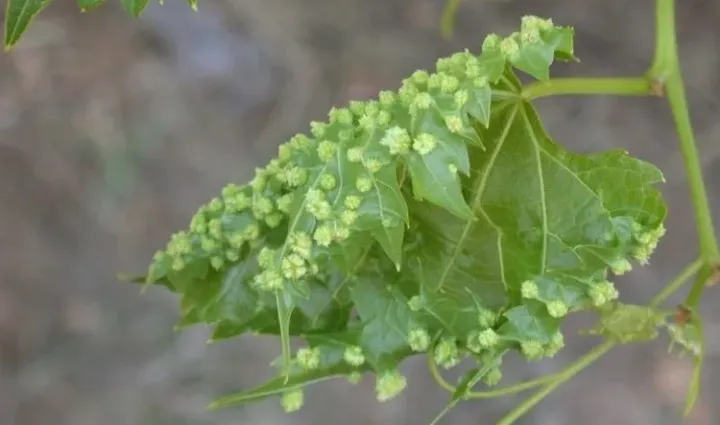
The leaf form occurs predominantly on American grape species and is characterized by the formation of galls. Some individuals of this form develop wings to migrate to other vines.
The lifecycle of this pest is extremely complex, involving multiple generations throughout the growing season. In optimal conditions, the population can expand at a very rapid pace.
Due to its microscopic size and subterranean lifestyle, detecting Phylloxera in the early stages of infestation is highly challenging for vineyard managers and researchers.
What it damages
The primary host for Phylloxera is the grapevine (Vitis). European cultivars (Vitis vinifera) are highly susceptible to root-feeding forms, which can lead to vine death.
Feeding at the root zone causes the development of galls and tuberosities. These deformities obstruct the plant's ability to transport water and essential nutrients from the soil.
The damaged root tissues often become colonized by secondary fungal and bacterial pathogens, which cause the roots to rot and eventually collapse the vine's health.
When the leaf form is present, galls appear on the leaves. These structures serve as protection for the eggs and nymphs, effectively reducing the photosynthetic capacity of the vine.
Repeated infestation over several seasons severely weakens the vine, resulting in significantly reduced yields and the eventual total decline of the vineyard block.
When it appears
Phylloxera activity usually begins in the spring when soil temperatures reach approximately 10 to 12 degrees Celsius at the depth where the roots are located.
Throughout the growing season, from late spring through early autumn, the pest actively feeds and reproduces, completing several generations within a single year.
As temperatures drop during autumn, the insects' metabolism slows down. Younger nymphs enter a state of dormancy, overwintering on the roots until the next spring.
Regions with warmer climates allow for a more prolonged period of development, which facilitates faster population recovery and spread across a vineyard site.
Humid and warm weather conditions during the summer months are particularly favorable for the survival and migration of winged adults, increasing the risk of infestation spread.
Signs of infestation
Early symptoms of an infestation often appear as general vine decline, stunted shoots, and yellowing leaves, which are sometimes misidentified as nutrient deficiencies.
- Small, bumpy galls appearing on the underside of grapevine leaves.
- Reduced shoot growth and poor vigor throughout the vineyard.
- Visible knots and distortions found on the root system during excavation.
- Patches of weakened or dying vines within a specific area of the block.
- Foul odor emanating from rotted roots when vines are uprooted.
Upon closer inspection of the roots, one can observe clear signs of hypertrophy, where the root tissue has swollen and warped due to the insect's salivary secretions.
The root system progressively deteriorates, losing its functional density, which becomes highly noticeable during hot, dry periods when the vine can no longer support its water demand.
Widespread vine collapse is a late-stage signal of heavy infestation, indicating that the population of Phylloxera has already caused irreversible damage to the vineyard's rootstock.
Control measures
The most effective management strategy is the use of Phylloxera-resistant rootstocks. European grape varieties are grafted onto American rootstocks that possess natural immunity.
Maintaining strict phytosanitary protocols is essential. Always source certified, disease-free nursery stock to prevent the introduction of the pest into clean vineyards.
If an infestation is confirmed, affected vines must be promptly removed, including all root material, and the area should be quarantined or treated with specialized fumigants.
Chemical control is difficult because the root-dwelling insects are protected by the soil. Soil fumigation is an expensive and intensive process that is rarely a long-term solution.
Regular monitoring and scouting programs are critical for the early detection of the pest, allowing for localized containment measures before the infestation becomes catastrophic.
Discussion
No discussions yet — be the first.