
Warbling vireo
Vireo gilvus
Description
How to identify
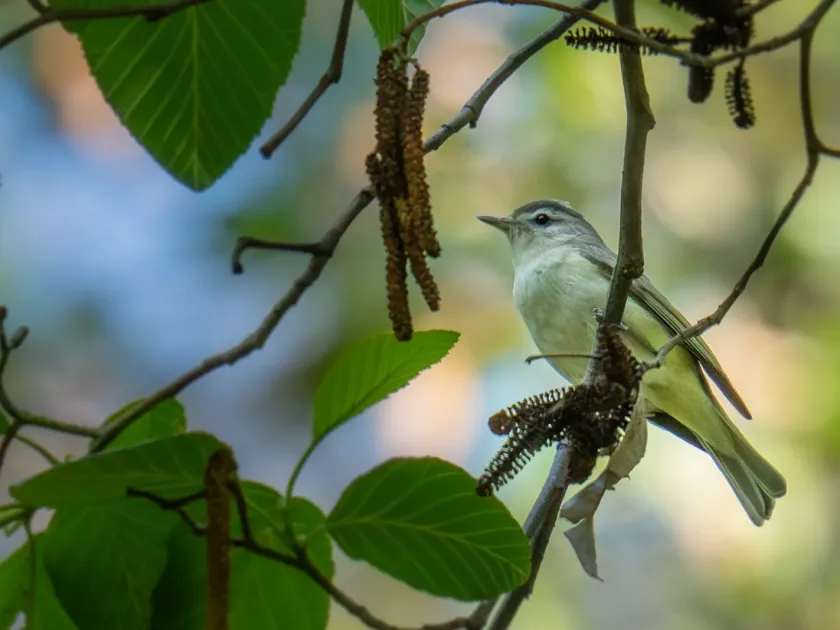
The warbling vireo (Vireo gilvus) is a small songbird belonging to the Vireonidae family within the order Passeriformes. It is characterized by its plain, olive-gray plumage and a subtle white eyebrow stripe.
Measuring approximately 12–14 cm in length, the bird lacks sexual dimorphism, making it difficult to distinguish males from females by sight alone. Their plumage is designed for effective camouflage within the foliage.
The primary identification tool is their complex, long, and flowing song. Unlike many birds, warbling vireos sing consistently throughout their breeding season, often remaining hidden in the upper canopy.
They prefer deciduous forests, parks, and fruit orchards where they find ample nesting sites. Because they are often heard rather than seen, their presence is confirmed by their distinctive vocalizations.
Native to North America, these birds have adapted well to human-altered landscapes, often thriving in managed gardens and suburban areas with mature trees.
What it damages
It is critical to note that the warbling vireo is not an agricultural pest; rather, it is a highly beneficial insectivore. It feeds strictly on arthropods found in the forest and orchard canopy.
Their diet includes a variety of caterpillars, beetles, weevils, and aphids. By consuming these insects, they provide significant ecosystem services by reducing pest populations that could damage crops.
The warbling vireo performs no negative impact on cultivated plants. They do not consume fruit or vegetable matter, making them completely harmless to agricultural produce.
Instead, they act as natural controllers. In commercial and home orchards, the presence of these birds helps keep populations of leaf-eating insects in check naturally.
From an agronomic perspective, the warbling vireo is a valuable biological agent that promotes plant health and contributes to a balanced, sustainable agricultural environment.
When it appears
The seasonal appearance of the warbling vireo is closely tied to spring temperatures and the start of tree growth. They migrate back to their breeding grounds as soon as prey becomes available.
Maximum activity occurs during May and June, which corresponds with the peak nesting and fledgling period. During these months, their insect consumption is at its highest.
As summer draws to a close, these birds prepare for their southward migration. Their presence aligns perfectly with the seasonal peak of many agricultural insect pests.
Climatic factors directly impact their arrival dates. A warmer spring typically triggers earlier breeding activity and increased foraging in fruit-bearing trees.
By September, the birds begin their departure. This timing correlates with the end of the main growing season, as temperatures drop and the abundance of insects declines.
Control measures
The management strategy for the warbling vireo involves conservation, not control. Protecting this beneficial species is essential for maintaining natural biological balance in gardens.
To support these birds, agriculturalists should minimize the use of broad-spectrum insecticides, especially during the breeding season, to prevent indirect poisoning.
Maintaining mature trees and hedgerows around orchards provides essential nesting sites. A diverse vegetation structure encourages vireos to settle and forage in the area.
Adopting integrated pest management (IPM) practices allows these birds to thrive, thereby reducing the reliance on chemical inputs for orchard maintenance.
- Avoid pesticide application during peak nesting months.
- Preserve old-growth trees and thickets for nesting.
- Maintain natural buffer zones around agricultural fields.
Taxonomy
- Latin name
- Vireo gilvus
- Family
- Vireonidae
- EPPO code
- VIREGI
Discussion
No discussions yet — be the first.