
Uranotaenia lowii
Uranotaenia lowii
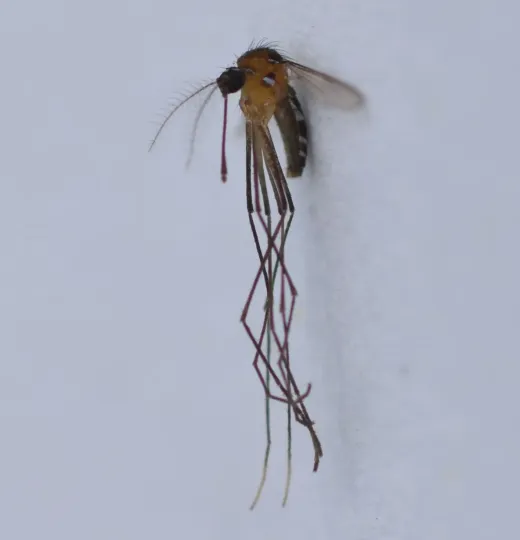
Description
How to identify
Uranotaenia lowii is a species of mosquito belonging to the family Culicidae. Unlike many agricultural pests that target crops, this species is primarily known for its biological traits within its natural habitat rather than its interaction with plants.
Adult mosquitoes of this species are small, often featuring distinct coloration and wing venation patterns typical of the Uranotaenia genus. They are generally found near dense vegetation associated with water bodies.
The life cycle of this species consists of an aquatic larval stage and an aerial adult stage. Larvae inhabit shallow, stagnant, or semi-permanent water sources, often where aquatic plants provide shelter and food.
Systematically, Uranotaenia lowii is categorized under the order Diptera. While it is an insect, it does not fit the traditional definition of a plant pest or agricultural crop destroyer in modern agronomy.
Identification often requires expert entomological analysis. For farm management, recognizing these insects is useful primarily for assessing site sanitation and potential vector-borne disease risks.
What it damages
Uranotaenia lowii does not feed on crops. It is not a phytophagous species and does not cause mechanical damage to plant tissues such as leaves, stems, roots, or fruit. Therefore, it does not negatively impact plant health or yield quality.
There are no diagnostic signs of damage, such as leaf mining, chewing, or sucking injuries, associated with this species. Consequently, no plant protection products are required to control it for the sake of crop protection.
The primary concern regarding this species is the nuisance it causes to farm workers. High populations can interrupt fieldwork, particularly in areas near irrigation canals, ditches, or swampy fields, reducing operational efficiency.
Additionally, mosquitoes can serve as potential vectors for various pathogens. While their impact on agricultural crops is non-existent, managing their population contributes to the overall safety and sanitary standards of the farm.
In summary, the economic damage caused by Uranotaenia lowii is limited to labor productivity issues. It does not threaten the harvest or the structural integrity of agricultural produce.
When it appears
The activity of Uranotaenia lowii is heavily influenced by seasonal temperature fluctuations and water availability. Warm summer months provide the optimal conditions for rapid population growth and development.
Seasonal patterns typically show a peak in mosquito emergence following heavy rainfall events. These rains create temporary pools and increase humidity, which are essential for the survival of adult mosquitoes.
As temperatures rise, the developmental time from egg to adult shortens significantly. This leads to the characteristic population surges observed during the height of the summer season in favorable climates.
Cooler autumn temperatures naturally reduce the activity levels of the population. As winter approaches, the mosquitoes typically enter a diapause state or cease development until the return of warmer conditions.
Farm managers should incorporate drainage maintenance schedules based on these seasonal patterns to effectively mitigate potential breeding sites before the peak activity periods occur.
Control measures
Management of Uranotaenia lowii focuses on environmental modification and integrated pest management (IPM) strategies. The most effective control method is the elimination of stagnant water breeding sites.
Regular maintenance of drainage systems, including the removal of debris and excess aquatic vegetation, significantly discourages the species from inhabiting those areas. Keeping canals clean is a vital sanitary measure.
Biological control agents, such as those containing Bacillus thuringiensis israelensis, can be safely applied to water bodies to manage larval populations without causing damage to the wider ecosystem.
For personnel protection, it is recommended to use appropriate personal protective equipment and insect repellents, especially when staff are operating in or near water management structures during active hours.
Broad-spectrum insecticide applications are discouraged as they are unnecessary for crop protection and harmful to beneficial insects. Targeted, site-specific measures are preferred to maintain ecological balance on the farm.
Taxonomy
- Latin name
- Uranotaenia lowii
- Order
- Diptera (flies)
- Family
- Culicidae
- EPPO code
- URATLO
Discussion
No discussions yet — be the first.