
Forage mite
Tyroglyphus longior
Description
How to identify
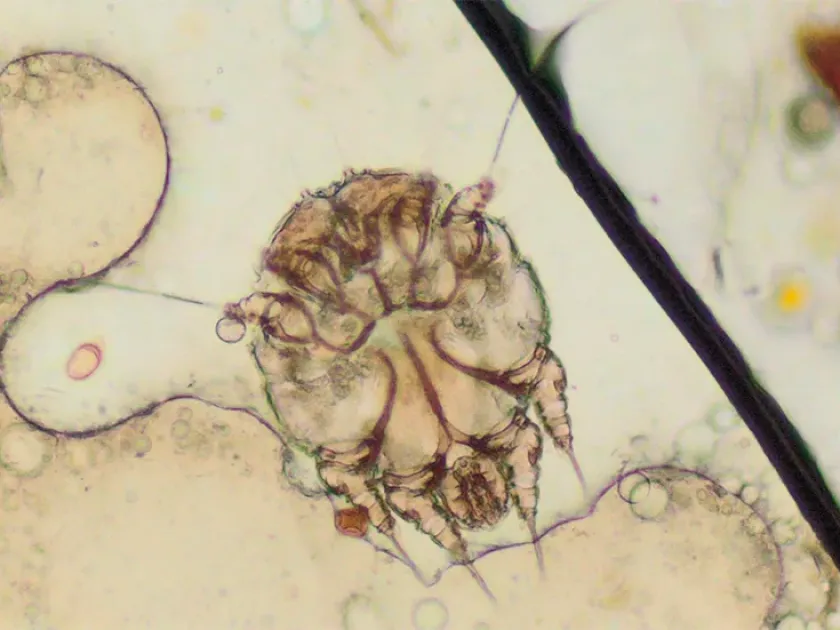
The forage mite (Tyrophagus longior) belongs to the Acaridae family within the Acariformes order. It is a tiny, translucent, whitish mite with a distinctly elongated body. Adult individuals are typically less than 0.5 mm long, making them difficult to detect without microscopic equipment.
What it damages
This mite is a major pest of stored products, particularly grain and seeds. It infests wheat, barley, rye, legumes, and oilseeds. Furthermore, it causes significant damage to processed goods such as flour, cake, and dried food, rendering them unfit for consumption or sowing.
When it appears
The development of the forage mite is highly dependent on humidity and temperature. It thrives in environments where grain moisture exceeds 13-14% and temperatures range from 15°C to 25°C. Under optimal conditions, populations can multiply rapidly, leading to major storage losses.
Signs of infestation
Infestation is often identified by a peculiar, sweetish, honey-like odor emanating from the infested storage area. The grain becomes covered in a greyish dust consisting of debris, molted skins, and feces. In severe cases, the grain clumps together and begins to self-heat.
Control measures
The most critical control measure is maintaining low grain moisture content below 13% during storage. Effective warehouse hygiene, including the removal of residual dust and grain, is essential. Fumigation with registered acaricides is recommended for severe infestations in sealed storage facilities.
Discussion
No discussions yet — be the first.