
Stem nematode
Tylenchus
Description
How to identify
The stem nematode, specifically species within the genus Tylenchus, belongs to the order Tylenchida and the family Tylenchidae. These microscopic roundworms are specialized plant parasites.
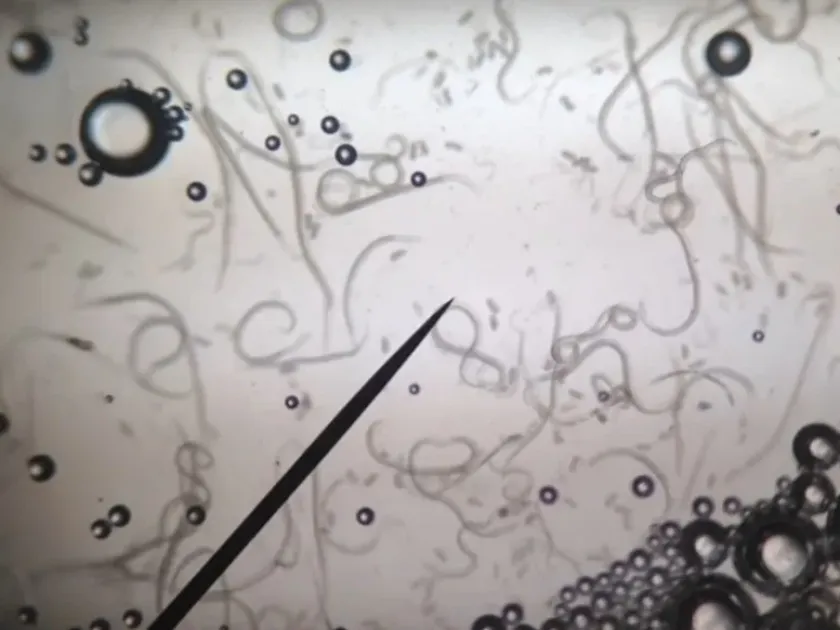
Morphologically, they are characterized by an elongated, transparent body and a sharp stylet used to penetrate plant cell walls. They are obligate parasites that depend on plant sap for their survival and development.
The life cycle encompasses eggs, four juvenile stages, and adults. Reproduction is usually sexual, and the population can grow rapidly under optimal moisture and temperature conditions.
These nematodes possess an exceptional ability to enter a dormant state, known as anhydrobiosis, which allows them to survive for years in dry crop residues or soil.
They are primarily identified through laboratory techniques, as their size makes detection in the field during the early stages of infestation nearly impossible without specialized equipment.
What it damages
Stem nematodes attack a wide array of crops, ranging from onions and garlic to various grains and ornamentals. They infiltrate stems, leaves, and bulbs, creating feeding galleries.
Signs of infestation
Common symptoms include stem twisting, stunted growth, chlorosis, and general plant distortion. Infested bulbs often show characteristic swelling or tissue decay at the basal plate.
In cases of severe infestation, the plant tissue may become spongy and break down completely. This often leaves the plant susceptible to secondary bacterial and fungal infections.
Control measures
Effective management starts with the use of nematode-free, certified seeds and sets. Strict crop rotation cycles are essential to break the nematode's life cycle in the soil.
Sanitation practices, such as the removal and destruction of infested plant materials, are crucial. Deep tillage and soil amendment practices help reduce the overall nematode density in the field.
Taxonomy
- Latin name
- Tylenchus
- Order
- Nematodes
- Family
- Tylenchidae
- EPPO code
- TYLNSP
Discussion
No discussions yet — be the first.