
Chigoe flea
Tunga penetrans
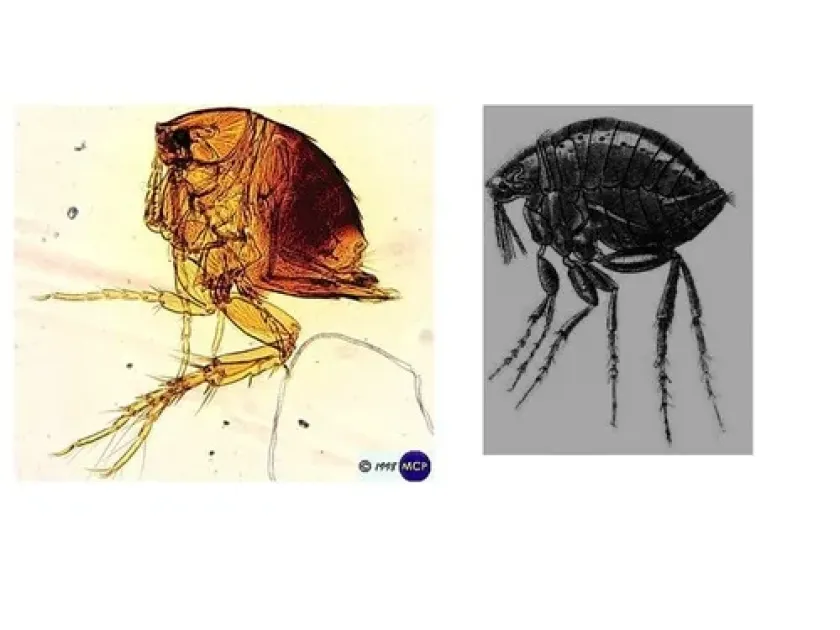
Description
How to identify
The chigoe flea (Tunga penetrans), also known as the jigger, is a member of the Siphonaptera order and the Tungidae family. It is a tiny insect, measuring about 1–2 mm in length.
Unlike common fleas, the fertilized female Tunga penetrans embeds herself deep into the skin of the host to feed and complete her reproductive cycle.
The flea’s body is laterally compressed, enabling it to move rapidly through the soil, where it spends a significant portion of its life cycle.
Once embedded under the epidermis, the female undergoes physiological changes, swelling to the size of a pea as her eggs develop internally.
The presence of the parasite is usually indicated by a small dark spot in the center of a localized skin lesion, representing the flea's breathing and discharge point.
What it damages
It is crucial to note that Tunga penetrans is not a plant pest. It is an obligate ectoparasite affecting mammals, including humans, pigs, dogs, and rodents.
In agricultural settings, this flea is classified as a significant sanitary pest that can cause major health issues within livestock farming operations.
The infestation causes extreme distress, inflammatory reactions, and secondary infections in livestock, leading to reduced productivity and poor animal health.
These parasites favor loose sandy soil and shaded, humid areas around barns and livestock pens, where conditions are optimal for larval development.
Economic losses in the agricultural sector arise from the need for intensive pest control, veterinary treatment costs, and restrictions on movement within infested zones.
When it appears
The activity of the chigoe flea is closely linked to tropical and subtropical climates, where consistently high temperatures favor its reproduction year-round.
Optimal conditions for survival include temperatures above 20–25°C and sufficient soil moisture, which are necessary for the development of larval stages.
The flea is most active during dry seasons when the soil becomes dusty and loose, facilitating easier movement and burrowing by the adult insects.
Heavy rains and waterlogged soil can temporarily reduce the population by destroying larval habitats, acting as a natural check on their numbers.
Shaded areas around farm buildings provide microclimates that sustain the parasite's population even during the hottest parts of the year.
Signs of infestation
The primary sign of infestation is a painful, itchy skin lesion, typically found on the feet, toes, or areas in direct contact with the ground.
Initial symptoms include redness and inflammation, which eventually progress to a white nodule with a distinct dark spot at the center.
If not addressed promptly, the site of the flea’s embedment can develop into a secondary bacterial infection, leading to abscesses or necrotic tissue.
The clinical presentation is often characterized by intense localized itching and pain, which can be severe enough to impede movement in both humans and animals.
- Reddish skin swelling at the site of infection.
- Severe itching and localized pain.
- Formation of pustules or abscesses.
- Impaired mobility if the infestation is heavy and localized on the feet.
Control measures
Effective control of the chigoe flea requires a multi-faceted strategy focused on environmental sanitation and personal/animal protection.
Regular application of residual insecticides to soil and livestock premises is necessary to eliminate both adult fleas and developing larvae.
Maintaining a clean farm environment, specifically the removal of organic debris and waste, is essential to deprive larvae of food and shelter.
Wearing appropriate footwear, such as closed-toe shoes or boots, is mandatory for staff working in potentially infested agricultural areas.
In cases of infestation, professional veterinary or medical intervention is required to safely remove the parasite and treat the resulting wounds to prevent infection.
Taxonomy
- Latin name
- Tunga penetrans
- Family
- Tungidae
- EPPO code
- TUNGPE
Discussion
No discussions yet — be the first.