
Amaryllis mealybug
Trionymus amaryllidis
Description
How to identify
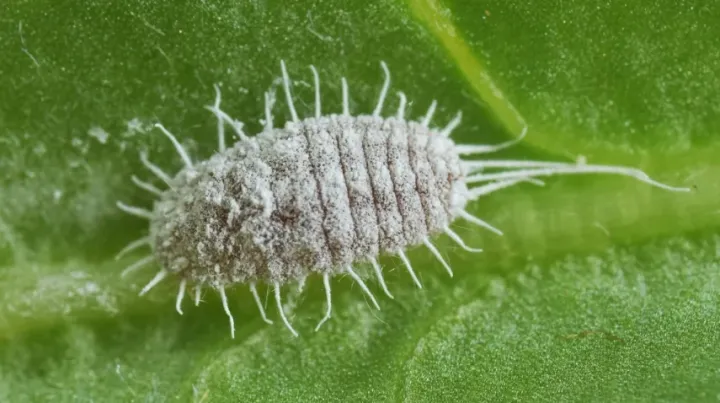
The Amaryllis mealybug (Trionymus amaryllidis) is a small insect belonging to the Pseudococcidae family. These pests are known for their white, waxy coating that resembles fine flour or cotton wool.
These insects prefer secluded habitats, often hiding deep within the scales of bulbs, near the neck of the plant, or in the tight junctions between leaves. This makes them difficult to spot during routine inspections.
Adult females are elongated and typically measure between 2 to 4 millimeters. While males may develop wings, they are rarely seen, as these insects often reproduce parthenogenetically in domestic environments.
The life cycle of the Amaryllis mealybug is continuous in indoor conditions, allowing populations to thrive year-round in greenhouses or on indoor window sills.
Their movement is generally slow, but the tiny, mobile crawlers (nymphs) can easily spread to neighboring plants, especially when plants are clustered together in a collection.
What it damages
The primary hosts of Trionymus amaryllidis include bulbous plants such as Amaryllis, Hippeastrum, Clivia, and occasionally Zephyranthes.
These pests feed by inserting their stylets into the plant's tissues and extracting sap. This constant feeding drains the plant's energy reserves stored in the bulb.
As the bugs feed, they inject toxic saliva that can lead to tissue necrosis. This weakens the bulb, making it highly susceptible to secondary bacterial and fungal infections, particularly rot.
The honeydew produced by the mealybugs encourages the growth of sooty mold, a black, unsightly fungus that covers the leaves and hinders the process of photosynthesis.
Heavy infestations result in stunted plant growth, yellowing foliage, deformed flower buds, and in severe cases, the eventual collapse and death of the entire bulb.
Signs of infestation
The most distinctive sign is the appearance of white, cotton-like masses found in leaf axils or hidden under the dry outer scales of the bulb.
Leaves may show symptoms of chlorosis, curling, or wilting. The plant may stop producing new foliage, even if environmental conditions such as light and water are sufficient.
A sticky residue on the leaves or the surface underneath the pot is a clear indicator of a mealybug infestation, as these insects excrete excess sugar after feeding.
Visual inspection of the root zone and bulb scales often reveals white, web-like egg sacs or small clumps of insects clustered together in the plant's protected areas.
A lack of blooms, or blossoms that fail to open properly and appear deformed, are classic signs that a mealybug colony is siphoning off the plant's energy.
Control measures
Quarantining new plants is the first line of defense. Thoroughly inspect any new bulbous arrivals before placing them near your existing healthy collection.
For minor infestations, mechanical control can be effective. Use a cotton swab dipped in rubbing alcohol to physically remove and kill the insects you can reach.
For more severe cases, systemic insecticides containing active ingredients like imidacloprid or acetamiprid are recommended. These products are absorbed by the plant and kill the bugs through ingestion.
Always repeat insecticide applications at 10 to 14-day intervals to catch newly hatched nymphs that may have survived the initial spray.
- Isolate infested plants immediately.
- Treat bulbs with systemic pesticides during the repotting process.
- Clean the area around infected plants to remove eggs and honeydew.
- Maintain good plant health through proper watering to increase natural resistance.
Taxonomy
- Latin name
- Trionymus amaryllidis
- Order
- Hemiptera (bugs, aphids, leafhoppers)
- Family
- Pseudococcidae
- EPPO code
- TRINAM
Discussion
No discussions yet — be the first.